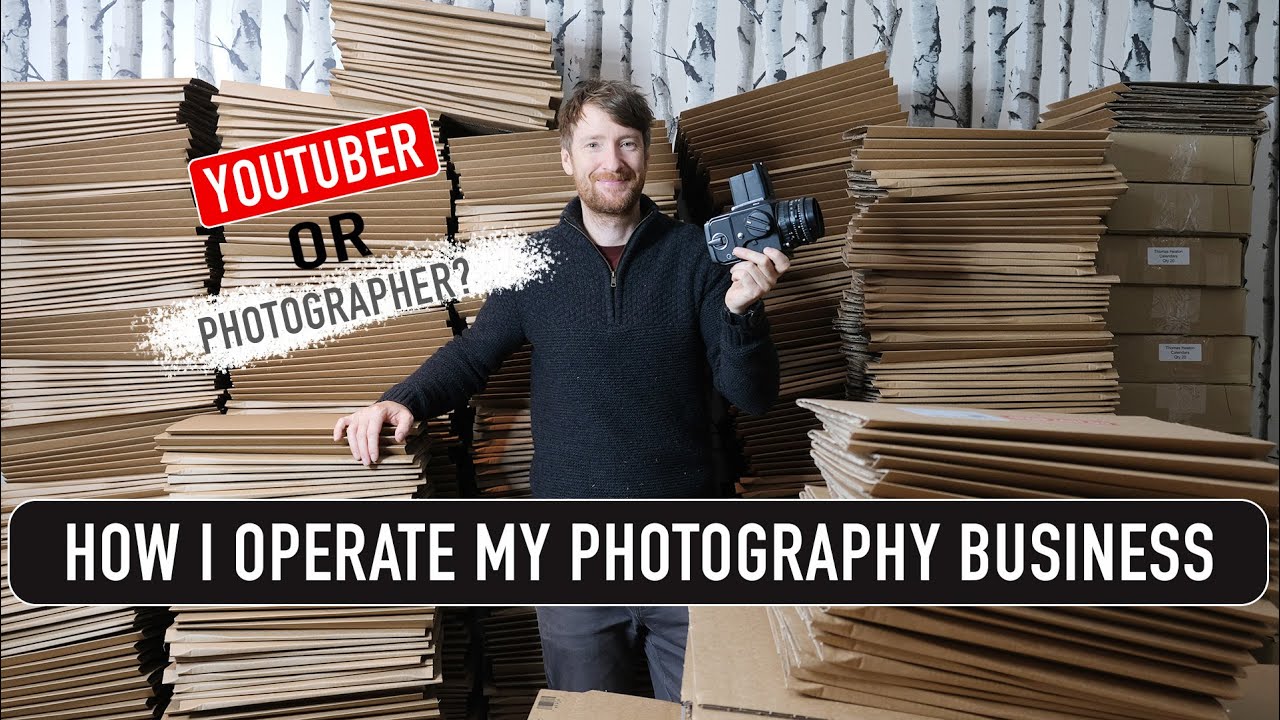
I grew up watching my parents run a photography studio on razor-thin margins. They were talented. Their clients loved them. And they were constantly broke because they had no system for what they sold or how they sold it. That experience is why I pay close attention whenever a photographer I respect pulls back the curtain on the actual business mechanics, not just the pretty images.
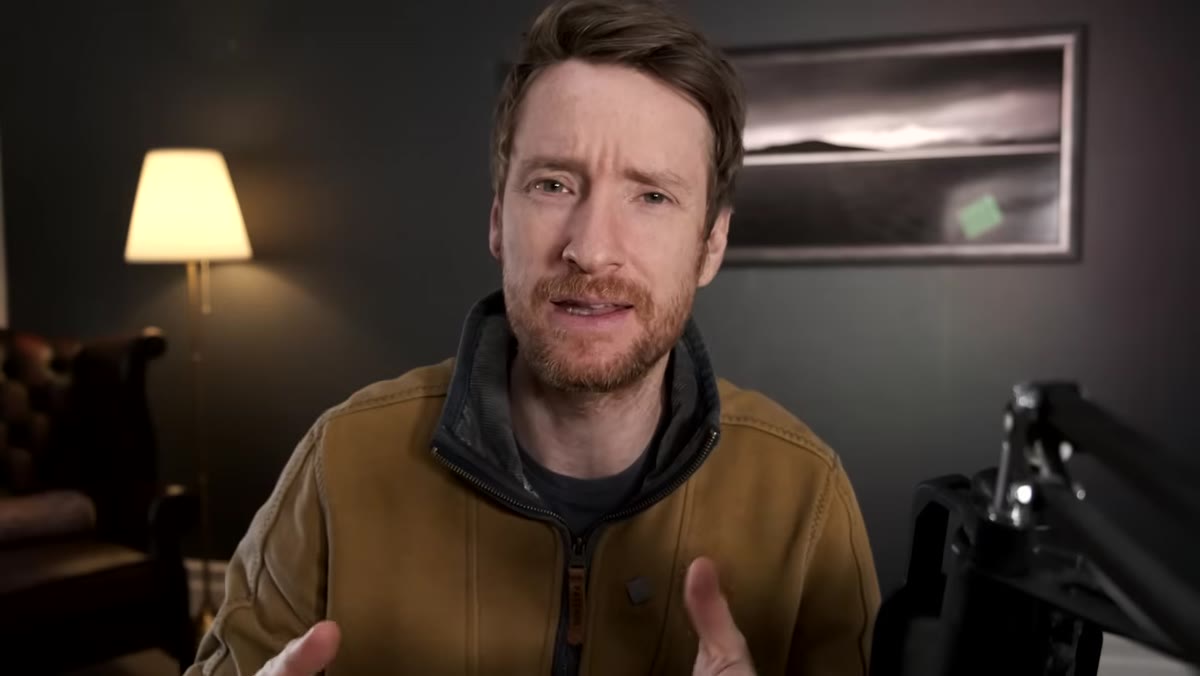
That’s exactly what Thomas Heaton does in his tutorial, Watch the full tutorial on YouTube, where he documents his busiest and most profitable week of the year. What makes this video worth studying is that Heaton doesn’t talk about photography business in vague inspirational terms. He talks about what works, what has repeatedly failed him, and why the structure he’s landed on makes sense given how he actually spends his time. If you’re trying to build income streams that connect to your creative work instead of pulling you away from it, this one is worth your full attention.
The core insight Heaton shares is something I wish someone had drawn out for me years earlier: the creative process itself can be engineered to produce sellable products as a natural byproduct. That shift in thinking, from “I need to find time to make products” to “my existing workflow already generates them,” changes everything about how you plan your year.
Step 1: Understand Why YouTube Ad Revenue Is Not a Business Model
 Revenue chart showing inconsistent ad income spikes and drops
Heaton is direct about this: ad revenue from YouTube is unpredictable and structurally low. He describes it as erratic, the kind of income that comes in waves rather than a reliable monthly number you can plan around. Sponsors, by contrast, offer consistent, negotiable fees that you can forecast. If you’re building a YouTube presence alongside your photography, treat it as a trust-building platform and a sponsor-attraction tool, not a paycheck. The audience you grow is the asset. The ad revenue is noise.
Revenue chart showing inconsistent ad income spikes and drops
Heaton is direct about this: ad revenue from YouTube is unpredictable and structurally low. He describes it as erratic, the kind of income that comes in waves rather than a reliable monthly number you can plan around. Sponsors, by contrast, offer consistent, negotiable fees that you can forecast. If you’re building a YouTube presence alongside your photography, treat it as a trust-building platform and a sponsor-attraction tool, not a paycheck. The audience you grow is the asset. The ad revenue is noise.
Step 2: Recognize the Content-to-Product Cycle
 Heaton in the field shooting landscape photography with camera and tripod
This is the strategic foundation of everything Heaton describes. When he goes out to shoot landscapes, he’s doing two things simultaneously: creating content for his channel and generating the image library that becomes his product catalog. He doesn’t take extra time to “make products.” The products emerge from the work he was already doing. For portrait photographers like me, this translates differently but the logic holds. Every client session, every behind-the-scenes clip, every location scout can feed both your marketing and your product pipeline if you’re intentional about capturing it. The question to ask yourself is: what does my existing creative process already produce that I’m not packaging?
Heaton in the field shooting landscape photography with camera and tripod
This is the strategic foundation of everything Heaton describes. When he goes out to shoot landscapes, he’s doing two things simultaneously: creating content for his channel and generating the image library that becomes his product catalog. He doesn’t take extra time to “make products.” The products emerge from the work he was already doing. For portrait photographers like me, this translates differently but the logic holds. Every client session, every behind-the-scenes clip, every location scout can feed both your marketing and your product pipeline if you’re intentional about capturing it. The question to ask yourself is: what does my existing creative process already produce that I’m not packaging?
Step 3: Know Why Prints Are Harder to Sell Than They Look
 Heaton discussing print pricing challenges and bespoke order process
Heaton is refreshingly honest here. He has struggled to sell prints throughout his entire career, and he explains exactly why. Bespoke fine art prints require significant time per sale, paper consultations, size decisions, custom orders, and that time cost drives the price up to a point where many buyers hesitate. On the other hand, when he’s tried mass-producing lower-cost print packs, the perceived uniqueness disappears and sales still underperform. It’s a squeeze from both directions. This doesn’t mean you should never sell prints, but it means you need to be clear-eyed about your cost per sale and whether the margin justifies the effort. I track every product type in my studio by profit per hour of my time, not just total revenue, and prints rarely win that comparison.
Heaton discussing print pricing challenges and bespoke order process
Heaton is refreshingly honest here. He has struggled to sell prints throughout his entire career, and he explains exactly why. Bespoke fine art prints require significant time per sale, paper consultations, size decisions, custom orders, and that time cost drives the price up to a point where many buyers hesitate. On the other hand, when he’s tried mass-producing lower-cost print packs, the perceived uniqueness disappears and sales still underperform. It’s a squeeze from both directions. This doesn’t mean you should never sell prints, but it means you need to be clear-eyed about your cost per sale and whether the margin justifies the effort. I track every product type in my studio by profit per hour of my time, not just total revenue, and prints rarely win that comparison.
Step 4: Build Around Books as Your Anchor Product
 Heaton holding up his photography book, showing the physical product
If there’s a single product Heaton is most enthusiastic about, it’s the photography book. The reasoning is sound: books can be produced at scale, they carry high perceived value because of their size and page count, and they appeal to a broad audience including people who would never buy a fine art print. A book lets you package dozens or hundreds of images into one purchase rather than trying to sell each image individually. It also positions you differently in the market. A photographer with a published book reads as more established, more serious, more worth the investment. If you shoot a specific subject or location consistently, a book is worth putting on your product roadmap even if it feels intimidating. The production side has become far more accessible through short-run printing services.
Heaton holding up his photography book, showing the physical product
If there’s a single product Heaton is most enthusiastic about, it’s the photography book. The reasoning is sound: books can be produced at scale, they carry high perceived value because of their size and page count, and they appeal to a broad audience including people who would never buy a fine art print. A book lets you package dozens or hundreds of images into one purchase rather than trying to sell each image individually. It also positions you differently in the market. A photographer with a published book reads as more established, more serious, more worth the investment. If you shoot a specific subject or location consistently, a book is worth putting on your product roadmap even if it feels intimidating. The production side has become far more accessible through short-run printing services.
Step 5: Treat Calendars as a Secondary Product, Not a Core One
 Annual calendar product laid out on table next to the photography book
Heaton includes calendars in his product mix but is careful to flag them as high-risk. The challenge is that calendars are time-sensitive inventory. If you over-order, you are left with product that has a hard expiration. Unlike a book that you can sell year-round, a calendar that doesn’t sell by January is a loss. He’s not saying skip them entirely, but they should come after you have a proven audience and a realistic read on your demand. Order conservatively your first year. The unit economics only work if you move the inventory, and a small successful run is better than a large embarrassing one.
Annual calendar product laid out on table next to the photography book
Heaton includes calendars in his product mix but is careful to flag them as high-risk. The challenge is that calendars are time-sensitive inventory. If you over-order, you are left with product that has a hard expiration. Unlike a book that you can sell year-round, a calendar that doesn’t sell by January is a loss. He’s not saying skip them entirely, but they should come after you have a proven audience and a realistic read on your demand. Order conservatively your first year. The unit economics only work if you move the inventory, and a small successful run is better than a large embarrassing one.
Step 6: Be Honest About Digital Products
 Heaton briefly referencing ebook product, low price point discussion
Heaton sells an ebook but describes it as cheap and low-volume. He doesn’t lean on digital products as a major income driver. This is worth noting because digital products are often sold to photographers as the easy, scalable answer. Sometimes they are. But Heaton’s model is built on physical products with tangible perceived value, and his audience responds to that. Know your audience before you invest heavily in a digital product. If your followers are buyers, a Lightroom preset pack or an educational PDF can work. If they’re mostly other photographers who follow you for inspiration, converting them to paying customers for digital goods is harder than it looks.
Heaton briefly referencing ebook product, low price point discussion
Heaton sells an ebook but describes it as cheap and low-volume. He doesn’t lean on digital products as a major income driver. This is worth noting because digital products are often sold to photographers as the easy, scalable answer. Sometimes they are. But Heaton’s model is built on physical products with tangible perceived value, and his audience responds to that. Know your audience before you invest heavily in a digital product. If your followers are buyers, a Lightroom preset pack or an educational PDF can work. If they’re mostly other photographers who follow you for inspiration, converting them to paying customers for digital goods is harder than it looks.
What I’d Add from Running a Portrait Studio
The content-to-product cycle Heaton describes is brilliant for landscape photographers who already have an active YouTube presence. In a portrait studio, the cycle works differently. My “content” is client work, behind-the-scenes reels, and educational posts. My “product byproduct” is the workflow systems and client experience frameworks I’ve refined over years. I turned those into a paid workshop, which now brings in consistent income without requiring me to be in front of a camera every week. The principle is the same even if the medium is different: look at what you already produce and ask what form it could take as something someone would pay for.
The single most important lesson from Heaton’s breakdown is this: stop thinking about products as something you make separately from your creative work. Design your workflow so that the work you love doing naturally generates the inventory you need to sell. That alignment is what makes a photography business sustainable instead of exhausting.
Watch the full tutorial on YouTube to hear Heaton walk through his busiest business week in his own words.
Comments
Leave a Comment