I lost a $5,000 client once because of a sloppy contract. No payment terms, no cancellation clause, nothing that would hold up if someone decided to walk. That experience cost me more than money. It cost me the confidence that I had any idea what I was doing on the business side. The photography was solid. The infrastructure around it was held together with good intentions and wishful thinking.
That’s why when The Portrait System dropped their 2022 overview video, I watched it twice. Not because I needed hype, but because they were announcing actual tools and programs that address the exact gaps most portrait photographers are quietly suffering through. Watch the full tutorial on YouTube and then come back here, because I want to walk through what they announced and why each piece matters more than it might sound on the surface.
This isn’t a platform pitch. I track my studio numbers obsessively, and I don’t recommend anything I haven’t stress-tested against real business logic. What The Portrait System laid out here is a genuinely useful framework for photographers who are ready to stop treating their business like an afterthought.
Step 1: Understand the Membership Tier Structure Before You Sign Anything
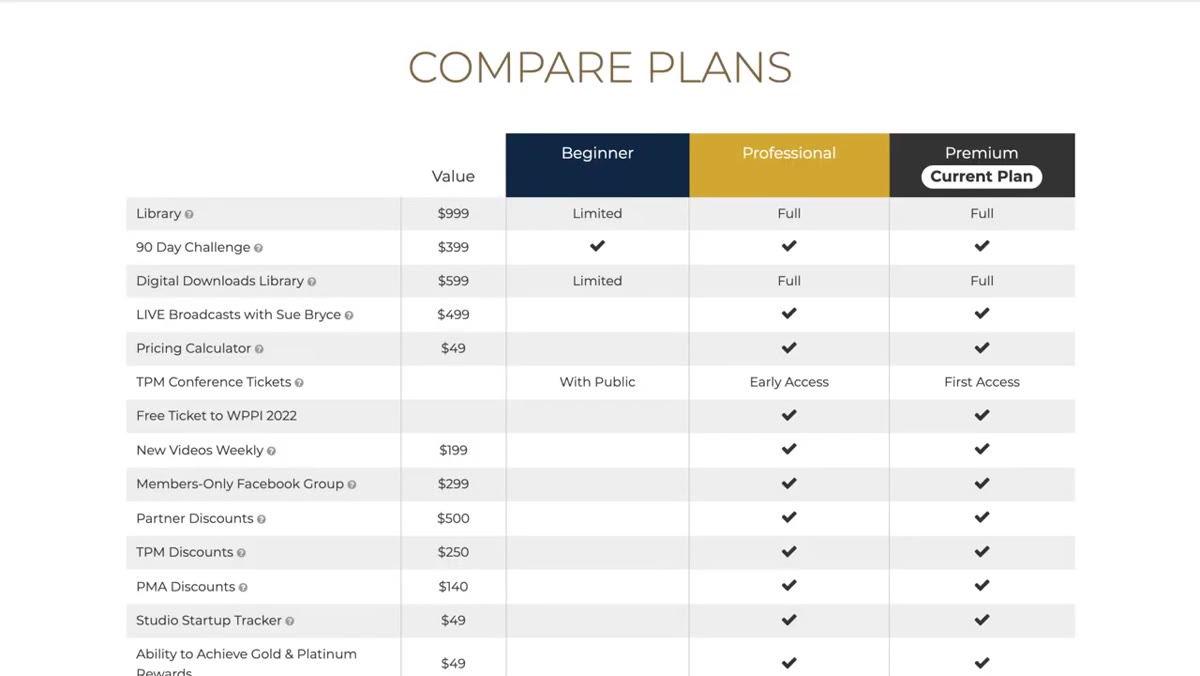 Membership page showing Beginner, Professional, and Premium tiers
The new membership levels, Beginner, Professional, and Premium, are not just pricing tiers. They determine which tools you can access and how much of the platform actually works for you. Before you pick a level, map out where your business actually is right now. Are you still figuring out what to charge? Are you post-booking but struggling with client management? Your honest answer should drive your tier decision, not which option feels the most aspirational.
Membership page showing Beginner, Professional, and Premium tiers
The new membership levels, Beginner, Professional, and Premium, are not just pricing tiers. They determine which tools you can access and how much of the platform actually works for you. Before you pick a level, map out where your business actually is right now. Are you still figuring out what to charge? Are you post-booking but struggling with client management? Your honest answer should drive your tier decision, not which option feels the most aspirational.
Step 2: Use the Pricing Calculator and Studio Startup Tracker as a Diagnostic, Not Just a Setup Tool
 Pricing calculator and studio startup tracker tools on screen
These two tools are listed almost as an afterthought in the video, but for anyone who has ever pulled a session fee out of thin air, they are the most valuable things on the page. The pricing calculator forces you to confront your actual cost of doing business. The studio startup tracker gives you a checklist-style framework for making sure you haven’t skipped a foundational step. I use a client experience checklist that’s 47 items long because I learned the hard way that the things you forget are the things that lose you clients. These tools are the equivalent of that list, but for the business itself.
Pricing calculator and studio startup tracker tools on screen
These two tools are listed almost as an afterthought in the video, but for anyone who has ever pulled a session fee out of thin air, they are the most valuable things on the page. The pricing calculator forces you to confront your actual cost of doing business. The studio startup tracker gives you a checklist-style framework for making sure you haven’t skipped a foundational step. I use a client experience checklist that’s 47 items long because I learned the hard way that the things you forget are the things that lose you clients. These tools are the equivalent of that list, but for the business itself.
Run your current numbers through the pricing calculator even if you’ve been shooting for years. You may find, like I did when I finally sat down with my accountant husband and looked at the real data, that your most profitable work isn’t what you assumed it was.
Step 3: Take the Portrait Masters Awards Seriously Now That They’re Open to Everyone
 Portrait Masters Awards and accreditation program overview
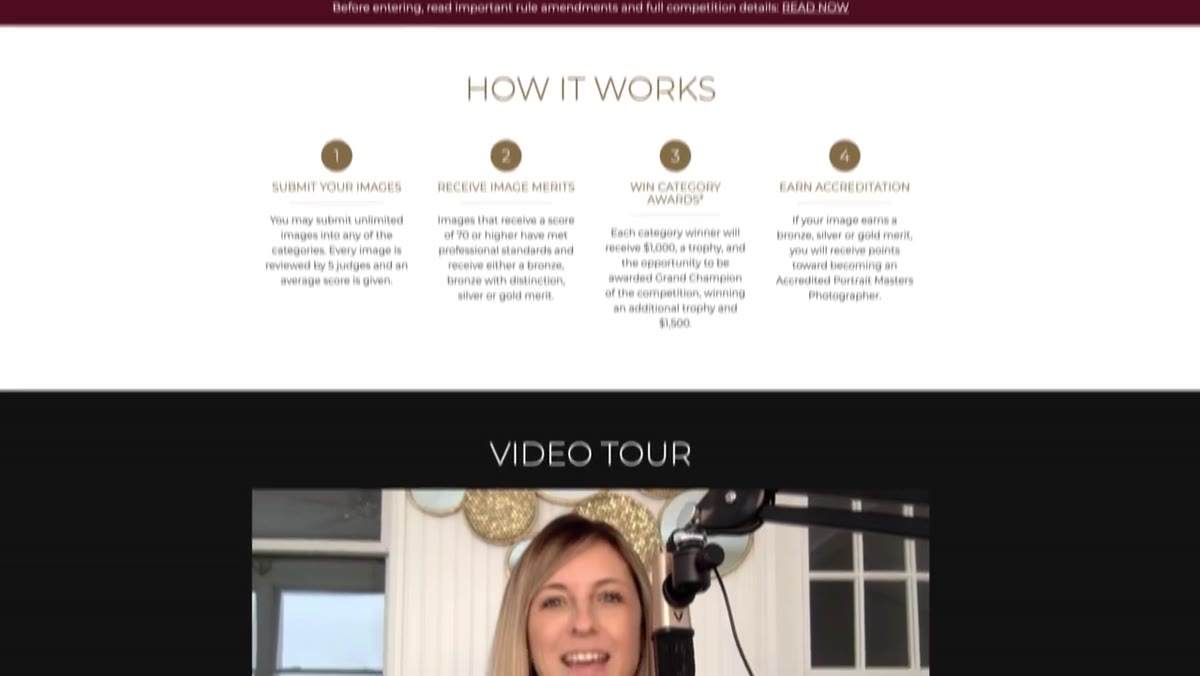
The Portrait Masters Awards program now runs three rounds per year and is open to all photographers, not just members. That matters because accreditation is one of the few external signals that actually moves the needle with higher-end clients. Cash prizes and portfolio merits are real, but the accreditation status is what I’d focus on. It gives prospective clients a credibility shortcut, and it gives you a concrete goal to shoot toward rather than the vague ambition of “getting better.”
Portrait Masters Awards and accreditation program overview
The Portrait Masters Awards program now runs three rounds per year and is open to all photographers, not just members. That matters because accreditation is one of the few external signals that actually moves the needle with higher-end clients. Cash prizes and portfolio merits are real, but the accreditation status is what I’d focus on. It gives prospective clients a credibility shortcut, and it gives you a concrete goal to shoot toward rather than the vague ambition of “getting better.”
The rotating challenge categories and guest judges from the industry are also worth paying attention to. Submitting to a category judged by someone whose work you respect forces a specific kind of self-evaluation that general portfolio review doesn’t replicate.
Step 4: Book a Folio Critique Session Before You Think You’re Ready
 Online folio critique session submission and live feedback format
This is the announcement I was most excited about. Small group folio critique sessions with PMA judges, mentors, or instructors mean you can get real, live feedback on your images without waiting for a conference or knowing the right people. Ten photographers per session. You get your work reviewed, and you get to hear nine other reviews, which is often where the real education happens.
Online folio critique session submission and live feedback format
This is the announcement I was most excited about. Small group folio critique sessions with PMA judges, mentors, or instructors mean you can get real, live feedback on your images without waiting for a conference or knowing the right people. Ten photographers per session. You get your work reviewed, and you get to hear nine other reviews, which is often where the real education happens.
Don’t wait until your portfolio feels polished enough to submit. Submit now, while it still has problems. The critique is most useful when there’s something to fix. Waiting until you feel confident means waiting until you’ve already figured it out on your own, which defeats the purpose.
Step 5: Get on the Mailing List for the Portrait Masters Conference and Plan Your Budget Now
 Portrait Masters Conference announcement with in-person event details
The Portrait Masters Conference is returning, and while dates weren’t confirmed in this video, the message was clear: tickets will sell out fast and access levels will vary by membership tier, including VIP options. If you’ve never been to an industry conference as a working photographer, not a hobbyist, the return on investment is harder to predict but consistently underrated. Peer relationships and vendor connections built in person compound in ways that online networking doesn’t.
Portrait Masters Conference announcement with in-person event details
The Portrait Masters Conference is returning, and while dates weren’t confirmed in this video, the message was clear: tickets will sell out fast and access levels will vary by membership tier, including VIP options. If you’ve never been to an industry conference as a working photographer, not a hobbyist, the return on investment is harder to predict but consistently underrated. Peer relationships and vendor connections built in person compound in ways that online networking doesn’t.
Start budgeting for this now. Travel, accommodation, and ticket cost can add up to $1,500 to $3,000 depending on where you’re coming from and what tier you’re attending. Treating that as a business expense and planning for it in Q1 means it doesn’t blindside you in Q3.
Step 6: Buy One Course from the Store and Finish It Before Buying Another
 Portrait Masters store showing new course releases and upcoming content
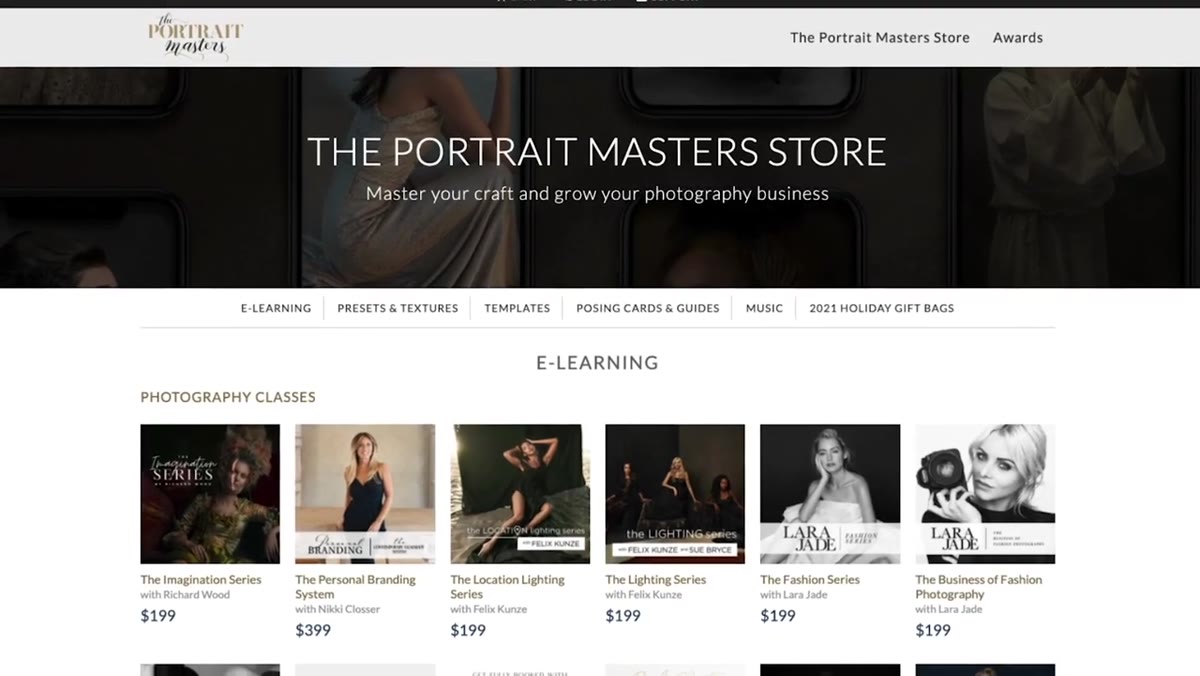
The Portrait System store released new courses covering creative conceptual work, personal branding photography, and social media bookings specifically through Facebook and Instagram. More are coming throughout the year. The trap with a content library this well-stocked is buying several courses and finishing none of them. Pick one that targets your single biggest bottleneck right now, not the most interesting-sounding topic. If bookings are the problem, the social media course is your answer. If the work itself feels uninspired, the creative series makes sense. One course, all the way through, implemented.
Portrait Masters store showing new course releases and upcoming content
The Portrait System store released new courses covering creative conceptual work, personal branding photography, and social media bookings specifically through Facebook and Instagram. More are coming throughout the year. The trap with a content library this well-stocked is buying several courses and finishing none of them. Pick one that targets your single biggest bottleneck right now, not the most interesting-sounding topic. If bookings are the problem, the social media course is your answer. If the work itself feels uninspired, the creative series makes sense. One course, all the way through, implemented.
What I’d Add From My Own Studio
The tools and programs The Portrait System announced are only useful if you have the habit of actually using them. I keep my studio metrics in a shared doc that I review every Monday morning, revenue per session, booking rate, average sale, client referral source. If I had started doing that in year one instead of year three, I would have raised my prices two years sooner. My parents ran a photography business for decades and nearly watched it fail because they never adjusted their pricing to match their costs. I watched that happen and still repeated a version of the same mistake.
Whatever tools you pick up from this platform, pair them with a weekly fifteen-minute review of your own numbers. The tools give you the framework. Your numbers tell you whether it’s working.
The single most important thing this video communicates isn’t any one feature. It’s that building a photography business is an ongoing, structured process, and the photographers who treat it that way consistently outperform the ones who rely on talent alone. Pick the membership level that matches where you actually are, use the pricing tools before you touch anything else, and get your work in front of a judge before you feel ready.
Watch the full tutorial on YouTube to hear the full breakdown directly from The Portrait System team.
Comments
Leave a Comment