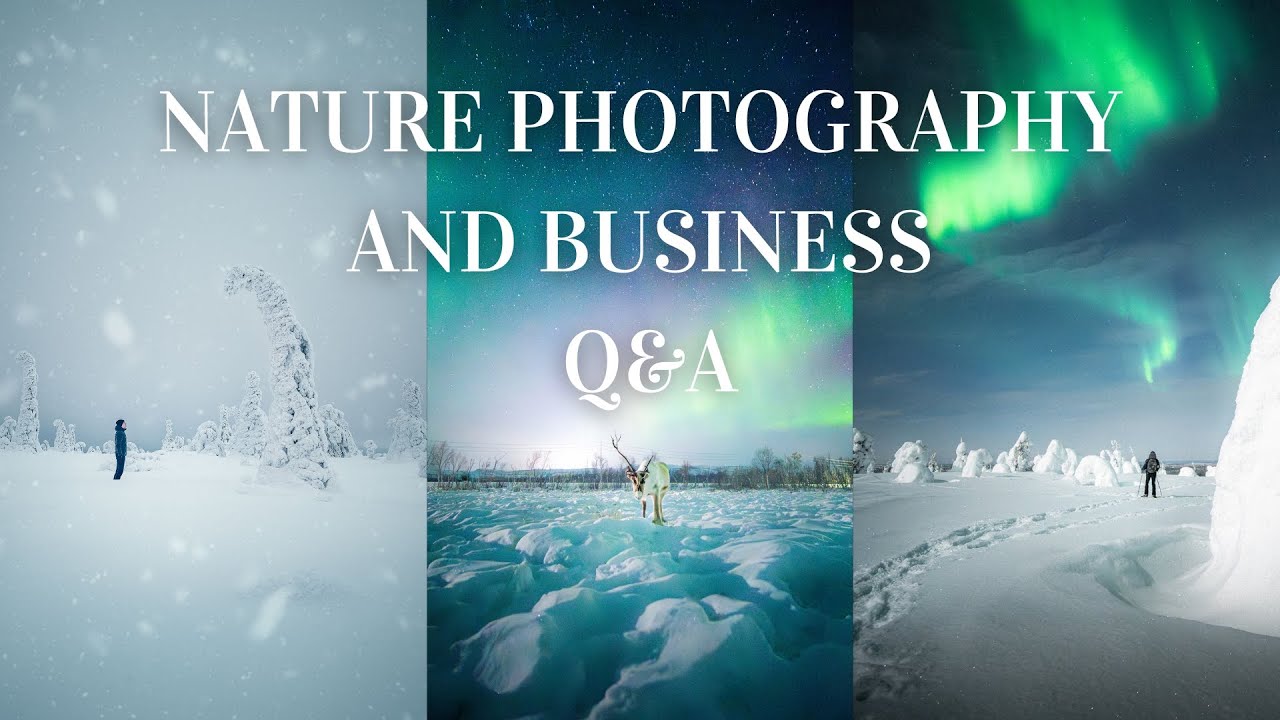
I get some version of this question at least twice a week in my studio inbox: “Nicole, I have a full-time job and I want to start shooting professionally — where do I even begin?” Most people asking that question are also tangled up in gear anxiety, wondering if their camera is holding them back, and second-guessing whether they can build any kind of audience or income without going all-in immediately. These are real friction points, and they keep talented photographers stuck longer than they need to be.
Watch the full tutorial on YouTube
In this Hugo Korhonen Q&A from early 2026, the travel and storytelling photographer works through a sharp set of audience questions covering gear decisions, building a photography business while employed elsewhere, growing and monetizing social content, and what it actually felt like to start from scratch. Hugo is candid in a way that a lot of photography creators aren’t, and his answers cut through the noise that usually surrounds these topics. I watched it twice, took notes, and want to walk you through the parts that matter most for photographers who are trying to build something real.
Step 1: Stop Waiting for Better Gear to Make You Better
 Hugo holding Sony A7 III camera, explaining his gear choice
Hugo has been shooting on a Sony A7 III for over seven years. Not because he can’t afford something newer, but because he’s honest with himself about what an upgrade would actually change. His answer: nothing about his photography would improve. The skill ceiling on his current camera is nowhere near as low as the temptation to upgrade suggests.
Hugo holding Sony A7 III camera, explaining his gear choice
Hugo has been shooting on a Sony A7 III for over seven years. Not because he can’t afford something newer, but because he’s honest with himself about what an upgrade would actually change. His answer: nothing about his photography would improve. The skill ceiling on his current camera is nowhere near as low as the temptation to upgrade suggests.
This is the mindset shift that separates photographers who make money from photographers who spend money. Before you invest in a new body, ask yourself whether you have fully exploited what your current setup can do. If you haven’t nailed your exposure triangle, your compositional instincts, and your post-processing workflow, a newer sensor is not going to fix that. Use the upgrade budget on education, a marketing consultation, or even just printing your portfolio and putting it in front of actual clients.
Step 2: Know What the Newer Features Actually Solve (and Whether You Need Them)
 Hugo discussing pre-capture feature on newer Sony models
Hugo does acknowledge one feature from the Sony A7 IV and A7 V worth noting: a pre-capture mode that begins recording images before you fully press the shutter. For wildlife and fast-action photographers, that matters. For portrait, wedding, or commercial shooters, it almost certainly does not.
Hugo discussing pre-capture feature on newer Sony models
Hugo does acknowledge one feature from the Sony A7 IV and A7 V worth noting: a pre-capture mode that begins recording images before you fully press the shutter. For wildlife and fast-action photographers, that matters. For portrait, wedding, or commercial shooters, it almost certainly does not.
This is a useful framework for evaluating any gear decision. Identify the specific shooting scenario where your current tool fails you, then check whether the upgrade actually addresses that scenario. If you mostly shoot lifestyle sessions in controlled lighting, the pre-capture argument is irrelevant. Be surgical about your gear reasoning, not aspirational.
Step 3: Build Your Business Around What You Already Post
 Hugo explaining content-to-product alignment for monetization
The monetization question Hugo gets asked is one I hear constantly: someone’s video goes viral, they get a spike in followers, and then nothing converts into actual income. Hugo’s diagnosis is clean. If what you’re selling has no logical connection to what you’re posting, the audience you’re building will not buy from you. The content and the offer need to share the same universe.
Hugo explaining content-to-product alignment for monetization
The monetization question Hugo gets asked is one I hear constantly: someone’s video goes viral, they get a spike in followers, and then nothing converts into actual income. Hugo’s diagnosis is clean. If what you’re selling has no logical connection to what you’re posting, the audience you’re building will not buy from you. The content and the offer need to share the same universe.
For Hugo, everything lines up. His photography content feeds directly into his mentorship and business education products. Viewers see the work, want to learn the process, and his offer is exactly that. Before you worry about scale, build that bridge. If you shoot weddings, your content should demonstrate your eye, your client experience, and your process. If you want to sell presets, your content should show what those presets actually do to real images. Misalignment between content and offer is one of the most common and most fixable reasons photographers struggle to monetize a growing audience.
Step 4: Starting While Employed Is a Strategy, Not a Compromise
 Hugo introducing how to start a photography business during school or a day job
Hugo addresses how he thought about building a creative career without treating the day job or school as the enemy. The key reframe is that steady income from your 9-to-5 removes desperation from your pricing. Photographers who need every client to pay rent tend to undercharge, oversell, and burn out. Photographers who have a financial cushion can wait for the right clients and charge rates that actually reflect their value.
Hugo introducing how to start a photography business during school or a day job
Hugo addresses how he thought about building a creative career without treating the day job or school as the enemy. The key reframe is that steady income from your 9-to-5 removes desperation from your pricing. Photographers who need every client to pay rent tend to undercharge, oversell, and burn out. Photographers who have a financial cushion can wait for the right clients and charge rates that actually reflect their value.
Use the employed phase deliberately. Shoot on weekends. Build your portfolio in the exact niche you want to work in. Don’t take every job that comes your way — take the jobs that move your portfolio in the right direction. Track your hours and your revenue so you know exactly when the math supports a transition. I ran my studio as a side business for fourteen months before I went full-time, and the patience I had during that phase shaped everything about how I priced and positioned once I made the jump.
Step 5: Expect Slow Channel and Audience Growth Early
 Hugo previewing question about early struggles with channel growth
Hugo mentions the question of early channel struggles, and his acknowledgment that the growth process is genuinely difficult at the start is worth sitting with. Most photographers give up on content creation right before it would have compounded. The early phase requires you to publish consistently without meaningful feedback, which is psychologically harder than most people anticipate.
Hugo previewing question about early struggles with channel growth
Hugo mentions the question of early channel struggles, and his acknowledgment that the growth process is genuinely difficult at the start is worth sitting with. Most photographers give up on content creation right before it would have compounded. The early phase requires you to publish consistently without meaningful feedback, which is psychologically harder than most people anticipate.
Set a publishing goal you can sustain for twelve months regardless of performance. For most photographers that is one piece of content per week, not five. Quality and consistency over time beat quantity and burnout every time. Track your analytics monthly, not daily. Daily tracking creates anxiety without actionable information.
Step 6: Community Recognition Is a Lagging Indicator of Real Traction
 Hugo answering whether people recognize him in public
Hugo’s answer about being recognized in public is surprisingly useful from a business perspective. He notes it happens, but less than you’d expect given his audience size, largely because he’s not in the physical locations where most of his followers live. This is a healthy reminder that online audience and local market presence are two different things that require different strategies.
Hugo answering whether people recognize him in public
Hugo’s answer about being recognized in public is surprisingly useful from a business perspective. He notes it happens, but less than you’d expect given his audience size, largely because he’s not in the physical locations where most of his followers live. This is a healthy reminder that online audience and local market presence are two different things that require different strategies.
If your goal is local portrait or wedding bookings, being recognized by your Instagram following in another city doesn’t pay your bills. Local SEO, vendor relationships, and referral networks matter more for that revenue stream than follower count. Know which metric actually connects to the income you want.
What I’d Add From the Studio Side
Audience alignment and content monetization are things Hugo covers well, but I want to add one layer from the business operations side. Once your content and your offer are aligned, the next thing that kills momentum is a sloppy client intake process. I lost a significant contract early in my career because my agreement was vague on deliverable timelines, and the client walked. Every point of friction between discovery and booking is a place where interested people quietly disappear.
If you’re building a photography business alongside a day job or school, audit your inquiry process before you focus on growing your audience. A smaller, warmer audience with a clean intake flow will generate more revenue than a large audience that hits a confusing booking page.
The single most important idea in Hugo’s Q&A is this: your gear ceiling and your income ceiling are set by your decisions and your systems, not by your equipment. The camera question is almost always a distraction from the harder and more valuable work of building something sustainable.
Watch the full tutorial on YouTube and use the timestamps to jump directly to the questions most relevant to where you are right now.
Comments (4)
This should be required reading for anyone starting out.
Great breakdown. The step-by-step approach really helps.
Couldn't agree more. I've seen this make a huge difference in compositing work specifically.
Simple but effective. Sometimes that's all you need.
Leave a Comment