I watched my parents almost lose their photography business twice. Not because they lacked talent. Not because clients stopped calling. Because the overhead kept climbing and the pricing never did. By the time I opened my own portrait studio in Miami, I was terrified of making the same mistake from a different direction, spending my way into a corner before the business had a chance to breathe.
That fear is exactly why this CreativeLive tutorial from Zack Arias hit me so hard the first time I watched it. Watch the full tutorial on YouTube - it’s short, but don’t let that fool you. Arias isn’t talking about apertures or lighting ratios here. He’s talking about the business decision that photographers get wrong more than almost any other: loading up on gear before the revenue exists to support it.
What follows is a breakdown of the core principles from that tutorial, with the practical layer I’ve added from running a working studio. If you’re in the early years of your photography business, or if you’ve been eyeing a new lens like it’s going to solve a client problem, this is the conversation you need.
Step 1: Decide Your Funding Rule Before You Buy Anything
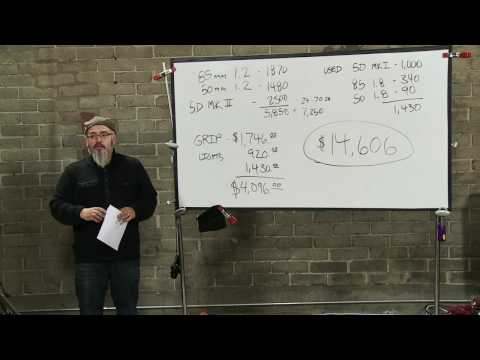
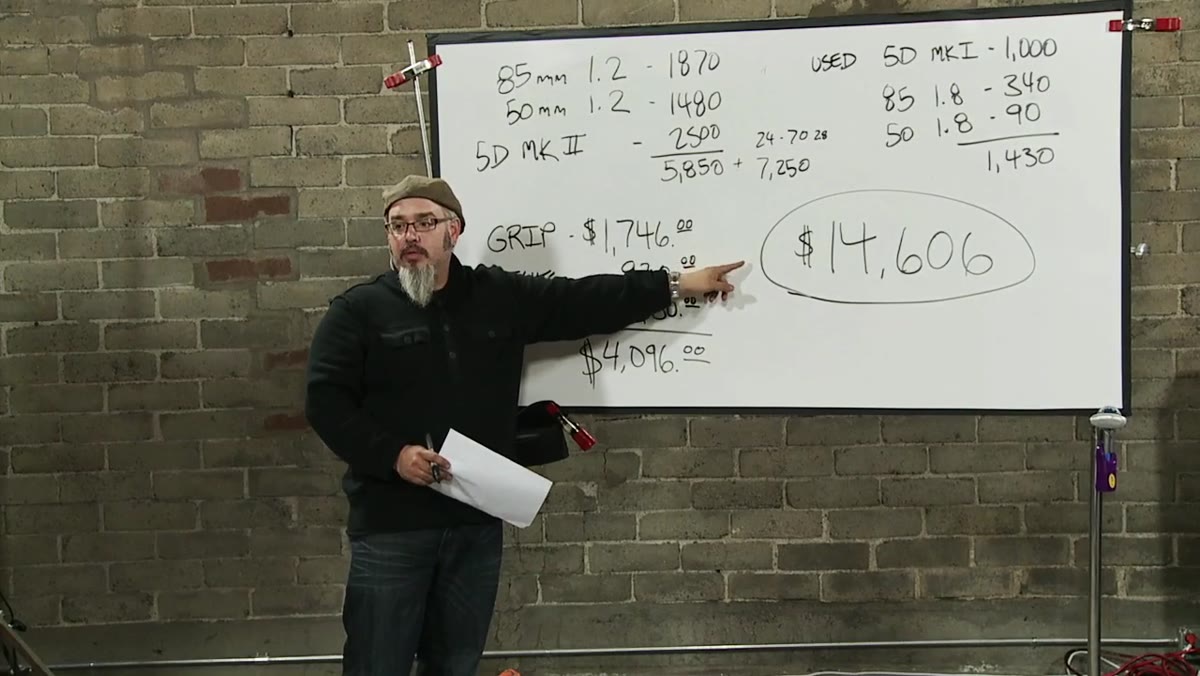 Zack on camera warning against debt-funded gear purchases
The first move isn’t picking a product. It’s setting a personal policy on how you’ll fund equipment purchases. Arias draws a clear line: if buying a piece of gear requires taking on debt, the default answer is no. Cash is the goal, and he’s specific that “cash” does not mean raiding a retirement account. It means money the business has actually earned.
Zack on camera warning against debt-funded gear purchases
The first move isn’t picking a product. It’s setting a personal policy on how you’ll fund equipment purchases. Arias draws a clear line: if buying a piece of gear requires taking on debt, the default answer is no. Cash is the goal, and he’s specific that “cash” does not mean raiding a retirement account. It means money the business has actually earned.
Write this down somewhere visible in your workspace. Your funding rule should exist before you’re standing in a camera store or watching a gear review at midnight. Decisions made with desire and a credit card rarely look smart two years later.
Step 2: Know Yourself as a Debt Manager
 Zack discussing personality types and credit card discipline
Arias makes an honest admission here that I respect enormously: he knows he’s not wired to handle debt responsibly. He’s the creative who tells himself the minimum payment is manageable, then passes the balance down through the years. Some photographers are genuinely disciplined with credit. Most of us, if we’re honest, are not.
Zack discussing personality types and credit card discipline
Arias makes an honest admission here that I respect enormously: he knows he’s not wired to handle debt responsibly. He’s the creative who tells himself the minimum payment is manageable, then passes the balance down through the years. Some photographers are genuinely disciplined with credit. Most of us, if we’re honest, are not.
Before you rationalize a purchase with “I’ll pay it off in three months,” think back through your actual financial history. Did you pay off the last thing you put on a card in three months? If the answer is no, treat credit as off-limits for gear. This isn’t judgment. It’s pattern recognition.
Step 3: Separate Gear Quality from Photo Quality in Your Head
 Zack explaining limited equipment still requires excellent results
Here’s where Arias challenges the most common beginner excuse: the idea that not having premium equipment justifies weaker results. He flips this completely. Working with modest gear doesn’t lower the standard. If anything, it raises the pressure on your technical skill, your eye, and your relationship with the client.
Zack explaining limited equipment still requires excellent results
Here’s where Arias challenges the most common beginner excuse: the idea that not having premium equipment justifies weaker results. He flips this completely. Working with modest gear doesn’t lower the standard. If anything, it raises the pressure on your technical skill, your eye, and your relationship with the client.
This reframe matters for your marketing, too. Clients are not hiring your camera body. They’re hiring your judgment, your consistency, and the experience you create for them. I have a 47-point client experience checklist I run before every session, and not one item on it mentions my gear. Build systems that deliver results regardless of what’s in your bag.
Step 4: Let the Business Earn the Upgrade
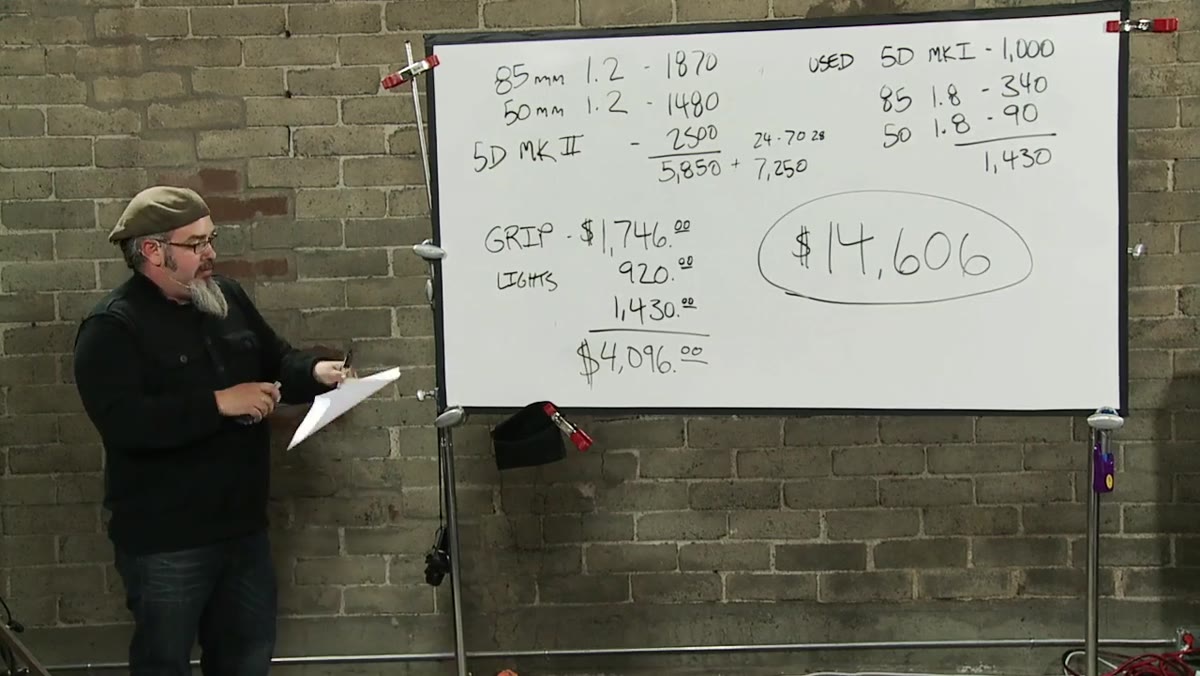
 Zack referencing his $400 strip lights and how recently he acquired them
Arias mentions a set of strip lights he loves, each running around $400. He also mentions that in nearly seven years of running his business, he’d only owned them for about a month at the time of filming. That detail is the lesson. Premium modifiers, high-end strobes, specialty lenses: these are rewards for a business that has already proven itself, not tools you buy to prove you’re serious.
Zack referencing his $400 strip lights and how recently he acquired them
Arias mentions a set of strip lights he loves, each running around $400. He also mentions that in nearly seven years of running his business, he’d only owned them for about a month at the time of filming. That detail is the lesson. Premium modifiers, high-end strobes, specialty lenses: these are rewards for a business that has already proven itself, not tools you buy to prove you’re serious.
Map your gear wish list to revenue milestones. Want an $800 octabank? Decide what monthly or annual revenue number has to be consistently real before you buy it. This keeps the purchase grounded in business logic rather than excitement.
Step 5: Play the Long Game on Business Survival
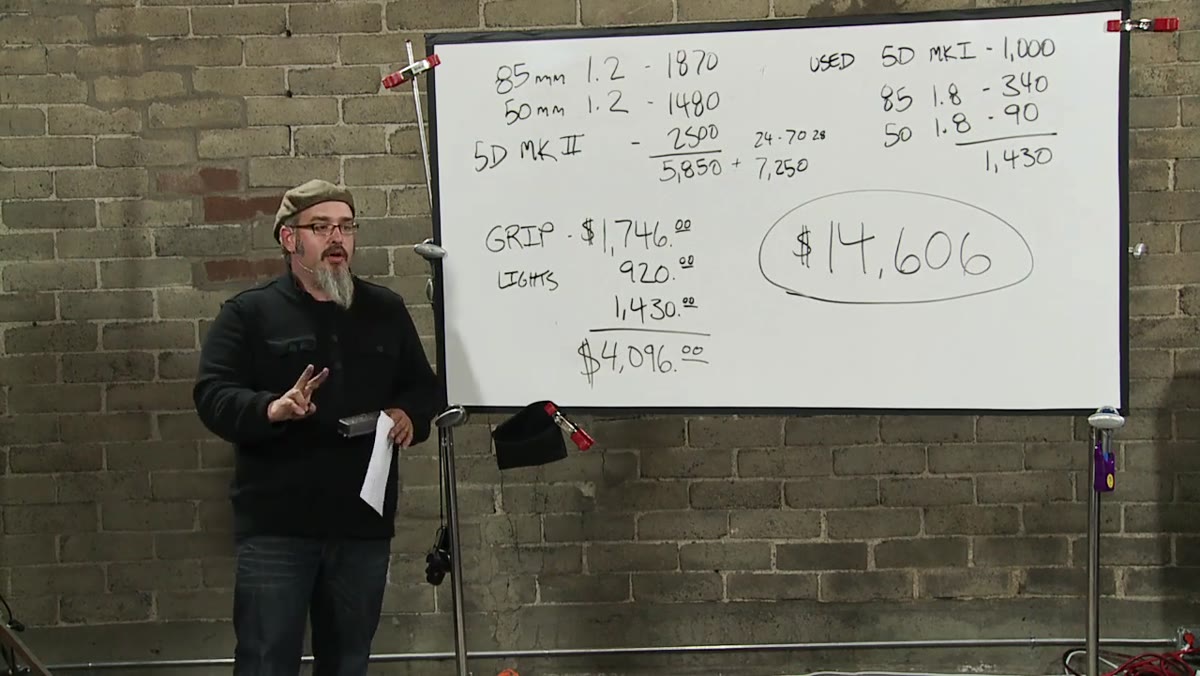 Zack describing his 20-year vision of being in business with upgraded gear
The most underrated part of this tutorial is when Arias describes what he actually wants his life to look like in 20 years. Not the fanciest studio. Not the most expensive kit. Two things: upgraded gear that he earned, and the fact that he’s still in business taking pictures. That’s it.
Zack describing his 20-year vision of being in business with upgraded gear
The most underrated part of this tutorial is when Arias describes what he actually wants his life to look like in 20 years. Not the fanciest studio. Not the most expensive kit. Two things: upgraded gear that he earned, and the fact that he’s still in business taking pictures. That’s it.
When you’re early in building a photography business, the goal isn’t to impress other photographers with your setup. The goal is to still be operating five years from now. Sustainable beats impressive every single time, because you can’t book clients from a business that closed.
Step 6: Recognize the Gear Flex Trap
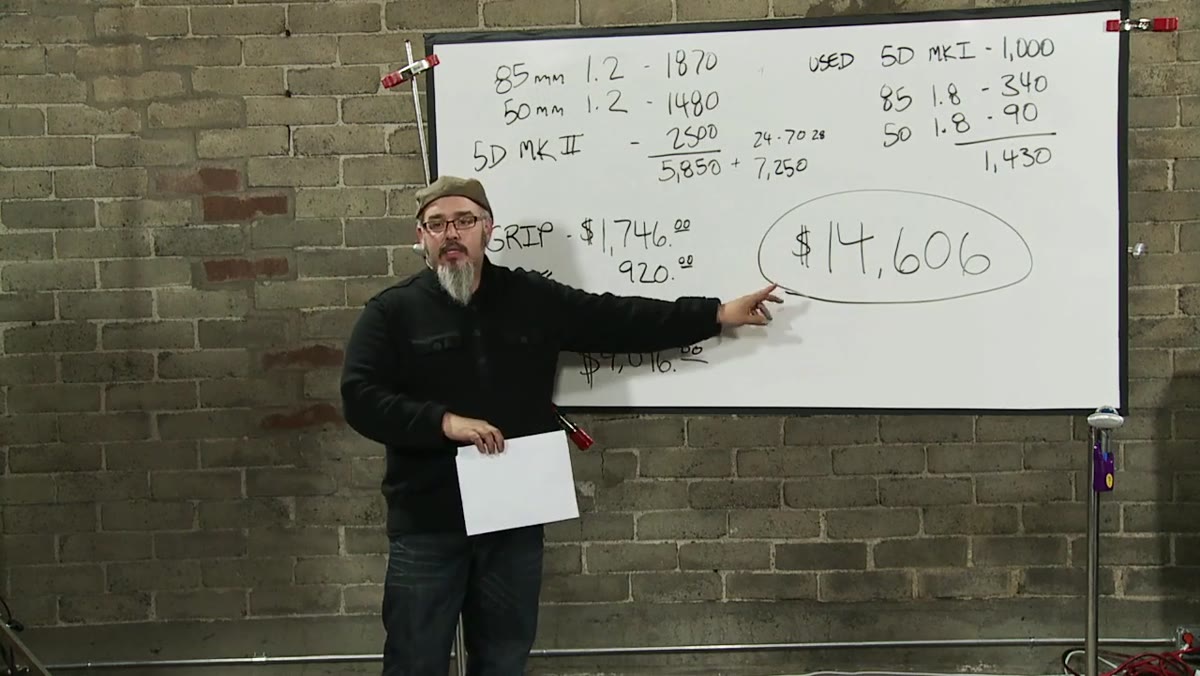 Zack warning that impressive gear won’t save a business drowning in bills
Arias closes with a scenario that should make every photographer uncomfortable: you walk into a shoot with the most impressive flash setup in the room, everyone admires it, and two years later you’re selling all of it off because you can’t cover your bills. The gear looked like success. It was actually the mechanism of failure.
Zack warning that impressive gear won’t save a business drowning in bills
Arias closes with a scenario that should make every photographer uncomfortable: you walk into a shoot with the most impressive flash setup in the room, everyone admires it, and two years later you’re selling all of it off because you can’t cover your bills. The gear looked like success. It was actually the mechanism of failure.
This is the trap social media makes worse. When you see another photographer’s behind-the-scenes post loaded with beautiful equipment, you’re not seeing their balance sheet. You’re not seeing their outstanding invoices or their credit utilization. Compare your business to your own last quarter, not to someone else’s gear closet.
What I’d Add From My Own Studio
The one thing Arias doesn’t get into, probably because it’s a whole other conversation, is the rental option. In Miami I have access to a solid rental house, and for the first three years of my studio I rented almost every modifier I used for paid shoots. I was running the gear through real client work, figuring out what actually mattered to my results before committing. When I finally bought my own strip lights, I already knew exactly how I used them and how often they’d earn their place in my budget.
If your market has a rental option, use it aggressively in the early years. Let clients pay for your access to premium equipment before you own it outright. Your cash flow will thank you.
The single most important idea in this entire tutorial is this: the photographer who survives is more valuable than the photographer who impresses. Gear impresses. Longevity builds a real business. Make every spending decision through that lens and you’ll be in far better shape than most of the photographers you’re currently comparing yourself to.
Watch the full tutorial on YouTube - Zack Arias delivers this with the kind of candor you rarely get in photography education, and it’s worth your full attention.
Comments
Leave a Comment