I spent most of last quarter wondering why my inquiry rate had gone flat. My work hadn’t changed. My pricing was competitive. My Instagram was consistent. But the pipeline felt thin in a way I couldn’t explain by season alone. I knew I needed to stop guessing and start looking at my marketing with fresh eyes.
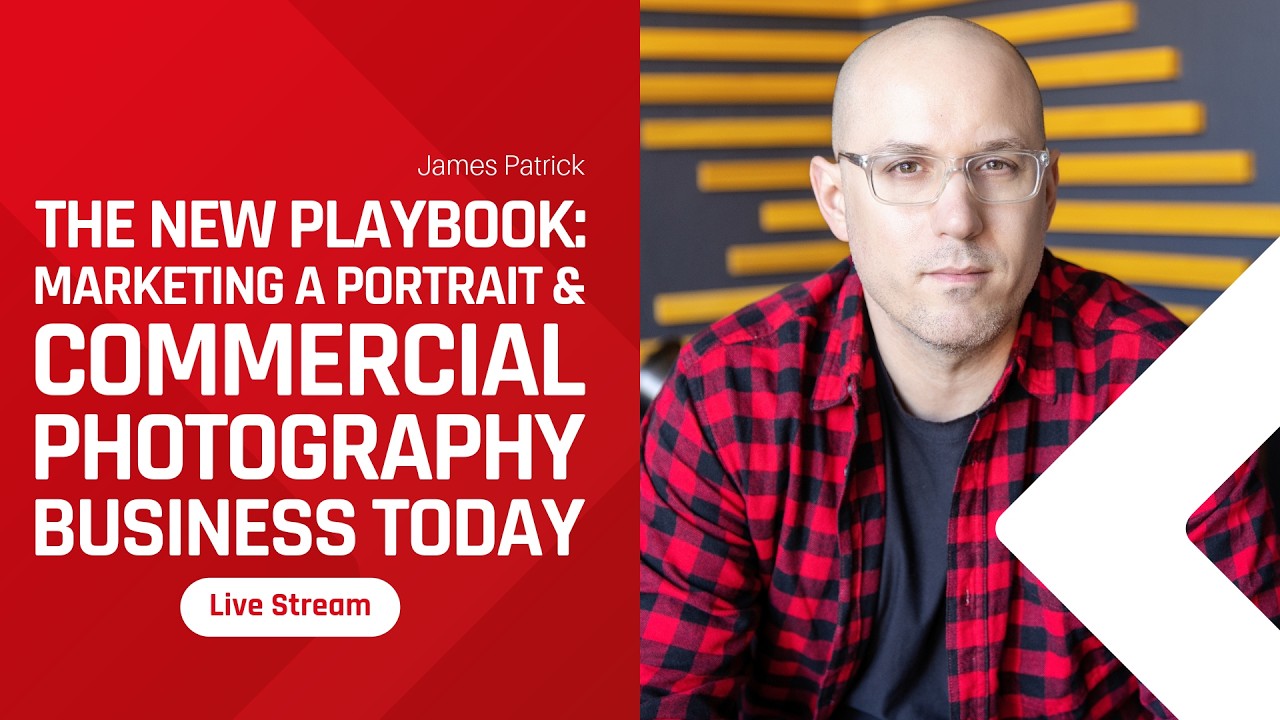
That’s exactly what pushed me to sit down with James Patrick’s session on CreativeLive, where he rebuilds the photography marketing playbook from the ground up. Not tweaks to an old system. A genuine rethinking of how portrait and commercial clients actually find and choose a photographer right now.
Watch the full tutorial on YouTube
What the Old Playbook Got Wrong
Patrick opens with a sharp observation: most marketing advice photographers get is either outdated, totally generic, or disconnected from how the industry actually operates. That hit me directly. I’ve absorbed a lot of “post consistently and engage with your audience” advice over the years. And while that’s not wrong, it’s incomplete in a way that costs real money.
The session focuses on two distinct markets, portrait and commercial/editorial, because the client journey for each is genuinely different. A family looking for a portrait photographer is not making decisions the same way a brand manager hiring for a product campaign is. Patrick treats these as separate problems, and that clarity alone reframes how you should be thinking about your channels.
The core argument is this: photographers are still pouring energy into channels they’ve always used, not because those channels are converting, but because they’re familiar. Instagram gets the attention. Referrals stay passive. And the tactics that are actually working right now get ignored because they feel either too simple or too uncomfortable.
The Channels That Are Actually Converting
Patrick maps out four main marketing channels: social media, content marketing, outbound outreach, and PR. The honest breakdown of each is where this session earns its time.
Social media, he argues, has shifted from a discovery tool to a credibility tool. Clients who already found you somewhere else will check your Instagram to confirm you’re legitimate. That’s a very different job than expecting someone to scroll their feed and book a shoot. Posting beautiful work still matters, but treating social as your primary acquisition channel is a strategic mistake many photographers are still making.
Content marketing, on the other hand, is underrated in the photography industry specifically because photographers resist writing. Patrick makes the case for SEO-driven content, blog posts and articles that answer the questions your ideal clients are actually searching for, as a long-game channel that compounds. One well-optimized post can drive inquiries for years. A reel has a 48-hour shelf life.
Outbound is where a lot of photographers check out mentally. Cold outreach feels salesy, and nobody went into photography to cold email art directors. But Patrick reframes this as the most direct path to commercial bookings. He walks through a straightforward structure: identify the decision-maker, research their current work and brand aesthetics, and send a short, specific message that connects your portfolio to a problem they actually have. Not “I’d love to work together.” Something like, “I noticed your recent campaign leaned heavily on lifestyle imagery. Here’s a recent project where I did something similar for a comparable brand.” The specificity is what separates a message that gets a reply from one that gets archived.
PR, rounding out the four, covers editorial placements, industry features, and being quoted as an expert. Patrick positions this as a credibility multiplier. It doesn’t generate direct bookings at scale, but it raises your authority ceiling, meaning clients who might have considered you are now more confident pulling the trigger.
How to Prioritize Instead of Trying Everything
One of the most practical pieces of the session is Patrick’s framework for prioritizing channels based on where you actually are in your business. Early-stage photographers trying to build a client base need direct outreach and referral activation first. Mid-stage businesses with some traction should invest in content and SEO because they have work worth writing about. Established studios can afford to layer in PR because they have credibility to amplify.
This staged approach matters because the biggest mistake I see photographers make, and I’ve made it myself, is trying to run every channel simultaneously and executing all of them at 40 percent. Patrick is explicit: one channel done well at 100 percent will outperform five channels done poorly every single time.
Where I’d Push Back Slightly
I want to add one nuance from my own work that Patrick’s session doesn’t address at length. The referral channel, which he describes as passive and unpredictable, can be made much more systematic than most photographers realize.
In my studio, I’ve built a deliberate post-session follow-up sequence that includes a check-in email 30 days after delivery, a reminder around the anniversary of a family’s session, and a direct ask for a referral tied to a specific incentive. Since I formalized that process, referrals have gone from random and unpredictable to a consistent percentage of my monthly inquiries. Patrick’s point that referrals alone aren’t a scalable pipeline is true. But a structured referral system behaves much more like a marketing channel than most photographers give it credit for.
That’s not a contradiction of what he’s teaching. It’s an extension worth layering in once you’ve addressed the foundational gaps he identifies.
The One Thing to Take Away
If you leave this session with one shift, make it this: stop measuring marketing effort by how much you’re doing and start measuring it by what’s actually driving bookings. Track your inquiry sources for 90 days. The data will tell you where to put your energy, and it will almost certainly surprise you.
Watch the full session on CreativeLive to get Patrick’s exact outreach templates and the visual walkthrough of how to map your marketing channels against your specific business goals: https://www.youtube.com/watch?v=bqWr5O4e45w
Comments (4)
This should be required reading for anyone starting out.
Well explained. I think my audience would really benefit from this — mind if I link to it?
Clear and practical. No fluff. Appreciate that.
Great breakdown. The step-by-step approach really helps.
Leave a Comment