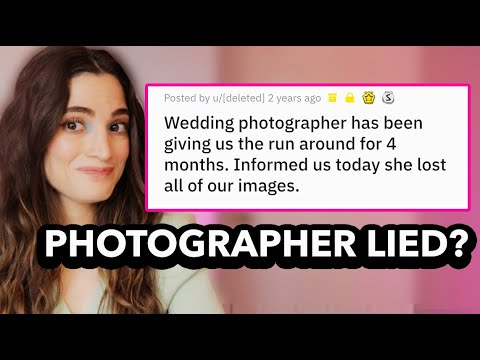
Every photographer I know has a version of the same recurring nightmare. The drive fails. The images are gone. The client is calling. I have been running my portrait studio for years now, and I still double-check my backup system before I leave every single shoot location. That anxiety is not irrational. It is useful, because it keeps me from becoming a case study.
In this Jessica Kobeissi reaction video, she breaks down a Reddit post from a couple whose wedding photographer spent four months lying, stalling, and making excuses before finally admitting the images were lost. Watch the full tutorial on YouTube. What makes this case valuable is not the drama. It is the specific, preventable failure points that show up one after another. Every single one of them is something you can build a system around right now, before anything goes wrong.
I once lost a $5,000 client because of a sloppy contract. After that, I built a 47-item client experience checklist. This situation in Jessica’s video would have triggered at least a dozen items on that list. Here is what the breakdown actually looks like, and what to do differently at each stage.
Step 1: Build a Redundant Backup System Before You Ever Shoot a Wedding
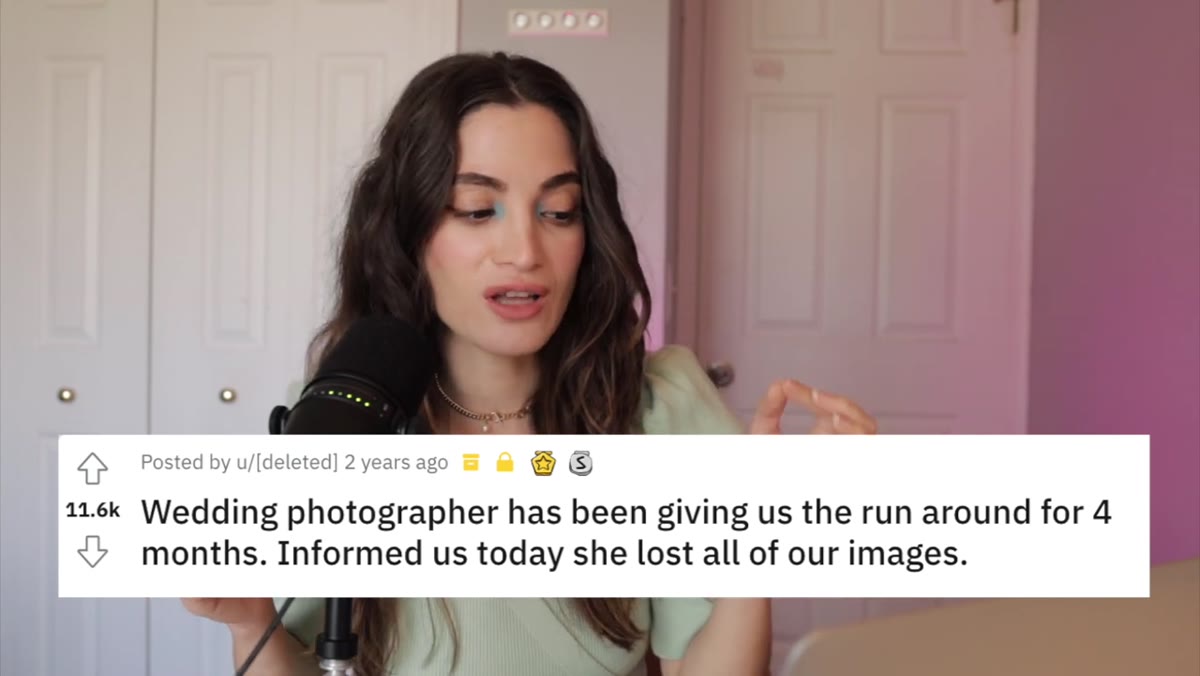 Reddit post describing photographer losing all wedding images
The photographer in this case lost every image except a 25-photo sneak peek. That tells us she had no redundant backup in place. A single card, a single drive, or a single cloud upload is not a backup strategy. It is a single point of failure.
Reddit post describing photographer losing all wedding images
The photographer in this case lost every image except a 25-photo sneak peek. That tells us she had no redundant backup in place. A single card, a single drive, or a single cloud upload is not a backup strategy. It is a single point of failure.
The professional standard is the 3-2-1 rule: three copies of your files, on two different types of media, with one stored off-site or in the cloud. For weddings specifically, I shoot dual-card cameras so images write simultaneously during the event. After the shoot, files go onto two separate external drives and into cloud storage before I sleep. No exceptions. The cost of a second card and a cloud subscription is nothing compared to the liability of losing irreplaceable images.
Step 2: Set a Realistic Delivery Timeline and Put It in the Contract
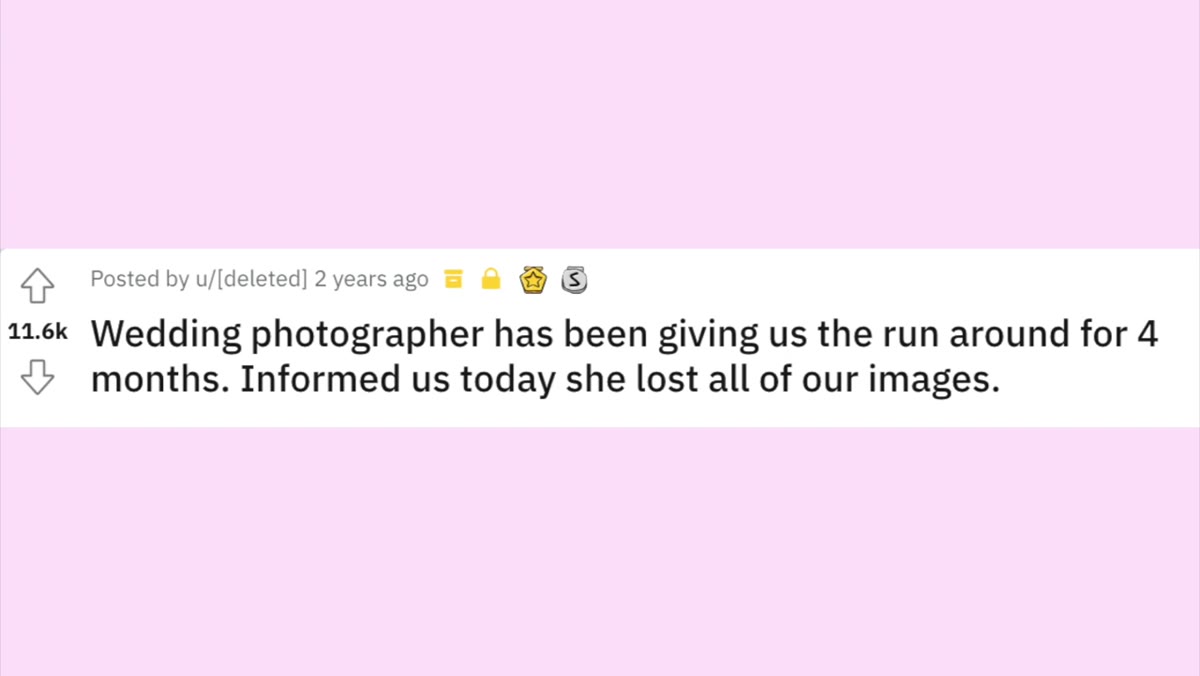 Reddit post text showing four months of excuses and missed deadlines
This couple waited four months and received nothing but moving deadlines. A vague or unwritten timeline is an invitation for exactly this kind of drift. Your contract should state a specific delivery window, in calendar days, from the date of the event. Mine says 60 days for full wedding galleries. That number is in the contract, in bold.
Reddit post text showing four months of excuses and missed deadlines
This couple waited four months and received nothing but moving deadlines. A vague or unwritten timeline is an invitation for exactly this kind of drift. Your contract should state a specific delivery window, in calendar days, from the date of the event. Mine says 60 days for full wedding galleries. That number is in the contract, in bold.
When life gets complicated and you need more time, you reach out proactively before the deadline, not after the client has already sent three follow-up messages. One short, honest email that says “I am running behind and here is my new delivery date” does more for your reputation than months of silence. It is not comfortable, but it is professional.
Step 3: Never Lie to a Client. Ever. About Anything.
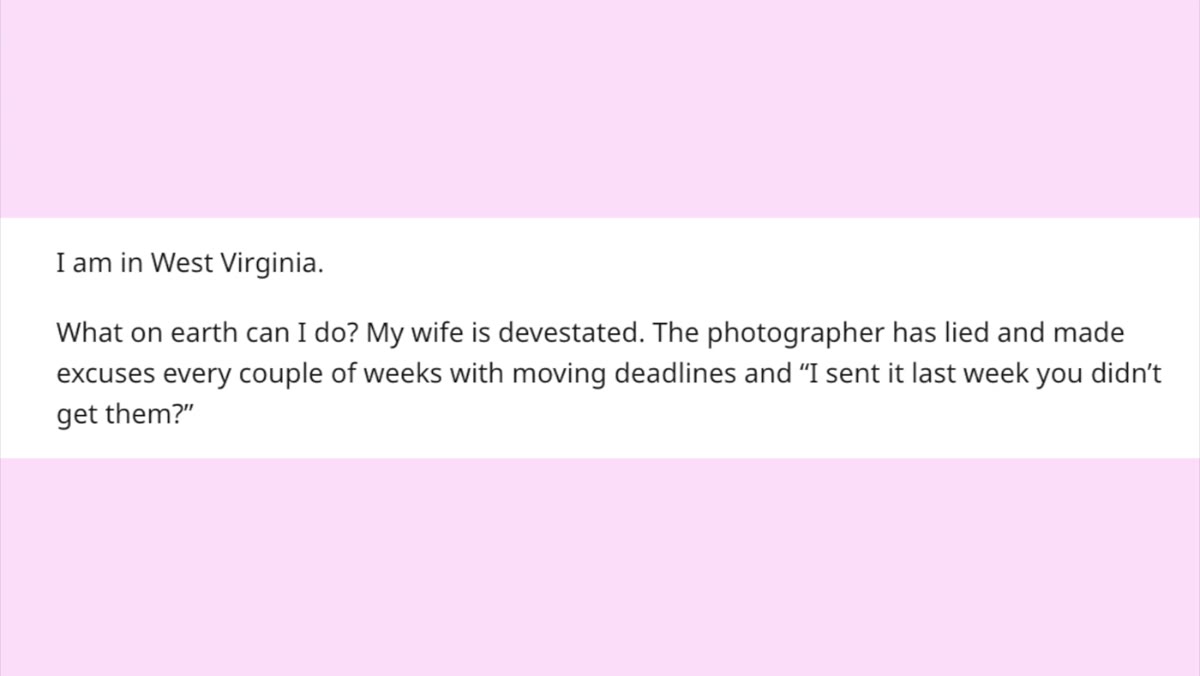 Reddit post describing photographer claiming she sent images that were never sent
Jessica’s reaction to this part of the story is worth watching on its own. The photographer told the couple she had already sent the USB drive. She had not. When the clients said it never arrived, the photographer claimed she would have to redo the work from scratch. There was no USB. There was no redo. There was just a lie stacked on top of another lie.
Reddit post describing photographer claiming she sent images that were never sent
Jessica’s reaction to this part of the story is worth watching on its own. The photographer told the couple she had already sent the USB drive. She had not. When the clients said it never arrived, the photographer claimed she would have to redo the work from scratch. There was no USB. There was no redo. There was just a lie stacked on top of another lie.
Lying to a client is not a short-term fix. It is a time bomb. The truth eventually comes out, and when it does, you have two problems instead of one: the original mistake and the cover-up. Clients can sometimes forgive an honest mistake. They almost never forgive being treated like they are too stupid to notice the deception. If you made a mistake, say so clearly and immediately. The conversation is hard for about ten minutes. The alternative is a lawsuit and a viral Reddit post.
Step 4: Offer a Full Refund Immediately When You Cannot Deliver
 Discussion of photographer not offering refund and going to court
The couple in this case had to consult a lawyer just to get their money back. The photographer had not offered a refund at all. She offered a free family photo session. Jessica’s frustration with this is entirely warranted: a free session is not remotely equivalent compensation for permanently lost wedding images.
Discussion of photographer not offering refund and going to court
The couple in this case had to consult a lawyer just to get their money back. The photographer had not offered a refund at all. She offered a free family photo session. Jessica’s frustration with this is entirely warranted: a free session is not remotely equivalent compensation for permanently lost wedding images.
The moment you know you cannot deliver what was contracted, the refund conversation happens first. Not second, not after you see if the client gets angry. First. If you genuinely cannot return the funds immediately because of financial hardship, you communicate that honestly, provide a written repayment plan, and follow through on it. Mentioning in your apology message that you are working three jobs and struggling financially is not a substitute for accountability. Your personal circumstances are real and I have sympathy for them, but they are not the client’s problem to absorb.
Step 5: Know What Additional Compensation Looks Like for a Total Loss
 Discussion of what compensation is appropriate after losing wedding photos
A refund is the floor, not the ceiling, when images are completely lost. Jessica makes this point directly. The couple will never have photographs of their wedding day. That loss has real emotional and legal weight. Small claims court and civil suits over situations like this are not unusual, and courts have awarded damages beyond the original contract price.
Discussion of what compensation is appropriate after losing wedding photos
A refund is the floor, not the ceiling, when images are completely lost. Jessica makes this point directly. The couple will never have photographs of their wedding day. That loss has real emotional and legal weight. Small claims court and civil suits over situations like this are not unusual, and courts have awarded damages beyond the original contract price.
Your contract should include a liability clause that specifies the maximum damages you can be held responsible for, typically capped at the value of the contract. Have a lawyer review this language before you use it. But more practically, carry professional liability insurance. It exists for exactly this kind of scenario and it is not expensive relative to what it protects.
What I Do Differently in My Own Studio
After watching Jessica work through this case, I kept thinking about the sneak peek detail. The photographer sent 25 images but none of them included photos of the bride with her family. That is not just a data loss problem. That is a coverage problem. It suggests the photographer may not have had a shot list or a second shooter to ensure complete coverage.
For every wedding I photograph, the client and I review a written shot list at least two weeks before the event. It covers family groupings, must-have moments, and any special requests. That document is in the client file and I bring a printed copy to the wedding. If something goes wrong technically, at least I know exactly what I was trying to capture and I can speak to it honestly. A thorough shot list also protects you contractually. It shows you had a professional plan and executed against it.
The single most important lesson from this entire breakdown is that systems protect you when your memory and your luck run out. A redundant backup system, a clear contract with delivery dates, and a policy of radical honesty with clients are not extras you add when your business grows. They are the foundation you build on from day one.
If you want to watch Jessica’s full reaction and hear her commentary as she reads through the original Reddit thread, the video is worth your time.
Watch the full tutorial on YouTube
Comments (2)
This is going in my reference folder. Incredibly useful.
This should be required reading for anyone starting out.
Leave a Comment