I had a moment last year that stopped me cold. A client came in for a portrait session, and halfway through, I realized I had no real protocol for what was happening. No structured conversation before we started. No clear agreement about how the images would be used. Just a loose verbal understanding and a lot of good intentions. She was lovely, the session went fine, and I still think about how badly it could have gone.
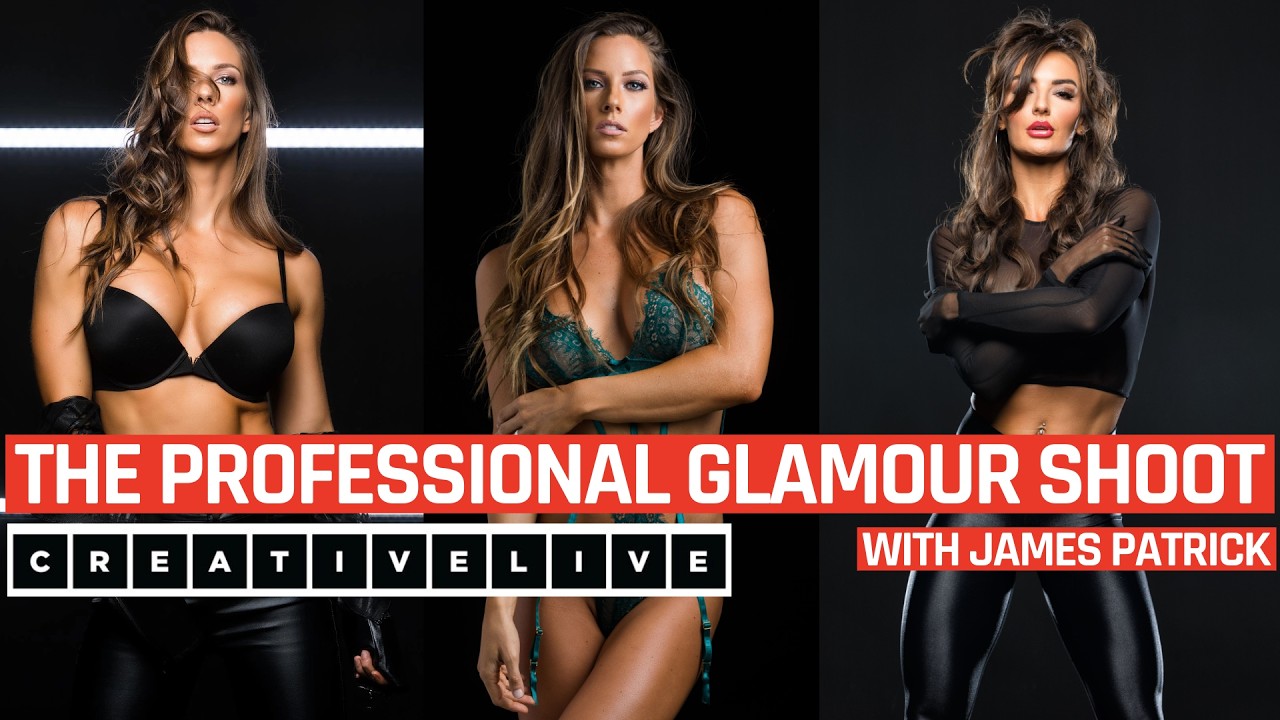
That gap, between being technically capable and being professionally prepared, is exactly what James Patrick addresses in his CreativeLive tutorial on glamour photography. Watch the full tutorial on YouTube before you book another shoot in this genre. It is one of the most complete treatments of both the creative and business sides of glamour I have come across, and I say that as someone who tracks her studio’s metrics obsessively and still found things here that tightened up my approach.
Lighting for Skin, Not Just for Light
Most lighting tutorials teach you to light a scene. Patrick teaches you to light skin, which is a completely different problem. His starting point is understanding how light wraps around facial structure and where shadow becomes flattering versus where it becomes harsh. He works with a modified Rembrandt setup but adjusts the key-to-fill ratio based on the subject’s skin tone and bone structure rather than applying a fixed rule.
His general working ratio sits around 3:1 for most subjects, dropping to 2:1 for clients with deeper skin tones to preserve detail in the shadows. He uses a large octabox as his key, positioned roughly 45 degrees off-axis and elevated slightly above eye level, with a silver reflector on the fill side rather than a second strobe. This keeps the light feeling natural and directional while still giving you control over the shadow depth. The key distinction he makes is that glamour lighting should imply dimension, not demonstrate it. You are not trying to prove you know how to light. You are trying to make someone look and feel extraordinary.
Posing as Direction, Not Instruction
This is where Patrick separates himself from the average tutorial. He does not give poses. He gives directions toward an emotional state, and the pose emerges from that. Instead of telling a subject where to put their hands, he talks about stillness, about attitude, about what the image is communicating. The physical arrangement follows the psychological one.
His practical method involves verbal prompts paired with very small physical adjustments. He might cue a subject with something like “hold that” after they land somewhere interesting, rather than engineering a position from scratch. He watches for the moment the body relaxes out of self-consciousness and into something genuine, and he shoots in that window. This requires the photographer to be patient and present, not firing continuously hoping something lands.
Consent and Comfort as a Business Protocol
This is the section most photographers skip in their education, and Patrick treats it as foundational. He runs a real pre-shoot consultation that covers exactly what will and will not be photographed, how images will be stored and shared, who has approval rights, and what the client is and is not agreeing to. This is not a five-minute conversation. It is a structured protocol.
From a pure business standpoint, this protects you legally and reputationally. From a creative standpoint, it removes the tension in the room and frees your subject to actually be present. I now run something similar, a client experience checklist that has grown to 47 items over the past few years, and the single biggest shift it created was not in my contracts. It was in the quality of the work itself. Clients who feel safe give you more to work with.
What Drives Premium Pricing in This Market
Patrick is direct about the revenue math in glamour photography, and I appreciate that he shares real numbers rather than vague ranges. The highest-earning work in this genre is not editorial. It is boudoir clients investing in personal portraits, talent and influencer branding work, and licensing for commercial use. Each of those has a different pricing structure and a different sales conversation.
For boudoir specifically, he positions the session fee as a relatively low entry point, with the real revenue coming from the in-person sales appointment where clients choose their images and collections. This is the model I moved to after years of doing digital delivery packages, and it changed my numbers significantly. The session becomes an experience you price accordingly, and the gallery sale is where the business actually lives. His framework for communicating value in that sales appointment is worth the price of admission on its own.
Where I Would Push Back
Patrick’s approach to styling as a storytelling tool is excellent, but it assumes you have a stylist or a subject who arrives camera-ready. In a real portrait studio in a mid-size market, that is often not the case. I have had to develop a light styling consultation I walk clients through before they arrive, covering hair, wardrobe choices, and what to avoid. It adds prep time, but it closes the gap between what Patrick is working with and what most of us are actually walking into. His techniques hold up regardless, but if you are shooting in a smaller market, build that prep step into your workflow.
The single most important takeaway from this tutorial is not a lighting ratio or a pricing strategy. It is that glamour photography done at a premium level is a comprehensive professional system, and every piece of that system, creative, relational, contractual, and commercial, has to work together for the business to hold.
Watch the full tutorial on YouTube to see Patrick demonstrate the lighting setups and client direction in real time. The visual component is where a lot of this clicks into place.
Comments (5)
Simple but effective. Sometimes that's all you need.
The tip about what a pro glamour shoot actua was the missing piece for me. Thank you.
Wow, I had no idea you could do this. Mind blown.
Just used this on a wedding shoot edit. Client was thrilled.
Couldn't agree more. I've seen this make a huge difference in retouching work specifically.
Leave a Comment