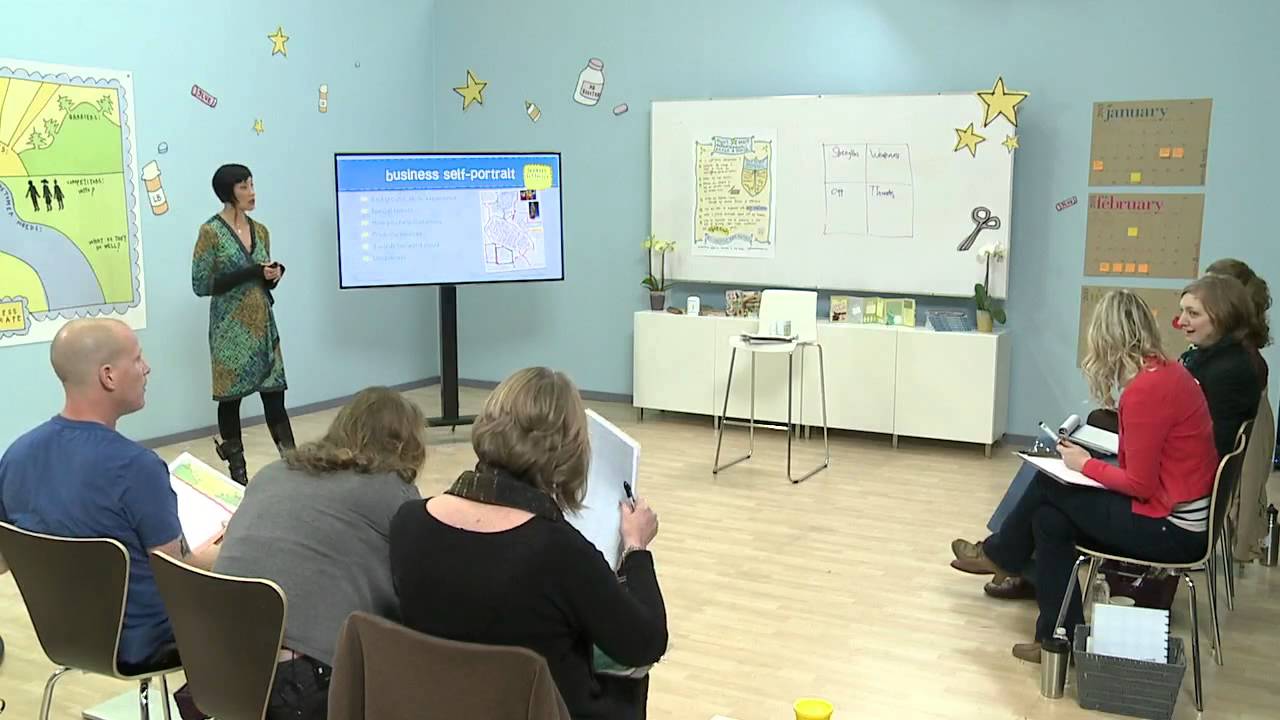
I spent the first three years of my portrait studio obsessing over tactics. Better lens, better website copy, better Instagram grid. What I never did was stop and look at the full landscape of my business as a system. I was zoomed so far into individual decisions that I had no altitude. I couldn’t see which parts of my business were actually working and which ones I was just busy maintaining out of habit. It wasn’t until I sat with a framework like the one taught in this CreativeLive tutorial that things started clicking into place.
Watch the full tutorial on YouTube
In this CreativeLive tutorial, the instructor walks through what she calls the “business landscape” – the full picture of what makes up your creative business, not just your services or your prices, but the internal and external forces shaping how you work and grow. It sounds conceptual, but the practical payoff is real. Once I could see my landscape clearly, I stopped reacting to every slow month like it was a crisis and started making decisions from a stable, informed place. Here is how to work through the process yourself.
Step 1: Separate the Left-Brain Work from the Right-Brain Resistance
 Instructor describing the balance between left and right brain work
Most photographers resist the business side because it feels like it lives in a different universe from their creative work. The instructor addresses this directly at the top of the session. The goal is not to turn you into a spreadsheet-first operator. It is to bring your analytical thinking and your creative instincts into the same room. Before you sit down to map your business landscape, acknowledge that both parts of your brain need to be present. Set up your workspace with something that reminds you why you started – a favorite image you shot, your vision board, a print from a session that made you proud. This is not decoration. It is a psychological anchor that keeps the left-brain work from feeling sterile.
Instructor describing the balance between left and right brain work
Most photographers resist the business side because it feels like it lives in a different universe from their creative work. The instructor addresses this directly at the top of the session. The goal is not to turn you into a spreadsheet-first operator. It is to bring your analytical thinking and your creative instincts into the same room. Before you sit down to map your business landscape, acknowledge that both parts of your brain need to be present. Set up your workspace with something that reminds you why you started – a favorite image you shot, your vision board, a print from a session that made you proud. This is not decoration. It is a psychological anchor that keeps the left-brain work from feeling sterile.
Step 2: Take Inventory of Where Your Attention Actually Goes
 Participant sharing what actions they took between sessions
The instructor opens with a simple but revealing question: what actions have you taken recently in your business, even small ones? This is not a performance check. It is a diagnostic. Write down everything you did in the last two weeks that was business-related – emails, social posts, client calls, editing, invoicing, planning sessions that never led anywhere. Do not edit the list. Just capture it. What you will see is a map of where your energy is actually going, which is almost always different from where you think it is going. For me, this exercise revealed that I was spending more time on Instagram than on follow-up with warm leads. That single realization was worth the whole exercise.
Participant sharing what actions they took between sessions
The instructor opens with a simple but revealing question: what actions have you taken recently in your business, even small ones? This is not a performance check. It is a diagnostic. Write down everything you did in the last two weeks that was business-related – emails, social posts, client calls, editing, invoicing, planning sessions that never led anywhere. Do not edit the list. Just capture it. What you will see is a map of where your energy is actually going, which is almost always different from where you think it is going. For me, this exercise revealed that I was spending more time on Instagram than on follow-up with warm leads. That single realization was worth the whole exercise.
Step 3: Identify the “Fire Hose” Problem in Your Workflow
 Participant describing feeling overwhelmed by too many simultaneous inputs
One of the participants in the tutorial describes the feeling of building a business while also running coaching programs, masterminds, and a full client load – drinking from a fire hose. If that resonates, it needs to go on your landscape map as a real constraint, not a personal failing. Write down every ongoing commitment that pulls on your time and attention: client work, education you are consuming, communities you are participating in, administrative systems you are managing. Now look at that list honestly. Which of these are generating revenue or directly building toward revenue? Which ones are just generating motion? Your business landscape includes your capacity, and pretending you have unlimited capacity is one of the fastest ways to burn out and underprice your work to compensate.
Participant describing feeling overwhelmed by too many simultaneous inputs
One of the participants in the tutorial describes the feeling of building a business while also running coaching programs, masterminds, and a full client load – drinking from a fire hose. If that resonates, it needs to go on your landscape map as a real constraint, not a personal failing. Write down every ongoing commitment that pulls on your time and attention: client work, education you are consuming, communities you are participating in, administrative systems you are managing. Now look at that list honestly. Which of these are generating revenue or directly building toward revenue? Which ones are just generating motion? Your business landscape includes your capacity, and pretending you have unlimited capacity is one of the fastest ways to burn out and underprice your work to compensate.
Step 4: Build In Structured Reflection as a Business Practice
 Participant describing napping and reflecting, wisdom surfacing without forcing it
This is the step that feels the least like “work” and tends to produce the most useful insights. The instructor and several participants discuss how breakthroughs came not during active problem-solving but during rest – when they stopped forcing and let things integrate. I know how that sounds, but there is a practical version of this that has nothing to do with napping in the middle of your workday. Schedule a weekly 30-minute block with no agenda other than sitting with your business numbers and your gut reaction to them. No email, no tasks. Look at your booking rate, your inquiry-to-close ratio, your average sale, and just notice what feelings come up. Those feelings are data. Ignoring them is how photographers end up six months into a pricing structure they quietly know is not working.
Participant describing napping and reflecting, wisdom surfacing without forcing it
This is the step that feels the least like “work” and tends to produce the most useful insights. The instructor and several participants discuss how breakthroughs came not during active problem-solving but during rest – when they stopped forcing and let things integrate. I know how that sounds, but there is a practical version of this that has nothing to do with napping in the middle of your workday. Schedule a weekly 30-minute block with no agenda other than sitting with your business numbers and your gut reaction to them. No email, no tasks. Look at your booking rate, your inquiry-to-close ratio, your average sale, and just notice what feelings come up. Those feelings are data. Ignoring them is how photographers end up six months into a pricing structure they quietly know is not working.
Step 5: Map the External Landscape Alongside the Internal One
 Instructor discussing the importance of concrete business foundations
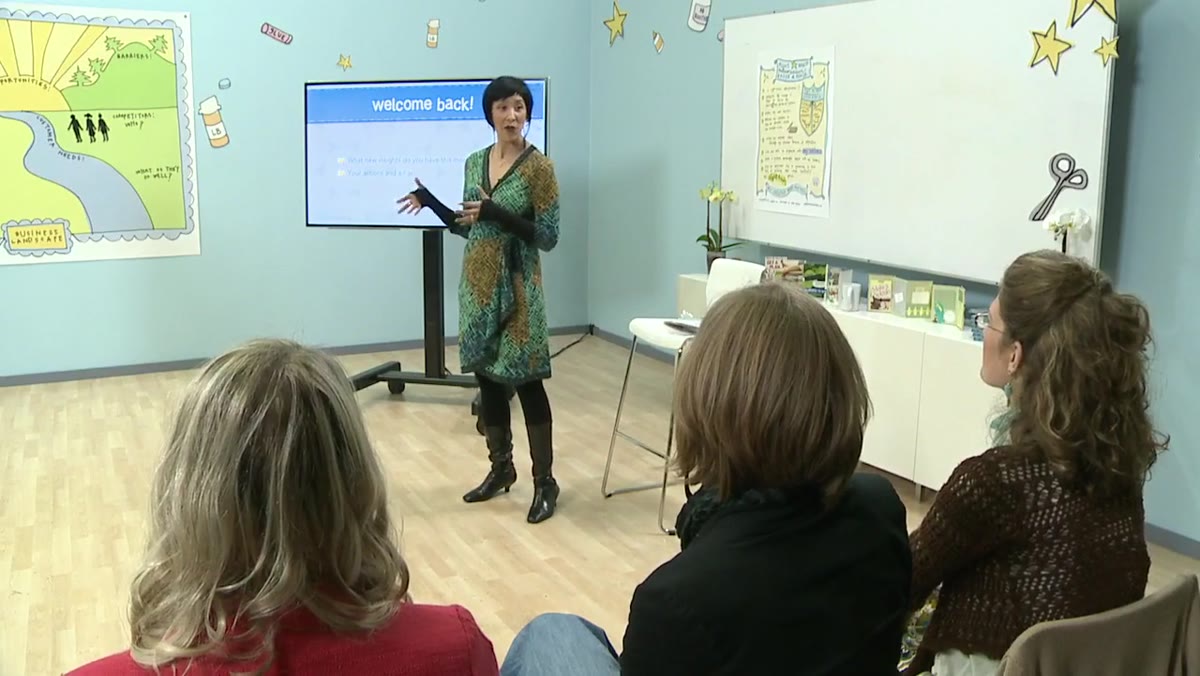
Your business landscape is not just internal. It includes your market, your local competition, your client base’s economic reality, and seasonal demand patterns. Once you have done the internal inventory, pull out your booking calendar for the last 12 months and answer three questions: When did clients find me? What drove them to reach out? What almost made them not book? These questions map the external forces acting on your business. In Miami, I know my landscape shifts dramatically in summer because families travel and the heat kills outdoor session demand. That is not a problem. It is a feature of my landscape that I can plan around instead of panic about every June.
Instructor discussing the importance of concrete business foundations
Your business landscape is not just internal. It includes your market, your local competition, your client base’s economic reality, and seasonal demand patterns. Once you have done the internal inventory, pull out your booking calendar for the last 12 months and answer three questions: When did clients find me? What drove them to reach out? What almost made them not book? These questions map the external forces acting on your business. In Miami, I know my landscape shifts dramatically in summer because families travel and the heat kills outdoor session demand. That is not a problem. It is a feature of my landscape that I can plan around instead of panic about every June.
Step 6: Write Your Landscape Down in One Place
 Instructor transitioning toward concrete business steps
The landscape only becomes useful when it is documented. Create a single page – one side of one page – that captures your capacity constraints, your current revenue drivers, your external market forces, and your biggest unresolved question as a business owner. This is not a business plan. It is a reference document you look at before making any significant decision. New pricing structure? Check it against the landscape. Considering a new genre of photography? Check the landscape. The discipline of returning to this document before taking action is what separates reactive studio owners from intentional ones.
Instructor transitioning toward concrete business steps
The landscape only becomes useful when it is documented. Create a single page – one side of one page – that captures your capacity constraints, your current revenue drivers, your external market forces, and your biggest unresolved question as a business owner. This is not a business plan. It is a reference document you look at before making any significant decision. New pricing structure? Check it against the landscape. Considering a new genre of photography? Check the landscape. The discipline of returning to this document before taking action is what separates reactive studio owners from intentional ones.
What I Would Add From Running My Own Studio
The tutorial focuses on awareness and mapping, which is exactly the right starting point. Where I would push further is in assigning numbers to your landscape. “I’m not booking enough seniors” is an observation. “I booked 11 senior sessions last year at an average of $800 and I need 20 at $1,200 to hit my revenue goal” is a landscape you can actually work with. I track these numbers obsessively – inquiry volume, conversion rate, average sale, repeat client rate – because without them, the landscape is just impressionistic. Your gut is a good signal. Your gut plus data is a strategy.
The single most important thing this tutorial teaches is that you cannot fix what you cannot see. Before you change your pricing, redesign your website, or hire an associate photographer, you need to know the full shape of the business you are operating. That clarity is what makes every subsequent decision faster and less expensive.
Watch the full tutorial on YouTube and work through the landscape exercise with a notebook in hand. It is the kind of session that looks simple on the surface and quietly reorganizes how you think about your business for months afterward.
Comments
Leave a Comment