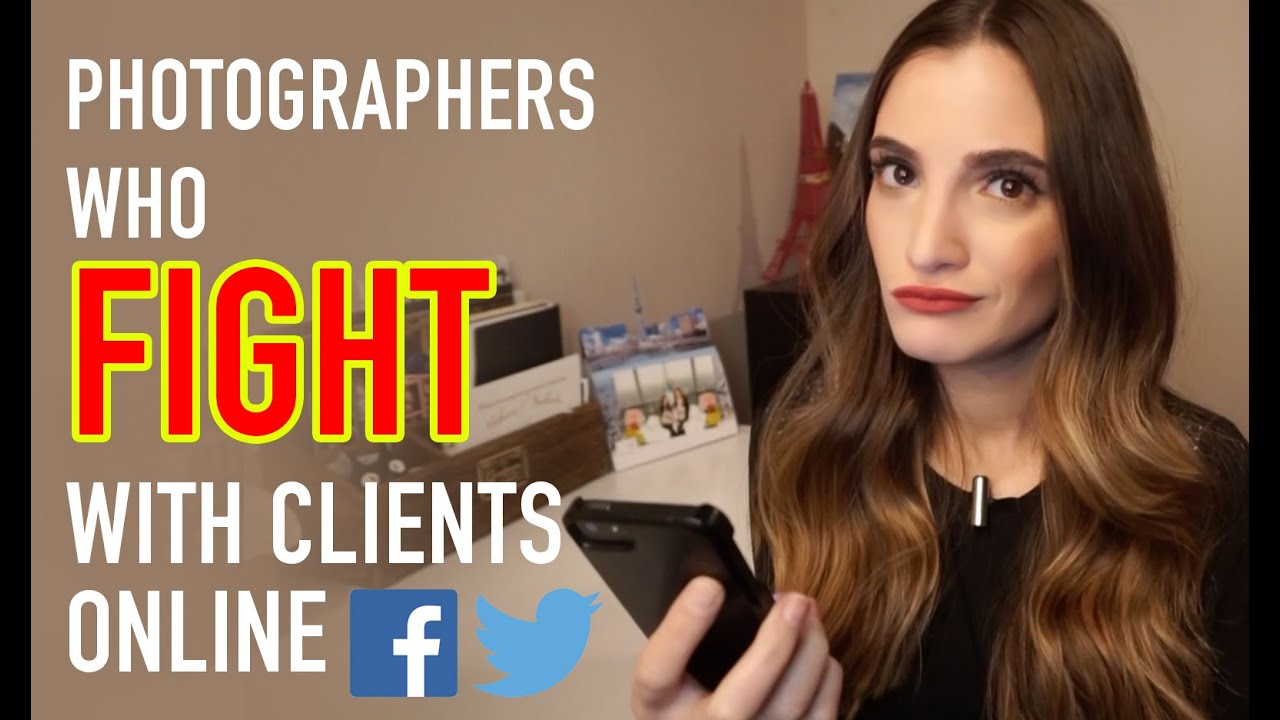
There is a moment every photographer knows. A client ghosts you after the gallery goes live. Someone disputes a charge after you delivered exactly what the contract promised. A bride leaves a one-star review that contradicts every email she sent during the booking process. Your hands are on the keyboard and you are about 30 seconds from letting the world know exactly what kind of person this is.
I have been there. Early in my portrait studio days, I lost a $5,000 client over a contract that had too many gaps in it, and the combination of financial pain and personal insult made me want to go scorched earth on every platform I had access to. I didn’t, but only barely. In this Jessica Kobeissi tutorial, Watch the full tutorial on YouTube, she walks through exactly why the impulse to blast a client online is one of the most expensive mistakes a photographer can make, and how to redirect that energy into something that actually protects your business. Her thinking lines up precisely with what I have watched play out in this industry over the past decade.
The core lesson here is not about being nice or turning the other cheek. It is about understanding who actually gets hurt when a professional picks a public fight with a client. That answer is almost always the photographer.
Step 1: Recognize the Real Cost of Public Complaints
 Photographer imagining client-facing Facebook page full of complaints
Before anything else, you have to shift your frame of reference from inside your own frustration to the perspective of your next potential client. Jessica’s starting point is a simple thought experiment: imagine you are a couple researching photographers, and you land on a page where the photographer regularly posts about terrible clients who showed up late, didn’t pay, or left bad reviews. Even if every one of those posts is 100 percent accurate and justified, what you are seeing is someone who will involve you in their drama if anything goes sideways. That is not a risk most clients are willing to take when they are handing over money for irreplaceable moments.
Photographer imagining client-facing Facebook page full of complaints
Before anything else, you have to shift your frame of reference from inside your own frustration to the perspective of your next potential client. Jessica’s starting point is a simple thought experiment: imagine you are a couple researching photographers, and you land on a page where the photographer regularly posts about terrible clients who showed up late, didn’t pay, or left bad reviews. Even if every one of those posts is 100 percent accurate and justified, what you are seeing is someone who will involve you in their drama if anything goes sideways. That is not a risk most clients are willing to take when they are handing over money for irreplaceable moments.
The business math here is straightforward. You are trying to attract clients. The client you are publicly fighting is not. The reputational damage lands almost entirely on you, and it compounds over time as posts get screenshots and shared out of context.
Step 2: Understand That Only One Side Gets Told Online
 Graphic representing two opposing stories from one conflict
The internet only ever shows one version of a dispute. Jessica makes a point that sticks: while you are posting your version, the other person is telling their friends the exact opposite version. Neither one of those accounts is the full story, and the people reading your post have no way to know that. What they do know is that you chose to handle a professional disagreement in public, and that tells them something about how you operate.
Graphic representing two opposing stories from one conflict
The internet only ever shows one version of a dispute. Jessica makes a point that sticks: while you are posting your version, the other person is telling their friends the exact opposite version. Neither one of those accounts is the full story, and the people reading your post have no way to know that. What they do know is that you chose to handle a professional disagreement in public, and that tells them something about how you operate.
This is especially true in local markets, which is where most portrait and event photographers actually work. Miami is not a small city, but the wedding and portrait photography community here absolutely is. People talk. A post that feels satisfying in the moment can travel to vendors, venues, and future clients in ways you cannot control or predict.
Step 3: Do Not Act While You Are Emotional
 Jessica gesturing while advising to step away and cool down
Jessica’s practical advice here is deliberately low-tech: step away from the screen. She lists a half-dozen ways to burn off the anger that don’t involve your audience, from playing a game to calling a friend to physically moving your body. The specific method doesn’t matter. What matters is putting time between the trigger and your response.
Jessica gesturing while advising to step away and cool down
Jessica’s practical advice here is deliberately low-tech: step away from the screen. She lists a half-dozen ways to burn off the anger that don’t involve your audience, from playing a game to calling a friend to physically moving your body. The specific method doesn’t matter. What matters is putting time between the trigger and your response.
In my studio, I have a personal rule that no client-facing communication goes out the same day I receive something upsetting. I wait at least 24 hours before replying to a dispute, a complaint, or a bad review. That window has saved me from sending responses I would have regretted, and it has produced much better outcomes when I did respond, because I was writing from clarity instead of anger.
Step 4: Separate Venting From Publishing
 Group chat on phone representing private venting space
There is nothing wrong with needing to process a frustrating client situation. The problem is conflating that processing with public communication. Jessica draws a clean line: take the rant to a private group chat, a trusted friend, or a mentor. Get the emotion out, get some perspective, and then decide what action is actually worth taking.
Group chat on phone representing private venting space
There is nothing wrong with needing to process a frustrating client situation. The problem is conflating that processing with public communication. Jessica draws a clean line: take the rant to a private group chat, a trusted friend, or a mentor. Get the emotion out, get some perspective, and then decide what action is actually worth taking.
This distinction matters more now than it did even five years ago. Screenshots travel. A message in a private Facebook group is not actually private if any one of the members decides to share it. The truly safe space for venting is a one-on-one conversation, not a semi-public community of colleagues who might know the client you are discussing.
Step 5: Protect Your Name Like It Is Your Most Valuable Asset
 Jessica speaking directly to camera about reputation and business name
Your name and your portfolio are the two things that generate every booking you will ever get. Jessica’s point in the final section of the video is that drama does not just make you look difficult to individual clients. It becomes a searchable, shareable part of how you are known in your market. People will remember the photographer who fought publicly with a client long after they have forgotten the details of what the dispute was even about.
Jessica speaking directly to camera about reputation and business name
Your name and your portfolio are the two things that generate every booking you will ever get. Jessica’s point in the final section of the video is that drama does not just make you look difficult to individual clients. It becomes a searchable, shareable part of how you are known in your market. People will remember the photographer who fought publicly with a client long after they have forgotten the details of what the dispute was even about.
Run a quick audit of your public-facing profiles and posts. If there is anything that reads as complaints about clients, vague subtweets about difficult shoots, or anything that a potential client could read and wonder “is this about someone like me?”, remove it. Your social presence should communicate only what you want people to associate with booking you.
What I Would Add From My Own Experience
Jessica’s advice focuses on the reactive moment, which is the right place to start. But the better long-term investment is building systems that reduce how often you end up in these situations to begin with. A well-written contract with clear payment terms, a client questionnaire that sets expectations before the shoot, and a booking process that filters out mismatched clients will eliminate most of the conflicts that tempt you to post something you shouldn’t.
My client experience checklist runs 47 steps from first inquiry to final gallery delivery. That might sound excessive, but it means almost nothing falls through the cracks, and when something does go wrong, I have documentation for every stage of the process. That documentation is far more useful than any public post when it comes to actually resolving a dispute.
The single most important thing to take from this tutorial: your online presence is a marketing tool, and everything you post is a message to future clients about what working with you looks and feels like. A business that handles conflict publicly tells clients they are one bad experience away from being the subject of your next post. That is not a reputation worth the five minutes of relief a venting post will give you.
Watch the full tutorial on YouTube and hear Jessica walk through this directly. She has a way of making the business case for professionalism that cuts through the emotion, which is exactly what you need when you are still annoyed and the keyboard is right in front of you.
Comments
Leave a Comment