Every few months, a client asks me for the raws. Sometimes it’s casual, almost an afterthought at the end of a session. Sometimes it comes in a formal email with bullet points explaining why they feel entitled to them. Either way, my answer is the same, and it took me years to be able to deliver that answer without fumbling or apologizing. What helped most wasn’t a script. It was truly understanding, on a technical and professional level, why this boundary exists in the first place.
In this Jessica Kobeissi tutorial, she tackles one of the most searched questions in photography head-on: why won’t photographers give clients their raw photos? Watch the full tutorial on YouTube. What I appreciate about her breakdown is that she doesn’t just say “because I said so.” She walks through the real reasons, from creative integrity to technical practicality, in a way that actually equips you to have this conversation with clients confidently. Below, I’ve expanded her key points into a framework you can internalize and, more importantly, communicate.
Step 1: Reframe What a Raw File Actually Is
 Photographer explaining raw files as unfinished creative product
Before you can explain this policy to a client, you need a mental model that holds up under pressure. Kobeissi uses a comparison that I now use myself: asking for raw files is like asking a painter for the unfinished canvas. The raw file is not the product. It is the raw material that gets shaped into the product. Think of it like framing lumber. A stack of two-by-fours sitting in a driveway is not a house. No one would accept a stack of lumber as a completed construction job, even if those exact boards are what the finished house is made from.
Photographer explaining raw files as unfinished creative product
Before you can explain this policy to a client, you need a mental model that holds up under pressure. Kobeissi uses a comparison that I now use myself: asking for raw files is like asking a painter for the unfinished canvas. The raw file is not the product. It is the raw material that gets shaped into the product. Think of it like framing lumber. A stack of two-by-fours sitting in a driveway is not a house. No one would accept a stack of lumber as a completed construction job, even if those exact boards are what the finished house is made from.
This reframe matters because clients often assume that raw files are simply “more” of what they’re already getting, just unfiltered. In reality, they’re an intermediate file format that represents a completely different stage of the workflow. Getting clear on this yourself means you can say it plainly, without hedging, when a client brings it up.
Step 2: Understand That Your Edit Is Your Signature
 Side-by-side of raw versus edited photo showing style difference
Your editing style is not a finishing touch. It is the reason clients book you. When someone hires you after scrolling your portfolio for 20 minutes, they are hiring the version of images that you have processed, color-graded, and refined. Raw files have none of that. They look flat, often underexposed by intention, and stylistically neutral. If those files circulate, anyone who sees them is not seeing your work. They are seeing a technical capture that could have come from almost any camera operator.
Side-by-side of raw versus edited photo showing style difference
Your editing style is not a finishing touch. It is the reason clients book you. When someone hires you after scrolling your portfolio for 20 minutes, they are hiring the version of images that you have processed, color-graded, and refined. Raw files have none of that. They look flat, often underexposed by intention, and stylistically neutral. If those files circulate, anyone who sees them is not seeing your work. They are seeing a technical capture that could have come from almost any camera operator.
Kobeissi makes the point that post-processing is what creates a photographer’s distinctive voice. In my studio, I spend as much time developing my editing approach as I do refining my lighting setups. One without the other is half a product. Letting raw files out into the world under your name is like a chef sending out unseasoned, unplated food and having it photographed for a restaurant review.
Step 3: Address the Technical Reality Clients Don’t Know About
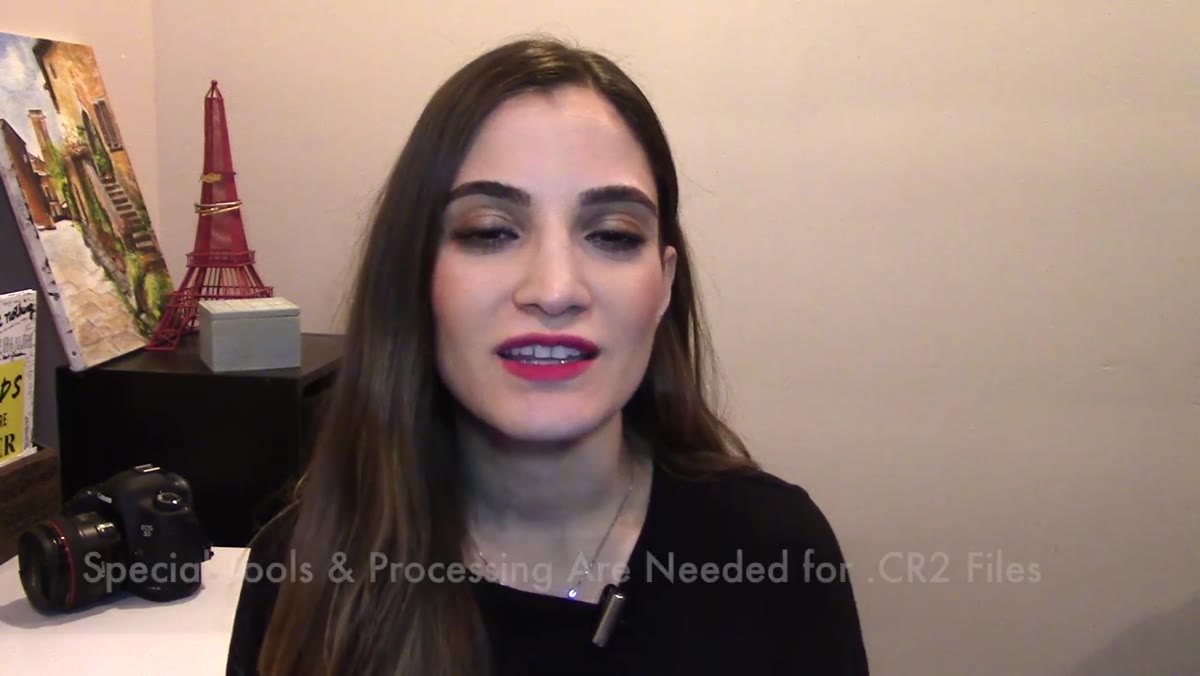 Explaining that raw files require specific software to open
Most clients picture raw files as really high-resolution JPEGs. They are not. Raw files are proprietary camera formats that require specific software to open and interpret correctly. Without tools like Adobe Lightroom, Capture One, or similar programs, the files are essentially unusable. A client who receives them may not even be able to view them, let alone do anything useful with them.
Explaining that raw files require specific software to open
Most clients picture raw files as really high-resolution JPEGs. They are not. Raw files are proprietary camera formats that require specific software to open and interpret correctly. Without tools like Adobe Lightroom, Capture One, or similar programs, the files are essentially unusable. A client who receives them may not even be able to view them, let alone do anything useful with them.
This is worth communicating directly, not as a technical lecture but as a practical heads-up. I have started including a one-paragraph explanation in my client welcome guide that covers what raw files are, what edited files are, and why the distinction matters for what they receive. It preempts the question entirely in most cases and positions the information as helpful rather than defensive.
Step 4: Protect Your Images from Unauthorized Editing
 Discussing risk of clients editing raw files without consent
When you hand over a raw file, you lose control of the final output. A client can apply any filter, adjustment, or edit they want, and then share that version publicly. That version is now associated with your name. If someone sees it and asks who the photographer was, they will get your name attached to an image you did not finish and would not have approved.
Discussing risk of clients editing raw files without consent
When you hand over a raw file, you lose control of the final output. A client can apply any filter, adjustment, or edit they want, and then share that version publicly. That version is now associated with your name. If someone sees it and asks who the photographer was, they will get your name attached to an image you did not finish and would not have approved.
Kobeissi compares this to handing someone a rough draft of a screenplay and letting them rewrite the ending. The work is yours until it is complete. This is also a licensing and copyright issue worth having an attorney weigh in on if you have not already. Your contract should specify clearly what formats are delivered, that raw files are not included, and that the delivered images are licensed for personal use only unless you have negotiated otherwise.
Step 5: Explain the Exposure and Processing Relationship
 Explaining intentional underexposure for post-processing control
Here is something clients genuinely do not know and that most photographers never bother to explain: many shots are deliberately captured with less light than the final image will show. Shooting with some underexposure preserves highlight detail and gives the editor more information to work with in post. When you open that raw file without processing it, it looks dim and flat. That is not a mistake. That is intentional.
Explaining intentional underexposure for post-processing control
Here is something clients genuinely do not know and that most photographers never bother to explain: many shots are deliberately captured with less light than the final image will show. Shooting with some underexposure preserves highlight detail and gives the editor more information to work with in post. When you open that raw file without processing it, it looks dim and flat. That is not a mistake. That is intentional.
If a client receives an unprocessed file captured this way, their first reaction is almost always that something went wrong. Kobeissi shares exactly this scenario, and it mirrors what I have seen in client conversations. A photo that looks muddy and dark at the raw stage becomes a clean, luminous final image after processing. Sending the unprocessed file without that context does not give the client more, it gives them a misleading and incomplete picture of your work.
Step 6: Make the Quality-Versus-Quantity Argument Concrete
 Comparing 150 edited images to 2000 unedited images
When clients push for raws, they are often really asking for more photos. More deliverables feels like more value. The reframe here is simple and effective: would you rather have 150 images you would actually post, print, and share, or 2,000 images where you have to dig through duplicates, blinking frames, and technically imperfect captures to find the ones worth keeping?
Comparing 150 edited images to 2000 unedited images
When clients push for raws, they are often really asking for more photos. More deliverables feels like more value. The reframe here is simple and effective: would you rather have 150 images you would actually post, print, and share, or 2,000 images where you have to dig through duplicates, blinking frames, and technically imperfect captures to find the ones worth keeping?
I tracked this with my own clients for a year, because I track everything in my studio. Clients who received larger edited galleries of 100 to 150 images consistently reported higher satisfaction than clients from earlier in my career who received larger unedited sets. Fewer images, done well, lands better every time. The edited gallery is curated, intentional, and finished. That is the deliverable. That is the promise.
What I Add to This Policy in My Own Studio
Kobeissi’s reasoning is solid across the board, but there is one piece I have built on top of it specifically for client-facing communication. I do not just say no to raw files. I explain what I say yes to instead. In my client guide, I outline the editing process briefly, including a timeline, what kinds of adjustments I make, and how the final images are delivered. When clients understand what goes into the processed images they receive, the raw file question rarely comes up. They are not asking for raws because they want raws. They are asking because they are not sure they will get enough of what they actually want. Address that fear directly and the request usually dissolves on its own.
The single most important thing to take away from Kobeissi’s tutorial is this: raw files are not a version of your product, they are a step in your process, and no professional is obligated to hand over their process along with their finished work. A baker does not owe you the unbaked dough. A copywriter does not owe you the first draft. You are delivering a finished, professional product. Own that clearly, explain it kindly, and build it into your client communication from day one.
Watch the full tutorial on YouTube to hear Kobeissi walk through her reasoning and see actual before-and-after comparisons that illustrate just how much the editing process transforms a capture into a final image.
Comments (2)
This saved me so much time on my last edit. Wish I'd found this sooner.
This is fantastic. I've been recommending this approach to my readers too.
Leave a Comment