Every quarter, I sit down with my studio metrics and ask myself the same question: which clients are actually worth the energy I’m spending? Not in a cold, transactional way. I mean genuinely, which relationships are generating repeat business, referrals, and the kind of word-of-mouth that no ad budget can buy? That question is what led me to completely rethink how I structure my client journey, and it’s exactly why a recent episode of The Portrait System podcast stopped me mid-scroll.
Watch the full tutorial on YouTube
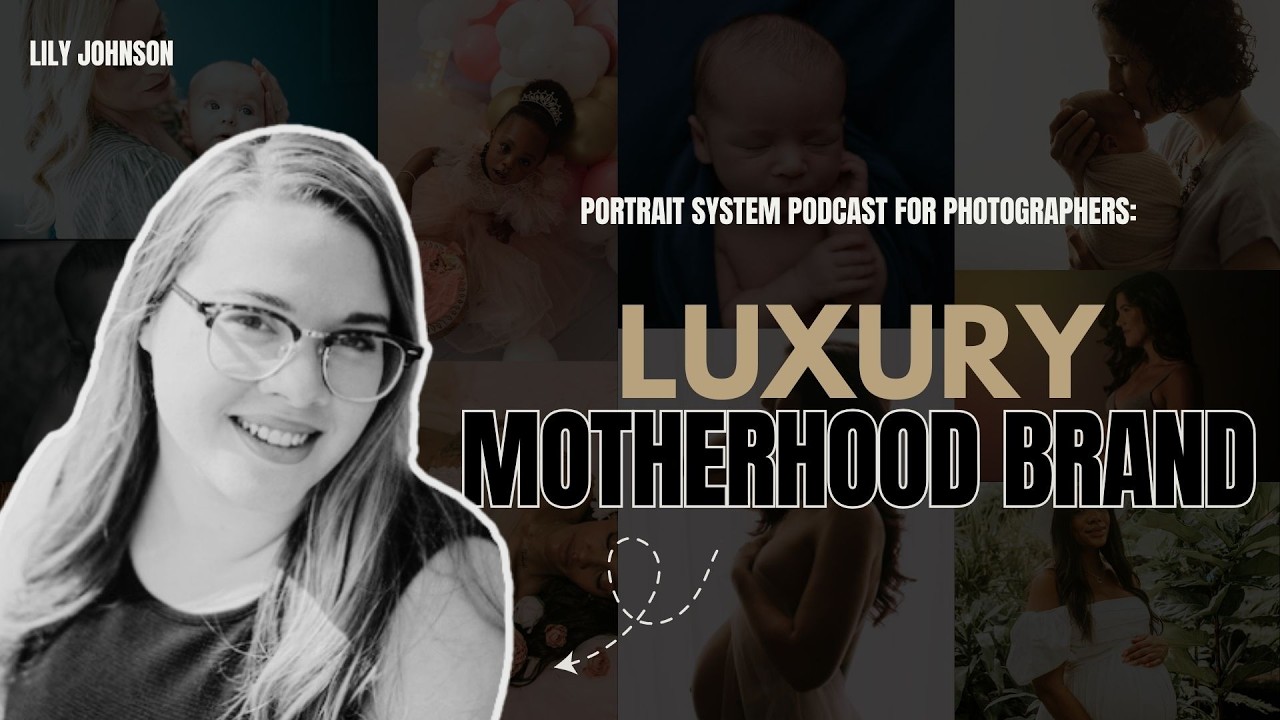
In this The Portrait System tutorial, host Nikki Closser interviews Lily Johnson of Burgh Babies Photography in Pittsburgh. Lily went from Amazon corporate employee to birth doula to full-service motherhood photographer with an average sale around $3,000. That number alone is worth paying attention to. But what makes her story genuinely useful, whether you shoot newborns or seniors or branding portraits, is the systems and thinking underneath it. Here is how she built it, broken into steps you can actually apply.
Step 1: Choose a Niche That Fits Your Real Life, Not Just Your Portfolio
 Lily describing the transition from doula work to studio photography
Lily did not stumble into motherhood photography randomly. She was already a birth doula and birth photographer, which meant she had low-light shooting skills, deep client trust, and a natural pipeline of pregnant women. When she realized she was falling in love with the portraiture side of that work, maternity, newborn, the postpartum season, she leaned in deliberately.
Lily describing the transition from doula work to studio photography
Lily did not stumble into motherhood photography randomly. She was already a birth doula and birth photographer, which meant she had low-light shooting skills, deep client trust, and a natural pipeline of pregnant women. When she realized she was falling in love with the portraiture side of that work, maternity, newborn, the postpartum season, she leaned in deliberately.
The lesson here is not “find a niche.” It is find a niche that your current life already supports. Lily’s doula background gave her something most photographers cannot buy: credibility with clients in one of the most vulnerable seasons of their lives. Ask yourself what access, expertise, or trust you already have that a competitor starting from scratch would not.
Step 2: Build Two Businesses That Feed Each Other
 Lily explaining her two separate businesses and how they connect
Lily runs two distinct businesses: one for birth doula and birth photography services, and one for the studio-based maternity, newborn, and motherhood work under Burgh Babies. These are not the same business with different service menus. They are separate brands with separate positioning, but they share a client base that moves naturally from one to the other.
Lily explaining her two separate businesses and how they connect
Lily runs two distinct businesses: one for birth doula and birth photography services, and one for the studio-based maternity, newborn, and motherhood work under Burgh Babies. These are not the same business with different service menus. They are separate brands with separate positioning, but they share a client base that moves naturally from one to the other.
This is a smarter structure than most photographers consider. By keeping birth photography and studio work separate, she avoids brand confusion and can price and market each appropriately. A client who hires her as a doula and birth photographer is already a warm lead for the studio work. That referral cost is essentially zero. If you have multiple service categories, think about whether separating them might actually make each stronger rather than diluting both.
Step 3: Use the Client Journey as Your Marketing Strategy
 Nikki and Lily discussing the multiple touchpoints from maternity through motherhood
Lily does not think in one-off sessions. She thinks in journeys. A client might come in for maternity photos, return for newborns, and then come back again for a milestone session, a nursing portrait, or a family session as the child grows. Each touchpoint is designed to feel connected and intentional, not like a separate transaction.
Nikki and Lily discussing the multiple touchpoints from maternity through motherhood
Lily does not think in one-off sessions. She thinks in journeys. A client might come in for maternity photos, return for newborns, and then come back again for a milestone session, a nursing portrait, or a family session as the child grows. Each touchpoint is designed to feel connected and intentional, not like a separate transaction.
This is the part that applies to every genre, not just newborn. When I doubled my income a few years ago, it was not because I raised prices overnight. It was because I started thinking about how to keep a client for three years instead of booking them once. Map out what a client’s life looks like beyond the first session and build offers that meet them at each stage.
Step 4: Design a Studio Experience That Does the Selling for You
 Lily describing her studio environment and the “big hug” atmosphere for postpartum clients
Lily describes her studio as feeling like a “big hug” for exhausted postpartum parents. That is not just a nice metaphor. It is a deliberate design choice that reduces resistance at every point in the sales process. When a client walks into a space that feels warm, calm, and thoughtfully prepared for their specific needs, they are already emotionally open before the session starts.
Lily describing her studio environment and the “big hug” atmosphere for postpartum clients
Lily describes her studio as feeling like a “big hug” for exhausted postpartum parents. That is not just a nice metaphor. It is a deliberate design choice that reduces resistance at every point in the sales process. When a client walks into a space that feels warm, calm, and thoughtfully prepared for their specific needs, they are already emotionally open before the session starts.
This matters because tired, overwhelmed new parents are not going to fight for wall art they are not sure about. But if they feel genuinely cared for, they will trust your recommendations. Physical product samples displayed in the studio make albums and wall art a tangible “yes” rather than an abstract upgrade. Invest in your environment the way you invest in your gear.
Step 5: Use Zoom IPS and Create-a-Collection Pricing to Close Sales
 Lily referencing her sales system including Zoom IPS and collection pricing
Lily conducts in-person sales (IPS) sessions over Zoom, which solves one of the biggest logistical headaches for new parents: getting out of the house. The session is structured, not casual. She uses a create-a-collection pricing model that guides clients toward building a complete order rather than picking individual items.
Lily referencing her sales system including Zoom IPS and collection pricing
Lily conducts in-person sales (IPS) sessions over Zoom, which solves one of the biggest logistical headaches for new parents: getting out of the house. The session is structured, not casual. She uses a create-a-collection pricing model that guides clients toward building a complete order rather than picking individual items.
The create-a-collection approach works because it anchors the client to a complete experience rather than a single product. Instead of asking “do you want prints?”, you are asking “which pieces do you want in your collection?” The framing shifts the entire conversation. Combined with real product samples they have already seen and touched in the studio, clients know exactly what they are buying. Ambiguity is what kills sales.
Step 6: Rebuild After Setbacks Without Rebuilding From Zero
 Lily mentioning the studio storage fire and how she recovered
Lily’s studio experienced a devastating storage fire that destroyed equipment and products. She rebuilt. She does not dwell on it in the interview, and that restraint tells you something. Setbacks in a photography business are not the end of the story, they are just expensive chapters.
Lily mentioning the studio storage fire and how she recovered
Lily’s studio experienced a devastating storage fire that destroyed equipment and products. She rebuilt. She does not dwell on it in the interview, and that restraint tells you something. Setbacks in a photography business are not the end of the story, they are just expensive chapters.
What matters is that she had the systems, the client relationships, and the brand identity already established. Those things did not burn. If you are building your business correctly, the intangibles outlast the equipment. Insurance covers gear. Nothing replaces the trust you have built with your client base, which is exactly why building that trust should come before acquiring more stuff.
What I Would Add From My Own Studio
Lily’s approach to long-term client relationships is something I have seen work consistently, but I would push one step further: track your returning client rate as a hard metric every quarter. I know photographers who celebrate every new booking but never notice that 90% of their clients never come back. A $3,000 average sale becomes genuinely sustainable only when a meaningful percentage of that revenue comes from clients who already know and trust you. If you do not know your retention rate right now, that is the first number to find.
The single most important idea in this entire conversation is that a photography business built on genuine client care, specific systems for sales, and a clear multi-session journey is categorically different from one built on one-off bookings and hope. Lily Johnson built a $3,000 average sale not by being the cheapest or the most technically impressive, but by understanding what her clients actually need and structuring every part of her business around delivering that.
Watch the full tutorial on YouTube to hear Lily walk through her full journey, including what it is really like to be on call for births, how she photographs C-sections, and the exact mindset shifts that helped her become one of Pittsburgh’s most sought-after motherhood photographers.
Comments
Leave a Comment