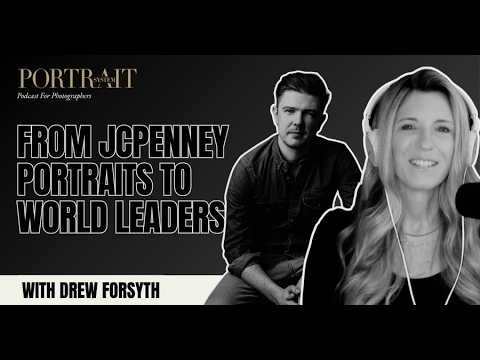
I grew up watching my parents undercharge for their photography work. They were talented, consistent, and completely terrified to raise their prices. By the time they finally did, they had spent years trading their best hours for rates that barely covered their costs. That pattern is what made me obsessive about pricing strategy long before I ever had a studio of my own. So when I came across Drew Forsyth’s conversation on The Portrait System podcast, I stopped what I was doing and took notes.
Watch the full tutorial on YouTube
Drew is a commercial portrait photographer based in Northwest England. He shoots for major brands, orchestras, ballet companies, and world leaders. His day rates sit around $2,000. What he shares in this episode is not a portfolio hack or a social media growth tip. It is a business philosophy, and it is one of the clearest explanations I have heard of how creative photographers actually break into and sustain serious commercial work.
Here is what I pulled from the conversation, translated into steps you can act on this week.
Step 1: Accept That the Portfolio Gets You Considered, Not Hired
 Drew and Nikki discussing what actually gets photographers hired
Most photographers, myself included at one point, believe the path to better clients runs directly through a better portfolio. Sharper images, more editorial work, a cleaner website. Drew challenges that assumption directly. The portfolio earns you a seat at the table. What keeps you there, and what gets you called back, is something else entirely.
Drew and Nikki discussing what actually gets photographers hired
Most photographers, myself included at one point, believe the path to better clients runs directly through a better portfolio. Sharper images, more editorial work, a cleaner website. Drew challenges that assumption directly. The portfolio earns you a seat at the table. What keeps you there, and what gets you called back, is something else entirely.
This reframe is important because it shifts where you invest your energy. Stop treating every job as a portfolio opportunity and start treating it as a relationship opportunity. The client who books you twice is worth far more than the client who looked at your site and moved on.
Step 2: Build Your Reputation Through Passion Projects Alongside Paid Work
 Discussion of how passion projects open doors to bigger clients
Drew makes a specific point about passion projects that I think gets misunderstood. He is not saying do free work. He is saying that the projects you choose to pursue on your own time, the ones that genuinely reflect your vision, often become the most powerful marketing tool you have. His work with ballet dancers and orchestra musicians was not all corporate-commissioned. Some of it came from his own drive to document extraordinary dedication in people.
Discussion of how passion projects open doors to bigger clients
Drew makes a specific point about passion projects that I think gets misunderstood. He is not saying do free work. He is saying that the projects you choose to pursue on your own time, the ones that genuinely reflect your vision, often become the most powerful marketing tool you have. His work with ballet dancers and orchestra musicians was not all corporate-commissioned. Some of it came from his own drive to document extraordinary dedication in people.
Those personal projects built a body of work that attracted the kinds of clients who wanted that exact sensibility. The lesson is to be intentional about what you shoot when no one is paying you. It should connect to the world you want to work in, not just look impressive in isolation.
Step 3: Learn to Set the Energy on Set, Not Just the Lights
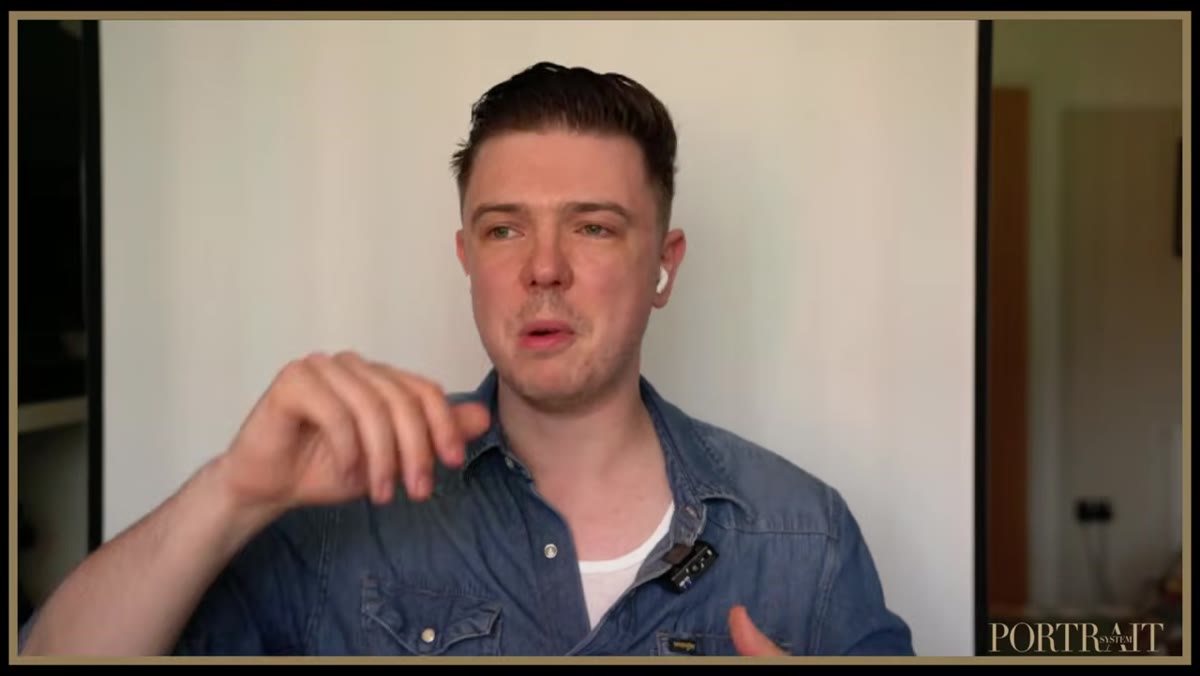 Drew describing how his mood directly affects his entire crew
Drew describes himself as someone who “sets the weather” on set. When he is energized and focused, his assistants and clients feel it. When he is stressed or scattered, everyone feels that too. He is deliberate about managing his own emotional state as a professional responsibility, not just a personality trait.
Drew describing how his mood directly affects his entire crew
Drew describes himself as someone who “sets the weather” on set. When he is energized and focused, his assistants and clients feel it. When he is stressed or scattered, everyone feels that too. He is deliberate about managing his own emotional state as a professional responsibility, not just a personality trait.
For photographers moving into commercial work, this is a skill worth developing consciously. Clients at the corporate level are paying for an experience as much as a deliverable. If the shoot day is calm, efficient, and positive, they will want to repeat it. Train yourself to project steadiness even when things go sideways, because things always go sideways.
Step 4: Say Yes to the Client, Then Hand the Problem Back to Them
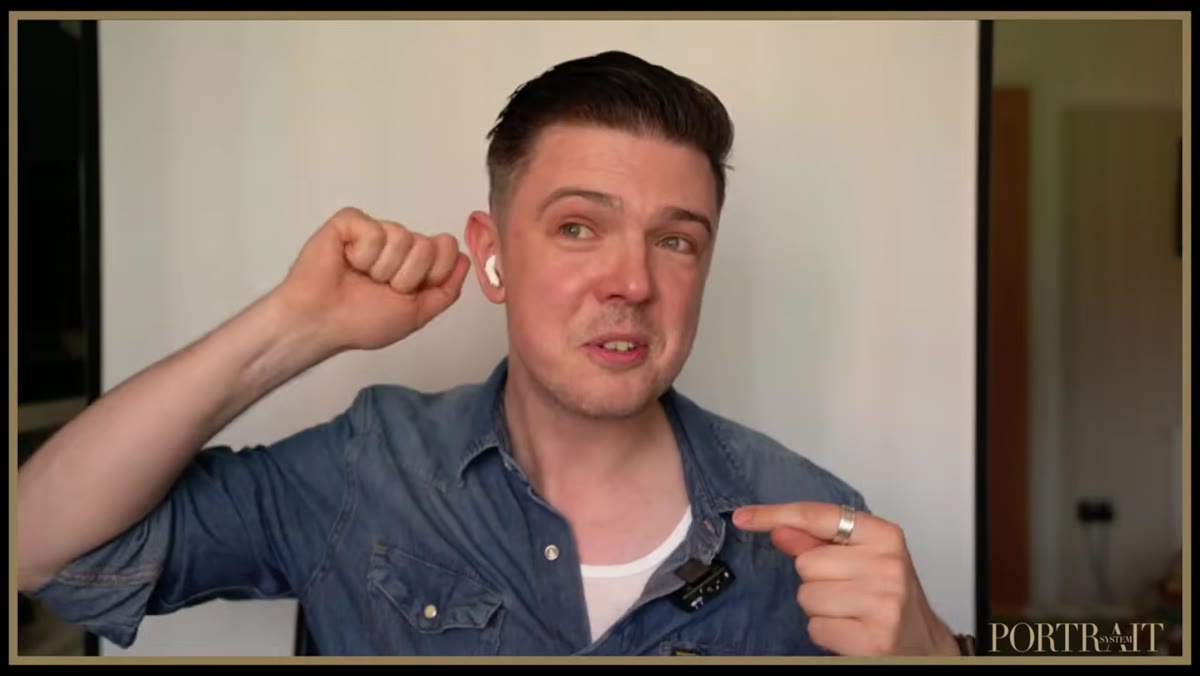 Drew explaining his method for handling scope creep on shoots
This is the most tactically useful thing in the entire conversation. When a client asks for something outside the agreed scope, “can we add one more look,” Drew does not say no and he does not say yes and silently absorb the extra work. He says something like: “Absolutely, I would love to do that. Which look from the original plan would you like to cut?”
Drew explaining his method for handling scope creep on shoots
This is the most tactically useful thing in the entire conversation. When a client asks for something outside the agreed scope, “can we add one more look,” Drew does not say no and he does not say yes and silently absorb the extra work. He says something like: “Absolutely, I would love to do that. Which look from the original plan would you like to cut?”
He hands the constraint back to the client. They get to make the call, which respects their authority. But it also makes the tradeoff visible, which protects his time and his schedule. Practice this exact language. It works in portrait studios, it works on commercial sets, and it works over email. Clients often do not realize what “one more thing” actually costs in time and logistics. This response educates them without creating conflict.
Step 5: Communicate Pricing With Confidence, Not Apology
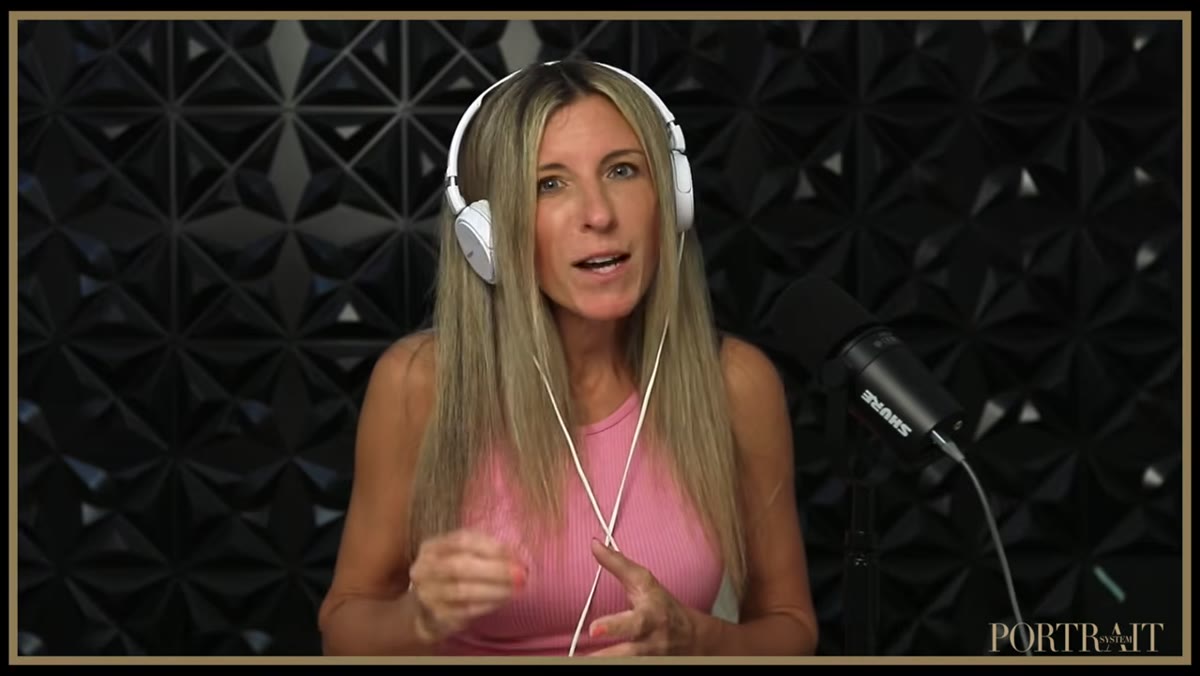 Nikki introducing the topic of communicating pricing with confidence
Drew’s $2,000 day rate does not come with a lengthy justification or a nervous explanation. One of the consistent patterns in how successful commercial photographers talk about money is that they present numbers the way a contractor quotes a job, directly, specifically, and without hedging.
Nikki introducing the topic of communicating pricing with confidence
Drew’s $2,000 day rate does not come with a lengthy justification or a nervous explanation. One of the consistent patterns in how successful commercial photographers talk about money is that they present numbers the way a contractor quotes a job, directly, specifically, and without hedging.
If you have been discounting your rates preemptively or burying your prices in qualifications, the issue usually is not the number itself. It is the delivery. Clients read uncertainty as inexperience. Work on presenting your rates the same way you would present your shot list: clearly, professionally, and with the assumption that the work is worth it.
Step 6: Think in Relationships, Not Transactions
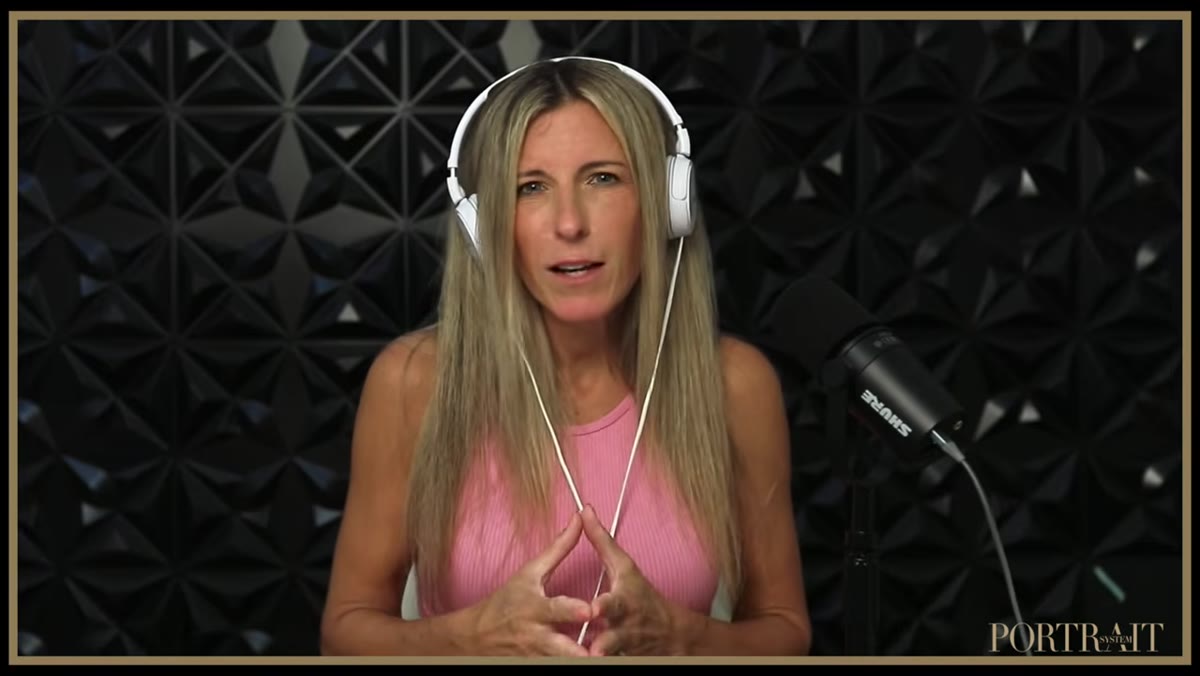 Discussion of building client relationships as a core business strategy
Commercial photography at the level Drew operates is fundamentally a relationship business. The photographers billing consistently high day rates are not constantly hunting new clients. They are deepening connections with existing ones and earning referrals from within those networks. Drew’s path from studio portraits to photographing world leaders was not a straight line, it was a series of conversations, referrals, and trust built incrementally.
Discussion of building client relationships as a core business strategy
Commercial photography at the level Drew operates is fundamentally a relationship business. The photographers billing consistently high day rates are not constantly hunting new clients. They are deepening connections with existing ones and earning referrals from within those networks. Drew’s path from studio portraits to photographing world leaders was not a straight line, it was a series of conversations, referrals, and trust built incrementally.
Map your current client relationships. Who has hired you more than once? Who has referred someone to you? Those are your best business development assets, and most photographers underinvest in them while chasing cold outreach and new platform algorithms.
What I Would Add From My Own Experience
The piece of this conversation that resonated most for me was the point about making your problems the client’s problems to solve. I spent years absorbing scope creep silently because I did not want to seem difficult. I wanted everyone to like working with me. What I eventually learned is that clients respect photographers who manage their process professionally. Unclear boundaries do not make clients feel taken care of. They make clients feel uncertain about whether the shoot is under control.
I now put a short scope document in every client agreement that defines exactly what a shoot day includes: number of looks, number of final images, revision rounds, and what triggers a change order. Clients almost never push back. And when they do ask for more, I have a framework to handle it without the conversation getting awkward.
Drew Forsyth’s career is proof that technical excellence combined with genuine relationship-building and confident pricing is a viable, repeatable business model. The single most important thing I took from this conversation is that the work that fills your calendar at high rates is almost never found through better marketing alone. It is built through how you show up, how you communicate, and how you make clients feel about the experience of working with you.
Watch the full tutorial on YouTube and pay close attention to the way Drew talks about client relationships. That part of the conversation is worth the whole hour.
Comments (9)
This saved me so much time on my last edit. Wish I'd found this sooner.
Finally someone explains this in a way that actually makes sense.
Couldn't agree more. I've seen this make a huge difference in photography work specifically.
I tried this on a client project yesterday and the results were way better than expected.
This saved me so much time on my last edit. Wish I'd found this sooner.
Great breakdown. The step-by-step approach really helps.
This saved me so much time on my last edit. Wish I'd found this sooner.
Tried this technique this morning. Game changer for real.
Applied this to my portfolio shots and the improvement is noticeable.
Leave a Comment