
I grew up watching my parents undercharge for their photography work. They were talented, booked solid most weekends, and still stressed about money every single month. The problem was never the quality of their images. It was that they priced from fear instead of from math. That pattern followed me into my own early years as a photographer until I got serious about treating this like a business and not a passion project with an invoice attached.
That’s why Sean Tucker’s tutorial on pricing and finding clients hit me harder than most business content does. Watch the full tutorial on YouTube before or after reading this breakdown. Tucker has a way of making the commercial side of photography feel logical rather than mercenary, which is exactly the reframe most creatives need. What follows is my own walkthrough of his framework, grounded in how I’ve applied it inside my Miami portrait studio.
Step 1: Understand What You Actually Need to Earn
 Intro frame establishing the pricing and client topic
Before you set a single price, you need a real number to work backward from. This means calculating your actual cost of living plus your business overhead, then dividing by the number of shoots you can realistically take on in a year. Most photographers skip this step and just copy what competitors charge, which means they inherit someone else’s financial problems.
Intro frame establishing the pricing and client topic
Before you set a single price, you need a real number to work backward from. This means calculating your actual cost of living plus your business overhead, then dividing by the number of shoots you can realistically take on in a year. Most photographers skip this step and just copy what competitors charge, which means they inherit someone else’s financial problems.
Sit down with your bank statements and add up rent, software subscriptions, gear maintenance, insurance, marketing costs, and taxes. In my studio, this exercise revealed that I needed to clear roughly $6,800 per month just to break even. Once I had that number, pricing became a math problem instead of a guessing game.
Step 2: Price for Profit, Not Just Coverage
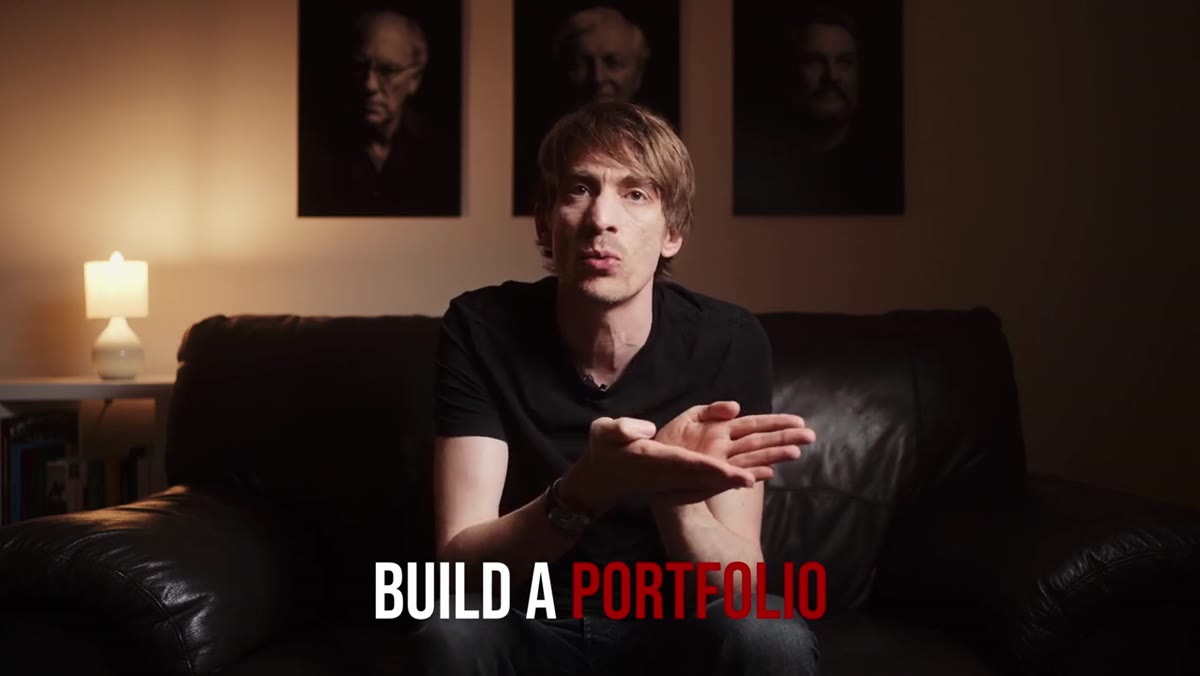 Discussion of building profit margin into your rates
Covering your costs is not a pricing strategy. It’s a survival strategy. Tucker makes the point that your rates need to include a profit layer above your expenses, because that profit is what funds growth, slow months, equipment upgrades, and eventually your ability to work less while earning more.
Discussion of building profit margin into your rates
Covering your costs is not a pricing strategy. It’s a survival strategy. Tucker makes the point that your rates need to include a profit layer above your expenses, because that profit is what funds growth, slow months, equipment upgrades, and eventually your ability to work less while earning more.
A simple way to build this in: take your break-even monthly number, add 30 to 40 percent on top of it, and use that inflated figure as your true revenue target. For me, that meant pricing my portrait sessions to generate around $9,000 per month rather than the $6,800 I actually needed. That gap has funded two new studio lights, a redesigned website, and a three-month emergency runway. Price for the business you want, not just the one you have right now.
Step 3: Identify the Clients Who Can Pay Those Rates
 Segment on identifying and targeting the right client market
Once your pricing is set at a sustainable level, the question becomes: who can actually afford it? This is where most photographers make a second mistake. They market to everyone and end up attracting the clients with the smallest budgets. Tucker’s approach is to get specific about the demographic and psychographic profile of the client who values what you do and has the means to pay for it.
Segment on identifying and targeting the right client market
Once your pricing is set at a sustainable level, the question becomes: who can actually afford it? This is where most photographers make a second mistake. They market to everyone and end up attracting the clients with the smallest budgets. Tucker’s approach is to get specific about the demographic and psychographic profile of the client who values what you do and has the means to pay for it.
For portrait work in Miami, my ideal client is a family or professional between 35 and 55, with a household income that puts discretionary spending on photography well within reach. I’m not trying to be the affordable option. I’m trying to be the obvious choice for people who already understand that photography is an investment. Narrowing that focus made my marketing more effective and my conversion rate noticeably higher.
Step 4: Show Up Where Those Clients Already Are
 Walkthrough of platforms and channels for reaching ideal clients
Finding clients is not about being everywhere. It’s about being in the right places consistently. Tucker’s guidance here is practical: identify two or three channels where your ideal clients spend time and go deep on those instead of spreading yourself thin across every platform.
Walkthrough of platforms and channels for reaching ideal clients
Finding clients is not about being everywhere. It’s about being in the right places consistently. Tucker’s guidance here is practical: identify two or three channels where your ideal clients spend time and go deep on those instead of spreading yourself thin across every platform.
For my studio, that meant Instagram for visual discovery, Google Business for local search, and community networking through a professional women’s group I joined in Miami. Within six months of focusing on those three channels exclusively, I stopped getting inquiries from bargain shoppers almost entirely. The quality of my leads improved because I was showing up in contexts that already signaled value to the right audience.
Step 5: Build a Referral Engine, Not Just a Lead List
 Discussion of referrals and building long-term client relationships
One of the most underused growth tools for photographers is the referral system, and Tucker addresses this directly. A satisfied client who sends you two more clients is worth more than any ad campaign over the long run. But referrals don’t happen automatically. You have to create an experience worth talking about and then make it easy for clients to share it.
Discussion of referrals and building long-term client relationships
One of the most underused growth tools for photographers is the referral system, and Tucker addresses this directly. A satisfied client who sends you two more clients is worth more than any ad campaign over the long run. But referrals don’t happen automatically. You have to create an experience worth talking about and then make it easy for clients to share it.
My version of this is a follow-up sequence I run after every session: a thank-you email the day after, a sneak peek gallery within 48 hours, and a personal note when I deliver the final images. After that, I send a referral card offering a credit toward a future session for every new client they send my way. It feels high-touch because it is, and it works. About 40 percent of my new bookings last year came directly from existing clients.
Step 6: Raise Your Prices Before You Feel Ready
 Addressing the mindset around raising rates
Tucker’s point here is one I had to learn the expensive way: you will almost never feel fully ready to raise your prices, and waiting until you do means leaving money on the table for years. The signal to raise your rates is not confidence. It’s demand. If you’re turning away work or booking out more than six weeks, your prices are too low.
Addressing the mindset around raising rates
Tucker’s point here is one I had to learn the expensive way: you will almost never feel fully ready to raise your prices, and waiting until you do means leaving money on the table for years. The signal to raise your rates is not confidence. It’s demand. If you’re turning away work or booking out more than six weeks, your prices are too low.
I raised my session fee by 25 percent two years ago and lost about one in five inquiries. What I didn’t lose was revenue. My total income went up because I was doing fewer sessions at a higher margin. The clients who pushed back weren’t the ones I wanted to build a business around anyway.
What the Tutorial Doesn’t Cover (And What I’d Add)
Sean Tucker’s framework is solid, but it’s built around the photography business in general terms. What it doesn’t dig into is the contract and client management side of pricing strategy. I learned this the hard way after losing a $5,000 commercial client over a vague contract that didn’t specify usage rights or revision limits. Your pricing means nothing if a missing contract clause can wipe out the profit on a job.
Whatever rates you set, make sure your agreements are as detailed as your pricing math. Specify deliverables, timelines, revision rounds, usage rights, and payment schedules in writing before any work begins. I treat the contract as part of the client experience, not just legal protection. When clients see a thorough, professional agreement, it actually reinforces that they’re working with someone who takes the business seriously.
The single most important thing to take away from Tucker’s tutorial is this: sustainable pricing starts with knowing your actual numbers, not with guessing what the market will bear. Do the math first, then build your marketing around finding the clients who fit the rates your business requires.
Watch the full tutorial on YouTube and run your own numbers alongside it. The math is simpler than most photographers expect, and the results are worth the discomfort of getting honest about what you need to charge.
Comments
Leave a Comment