One of the most common things I hear from photographers trying to grow their studios is this: “People keep saying they can’t afford me.” I heard it from a photographer in my workshop last fall. I’ve heard it from photographers with ten years of experience who still feel stuck. And honestly, I’ve said it myself. For a long time, I thought the solution was to get better at justifying my prices. What I actually needed was a smarter pricing structure altogether.
That shift clicked for me when I watched a CreativeLive tutorial featuring TriCoast Photography, a high-volume studio that has built an entire business around the idea that not every client needs the same level of service. Watch the full tutorial on YouTube. What they lay out isn’t just a pricing trick. It’s a complete rethinking of how a photography business positions itself in a market. Here’s how they do it, and how you can apply it.
Step 1: Accept That One Price Point Turns People Away
 Presenter explaining why clients say they can’t afford them
The TriCoast team makes a simple but important observation: when a studio presents only one tier of service, potential clients who perceive it as expensive just walk away. They don’t ask questions. They don’t negotiate. They leave. TriCoast’s fix is to build multiple entry points into the business so that a wider range of clients can say yes to something.
Presenter explaining why clients say they can’t afford them
The TriCoast team makes a simple but important observation: when a studio presents only one tier of service, potential clients who perceive it as expensive just walk away. They don’t ask questions. They don’t negotiate. They leave. TriCoast’s fix is to build multiple entry points into the business so that a wider range of clients can say yes to something.
Think of it the way they describe it: like buying tires. You walk into a shop and there’s a $100 option and a $500 option. Both get you down the road. The difference is quality and features, not the fundamental service. Your studio can work exactly the same way. If someone can’t invest in your premium package right now, a lower tier keeps them in your world instead of sending them to a competitor.
Step 2: Define Your Service Tiers Before You Set Prices
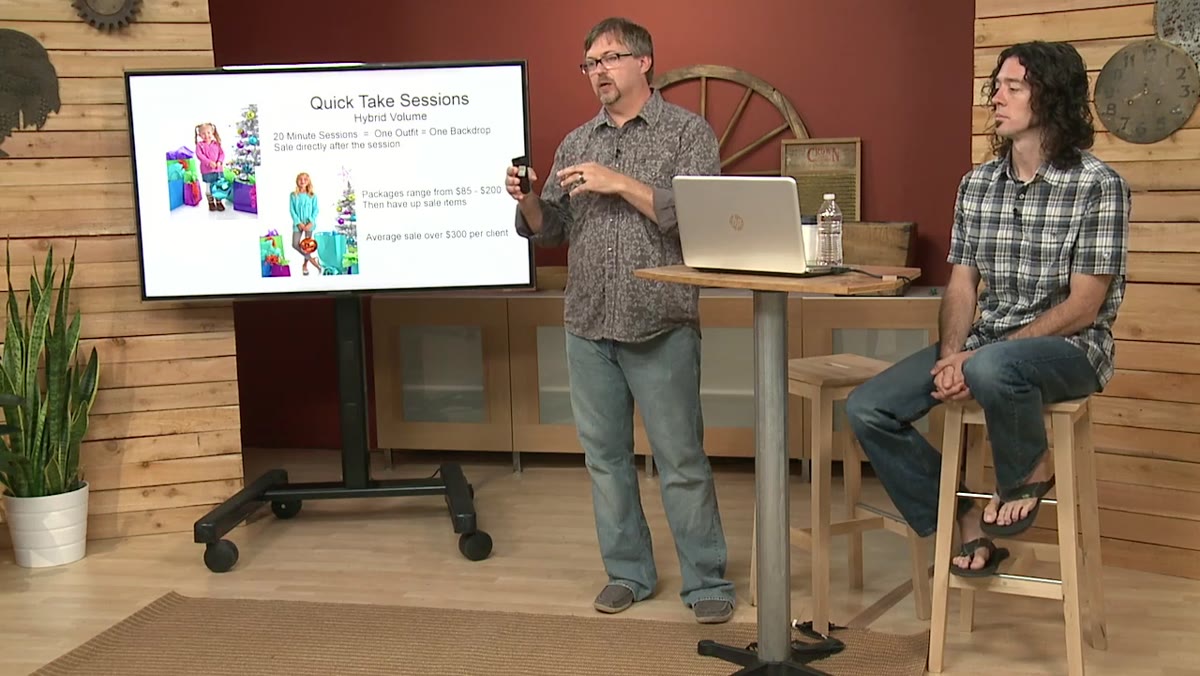
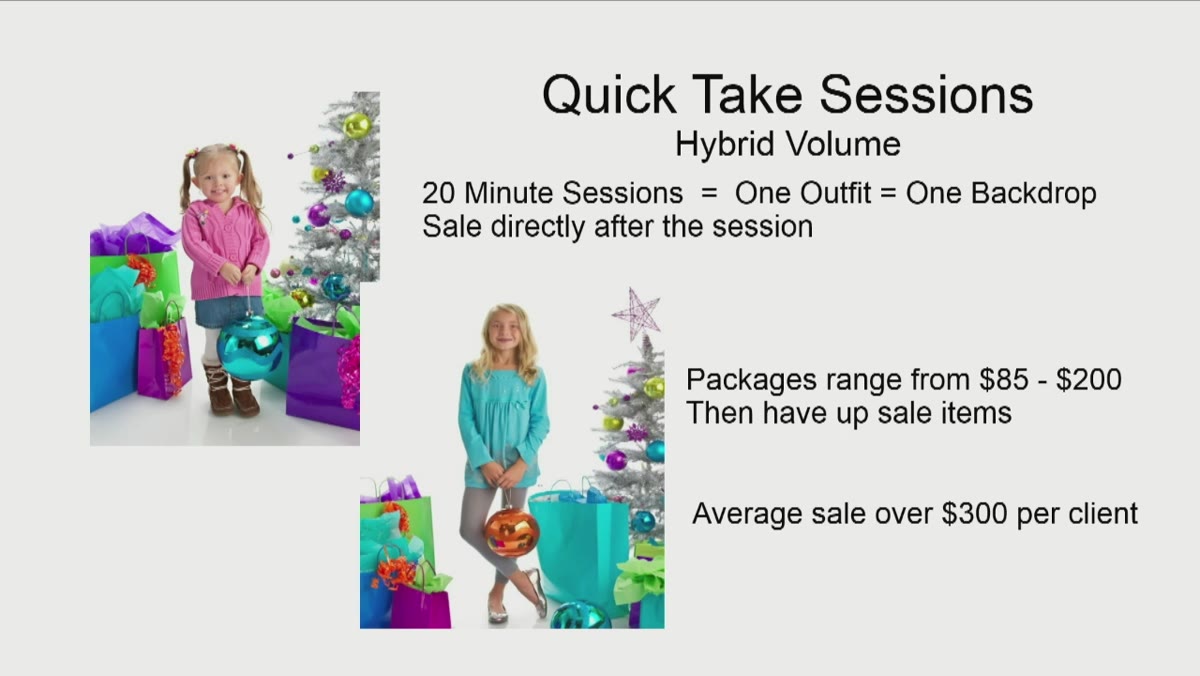 Presenter outlining high volume, mid-volume, hybrid, and high-end categories
TriCoast operates across four clearly defined levels: high volume, mid-volume, hybrid (what they call “quick take” sessions), and high-end. Each tier has a distinct client experience attached to it. The high-volume work is clean, efficient, and designed for speed. The high-end work involves more time, more personalization, and more creative control. The price difference reflects that gap in service delivery, not arbitrary markup.
Presenter outlining high volume, mid-volume, hybrid, and high-end categories
TriCoast operates across four clearly defined levels: high volume, mid-volume, hybrid (what they call “quick take” sessions), and high-end. Each tier has a distinct client experience attached to it. The high-volume work is clean, efficient, and designed for speed. The high-end work involves more time, more personalization, and more creative control. The price difference reflects that gap in service delivery, not arbitrary markup.
Before you touch a pricing calculator, write out what each tier of your service actually includes. How long is the session? How many edited images? What’s the turnaround time? What does the client experience look like from inquiry to delivery? When you can articulate those differences clearly, your prices become easy to justify because they’re tied to real, tangible value.
Step 3: Identify the Volume Markets in Your Community
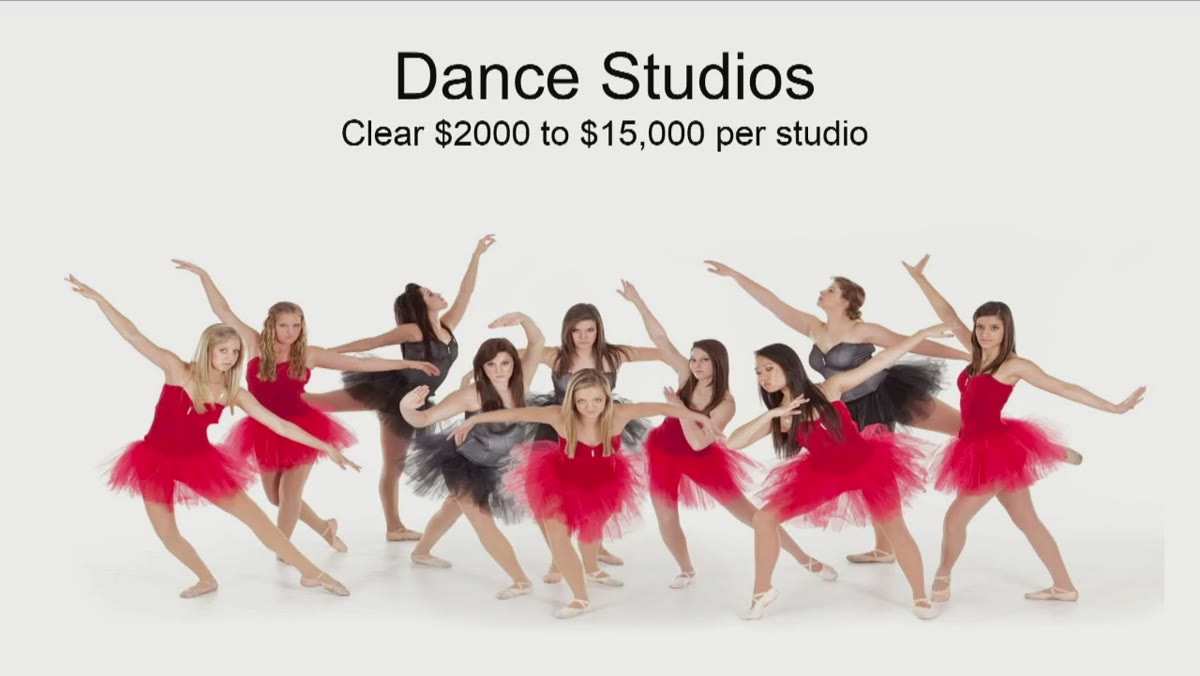 Presenter listing dance studios, sports, daycares as volume markets
TriCoast generates consistent high-volume work from daycares, sports leagues, dance studios, and schools. What’s worth noting is how they treat each of these as its own vertical, not just a variation of the same job. A dance studio shoot has different logistics, different parent expectations, and different upsell opportunities than a youth soccer league.
Presenter listing dance studios, sports, daycares as volume markets
TriCoast generates consistent high-volume work from daycares, sports leagues, dance studios, and schools. What’s worth noting is how they treat each of these as its own vertical, not just a variation of the same job. A dance studio shoot has different logistics, different parent expectations, and different upsell opportunities than a youth soccer league.
Sit down and map out the organizations in your area that photograph groups of children or young adults on a recurring basis. Schools are the obvious answer, but TriCoast makes the point that you can build a full business on dance studios alone if that’s the market you want to serve. The volume is there. The question is whether you’ve introduced yourself to it.
Step 4: Use One Market as a Gateway to Others
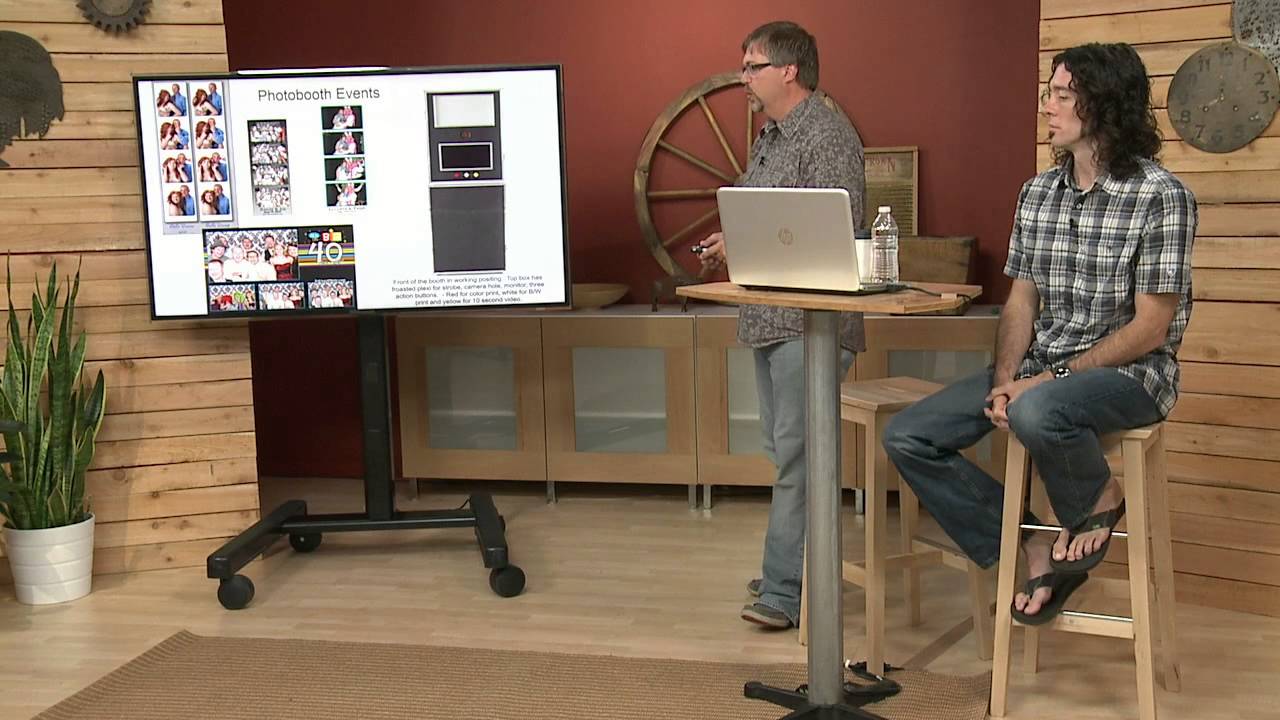
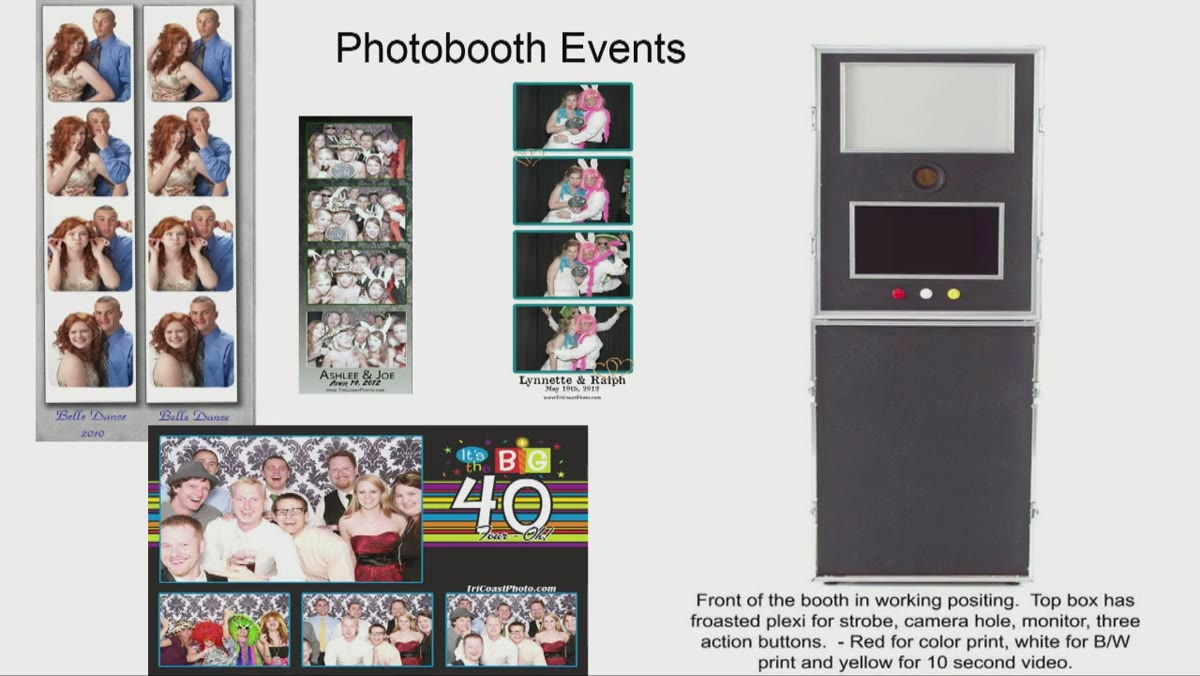 Presenter describing how photo booth work grew from initial volume clients
One of the more practical things TriCoast shares is how their photo booth business grew directly out of their existing volume relationships. A trusted contact pushed them toward bar and bat mitzvah events. They were hesitant at first, unsure of the format and unfamiliar with the culture around it. One visit changed that. The photo booth business then expanded into school dances and other events they hadn’t originally targeted.
Presenter describing how photo booth work grew from initial volume clients
One of the more practical things TriCoast shares is how their photo booth business grew directly out of their existing volume relationships. A trusted contact pushed them toward bar and bat mitzvah events. They were hesitant at first, unsure of the format and unfamiliar with the culture around it. One visit changed that. The photo booth business then expanded into school dances and other events they hadn’t originally targeted.
This is a real growth strategy, not just a nice story. When you serve a school or a sports organization well, you become the known and trusted photographer in that community. Parents, coaches, and event coordinators cross paths constantly. Ask your current volume clients what other events they coordinate or attend where photography is needed. You will almost always find an opening you hadn’t considered.
Step 5: Anchor Your Business Around a Flagship Client
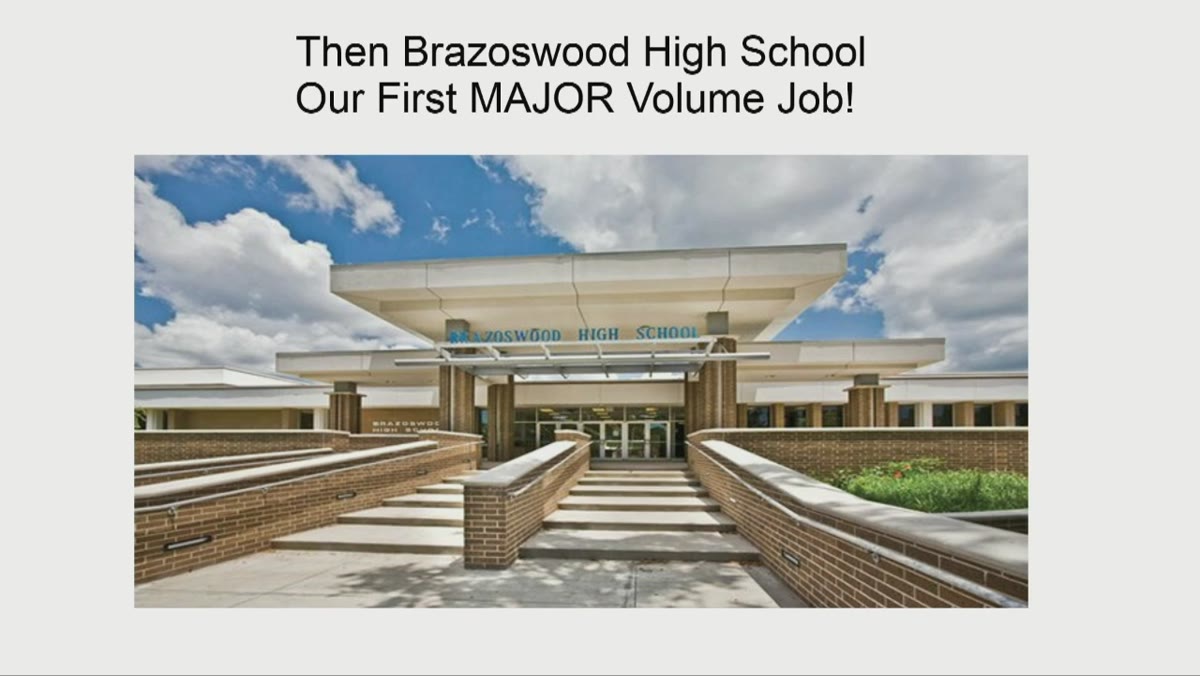 Presenter discussing Bradwood High School as flagship account
TriCoast built much of their local identity around a single flagship school located near their studio. This wasn’t accidental. They targeted it because of its size, its proximity, and its visibility in the community. Landing that account gave them credibility with every other school and organization in the area.
Presenter discussing Bradwood High School as flagship account
TriCoast built much of their local identity around a single flagship school located near their studio. This wasn’t accidental. They targeted it because of its size, its proximity, and its visibility in the community. Landing that account gave them credibility with every other school and organization in the area.
If you’re building a volume business, look for one anchor client that signals to the rest of the market that you’re serious and capable. This could be the largest school in your district, the most prominent sports league, or the dance studio with the biggest recital. When other organizations see your name attached to that account, your pitch becomes significantly easier. You’re not an unknown quantity anymore.
Step 6: Build Packages That Start Low Enough to Remove the “Can’t Afford It” Objection
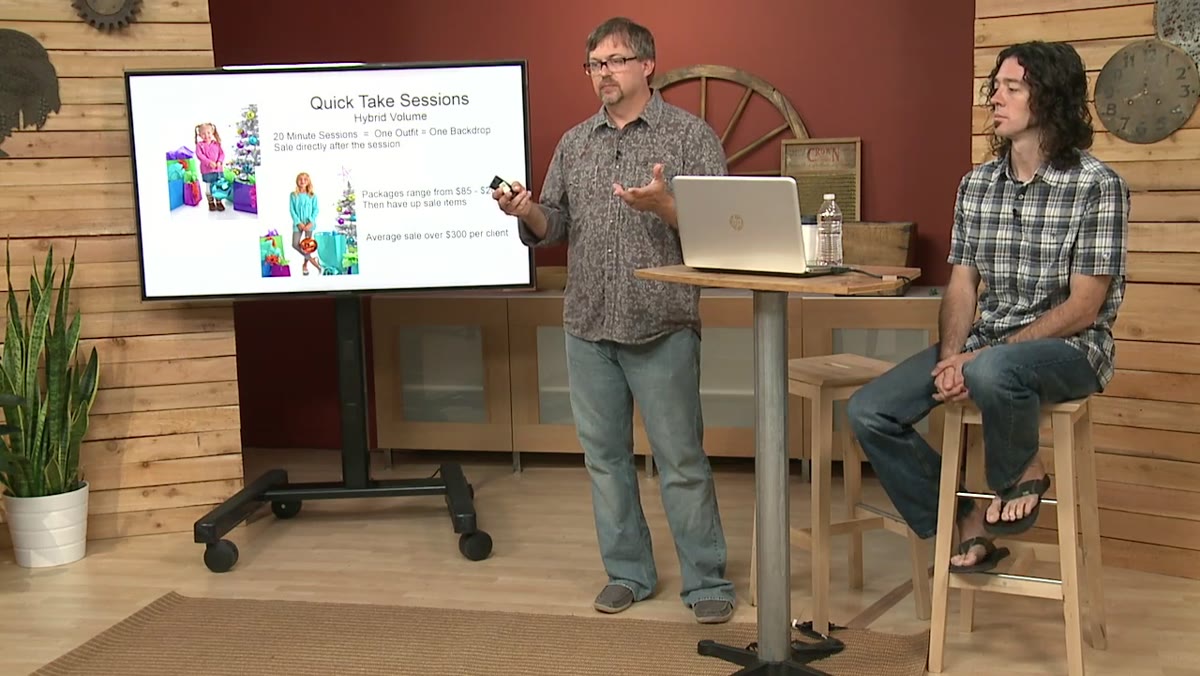 Presenter stating packages begin at $80 and below
TriCoast mentions packages starting at $80 and some starting even lower. That floor isn’t there because they’re underselling their work. It’s there to keep the door open for every family in the communities they serve. The entry-level package covers the basics. Families who want more can move up.
Presenter stating packages begin at $80 and below
TriCoast mentions packages starting at $80 and some starting even lower. That floor isn’t there because they’re underselling their work. It’s there to keep the door open for every family in the communities they serve. The entry-level package covers the basics. Families who want more can move up.
When you design your lowest tier, the goal is to make it genuinely useful, not stripped down to the point of embarrassment. It should reflect what a family can actually do with it: a clean portrait, a digital file, something that has real value. From there, each higher tier adds convenience, quantity, or quality in ways that are easy to understand. Keep the language simple enough that a parent filling out a form at a school event can make the decision in under two minutes.
What I’d Add From My Own Experience
My accountant husband once sat down with me and pulled apart which of my sessions were actually profitable after accounting for my time. The high-volume work I’d been treating as “lesser” was consistently outperforming my premium portrait sessions on a per-hour basis because my systems were tight and my turnaround was fast. TriCoast’s model confirmed what those numbers were already telling me: volume doesn’t mean low value. It means high efficiency. If you’ve been avoiding volume work because it feels like it doesn’t fit your brand, run the math first. You might be surprised.
The single most important idea in this tutorial is that pricing tiers are not about discounting your work. They’re about designing access. A client who books your $80 package today is a client who might book your premium session for a family portrait next year. Keep the door open, deliver excellent work at every level, and let the relationship grow from there.
Watch the full tutorial on YouTube to see how TriCoast walks through their complete approach to high-volume photography and packaging.
Comments (3)
Clear and practical. No fluff. Appreciate that.
This is fantastic. I've been recommending this approach to my readers too.
I keep coming back to this article. It's that useful.
Leave a Comment