I grew up watching my parents price their photography work like an apology. They were talented. Their clients loved them. But every time someone pushed back on a quote, my parents folded, discounted, and hoped for the best. They never connected the dots between what they were charging and what they were actually delivering. That pattern stuck with me until I finally built a framework for my own studio that made pricing feel like a conversation instead of a confession.
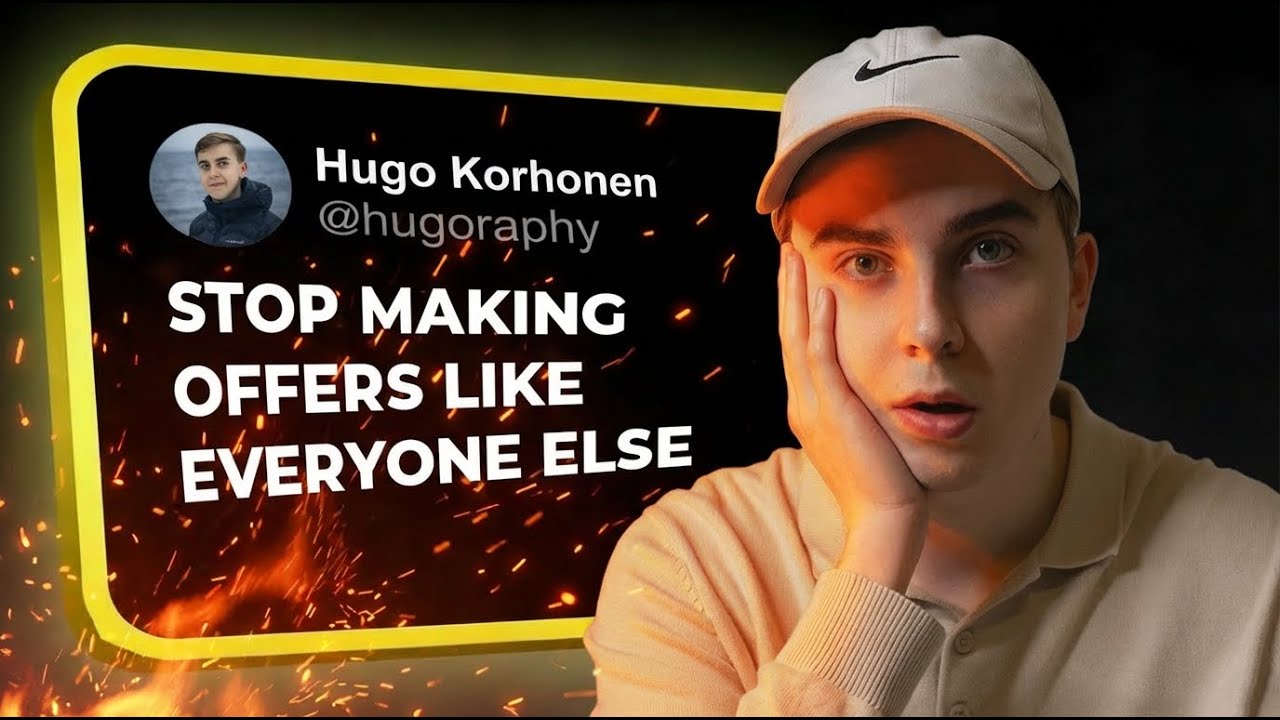
That’s why a recent tutorial by Hugo Korhonen stopped me mid-scroll. Korhonen has shot for Sony, Adobe, and Etihad Airways, and he now teaches photographers how to turn their craft into a full-time business. In this video, he lays out seven traits of what he calls an irresistible photography offer. The premise is simple but genuinely reframes how most photographers think: your price is never the problem. The problem is that you haven’t built an offer worth the price you’re asking. Watch the full tutorial on YouTube
What follows is a practical breakdown of his framework, with my own notes from running a portrait studio in Miami for the past several years. If you’ve ever lost a client and blamed your rates, this one’s for you.
Step 1: Identify Your One Dream Client Before You Build Anything
 Presenter explaining “one dream client” concept on camera
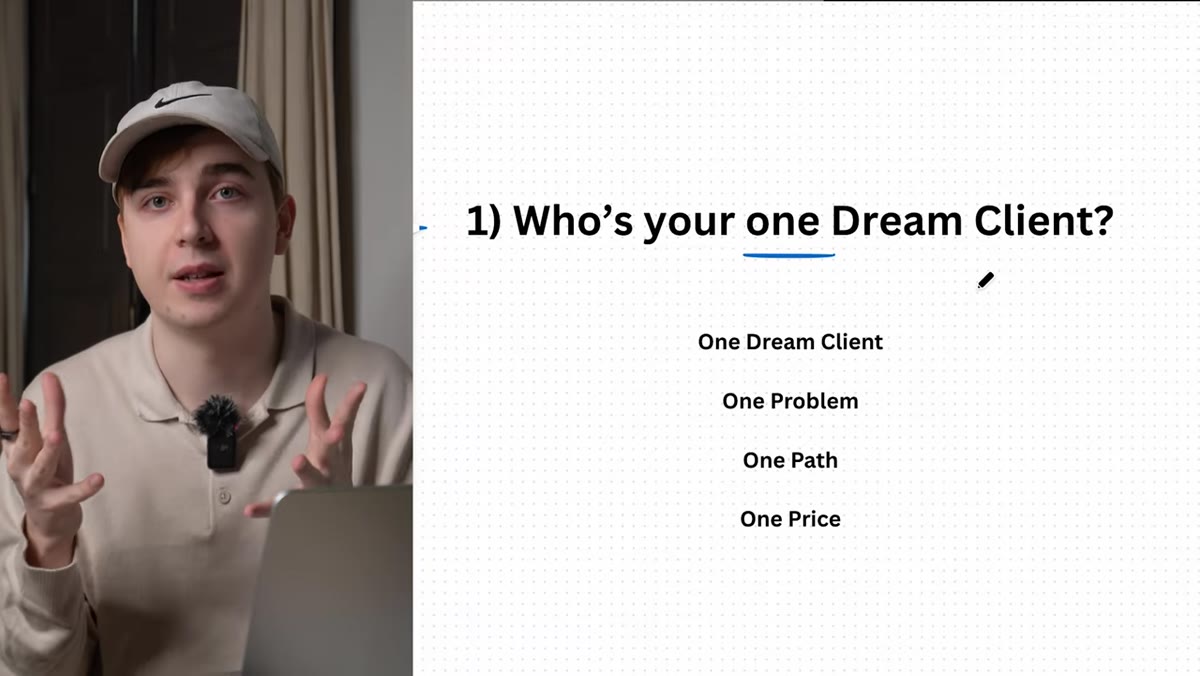
Before Korhonen touches pricing, deliverables, or packaging, he insists you lock in exactly who your offer is for. Not a general demographic. One specific type of person or company. His reasoning is sharp: an offer that tries to appeal to everyone ends up resonating with no one. The moment you try to cover every possible client, your messaging gets diluted and your packaging gets bloated.
Presenter explaining “one dream client” concept on camera
Before Korhonen touches pricing, deliverables, or packaging, he insists you lock in exactly who your offer is for. Not a general demographic. One specific type of person or company. His reasoning is sharp: an offer that tries to appeal to everyone ends up resonating with no one. The moment you try to cover every possible client, your messaging gets diluted and your packaging gets bloated.
The exercise he recommends is simple. Write down who your dream client is, what specific problem they have, and what process you would take them through to solve it. That’s your offer’s foundation. Everything else gets built on top of those three answers. Skip this step and you’ll keep wondering why your perfectly worded proposals aren’t converting.
Step 2: Build Around One Core Solution, Not a Pile of Deliverables
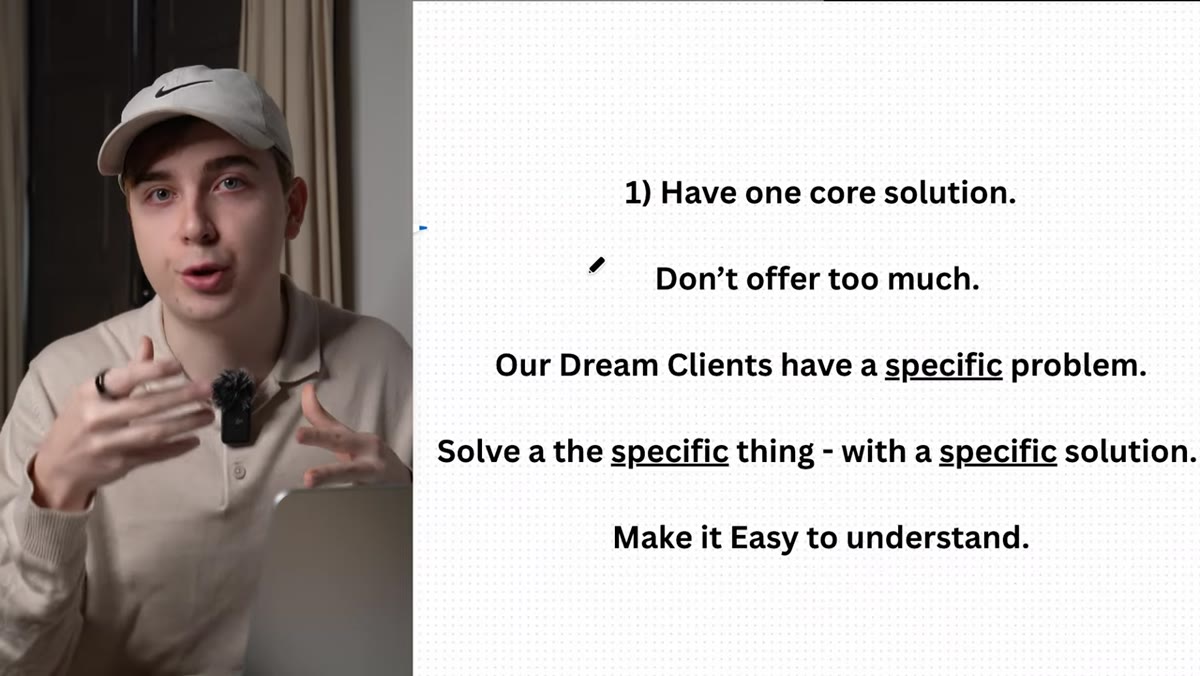
 Presenter gesturing while explaining the danger of too many deliverables
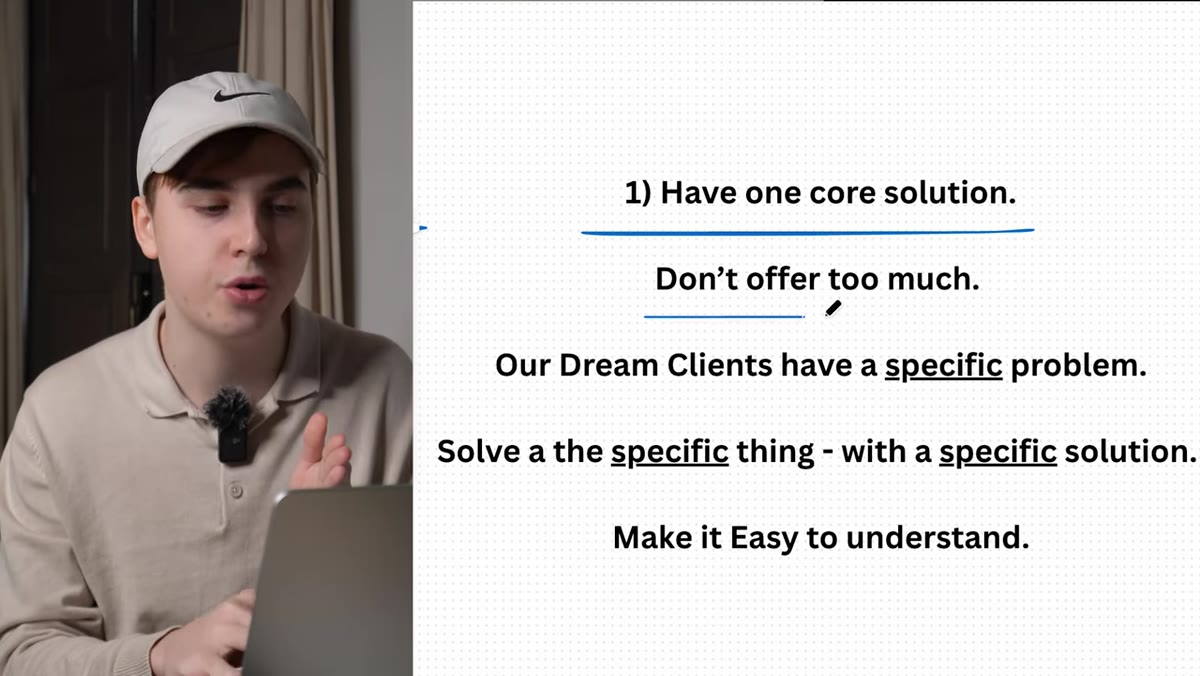
Here’s where most photographers go wrong, and I say that as someone who made this exact mistake for two years. More photos does not mean more value. Korhonen is direct about this: clients are not paying you for a quantity of files. They are paying you to solve a specific problem. When you stack your offer with extras you think sound impressive, you’re actually making it harder for the client to understand what they’re buying.
Presenter gesturing while explaining the danger of too many deliverables
Here’s where most photographers go wrong, and I say that as someone who made this exact mistake for two years. More photos does not mean more value. Korhonen is direct about this: clients are not paying you for a quantity of files. They are paying you to solve a specific problem. When you stack your offer with extras you think sound impressive, you’re actually making it harder for the client to understand what they’re buying.
Keep your offer focused on solving one clearly defined problem. If a corporate client needs headshots that help them attract executive-level hires, your offer should be built around that outcome, not around how many retouched images come in the gallery. Clarity sells. Confusion doesn’t. I track conversion rates on every proposal I send out, and the ones with the cleanest single-outcome framing close at nearly twice the rate of the ones where I tried to show off everything I could do.
Step 3: Make Your Offer Easy to Understand at a Glance
 Presenter explaining that clients won’t buy what they don’t understand
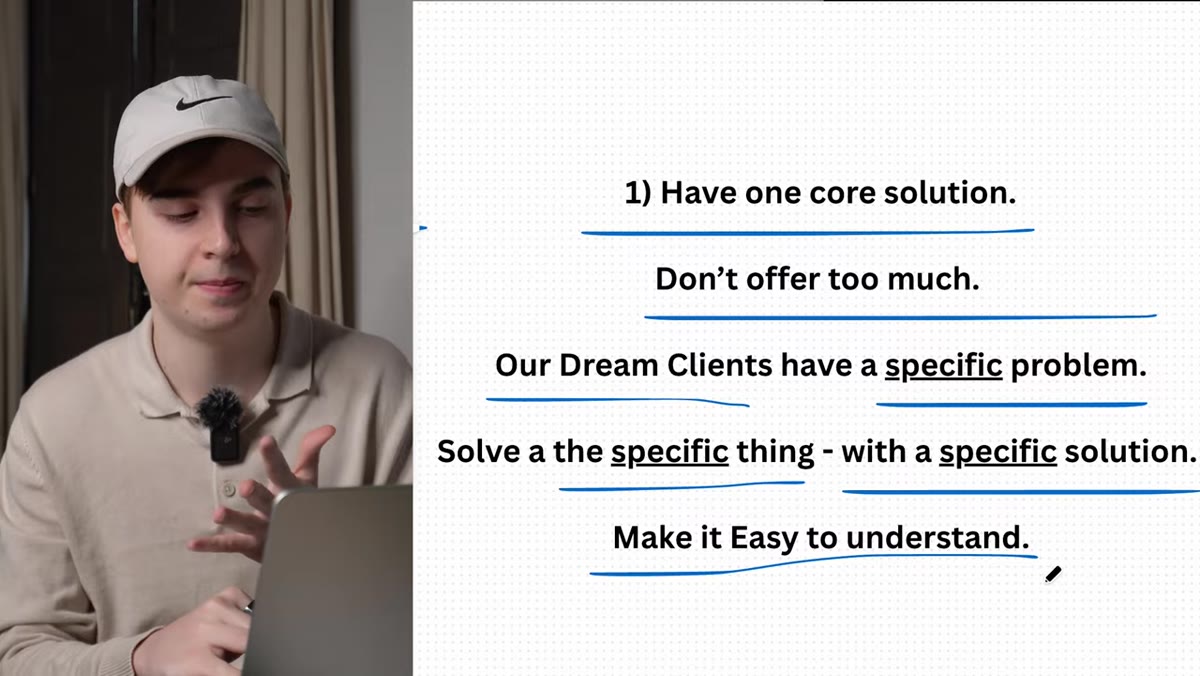
Korhonen makes a point that sounds obvious until you look at your own pricing page: nobody buys something they don’t understand. If a potential client has to decode your offer, they won’t. They’ll just move on to someone whose offer feels familiar and clear.
Presenter explaining that clients won’t buy what they don’t understand
Korhonen makes a point that sounds obvious until you look at your own pricing page: nobody buys something they don’t understand. If a potential client has to decode your offer, they won’t. They’ll just move on to someone whose offer feels familiar and clear.
Your language matters here. Write your offer description the way your client talks, not the way photographers talk to each other. “20 high-resolution edited images delivered via private gallery within 72 hours” is clearer than “a curated selection of premium digital assets.” Test your offer language on someone outside the industry. If they pause or ask a follow-up question, rewrite it.
Step 4: Solve a Specific Problem for a Specific Person
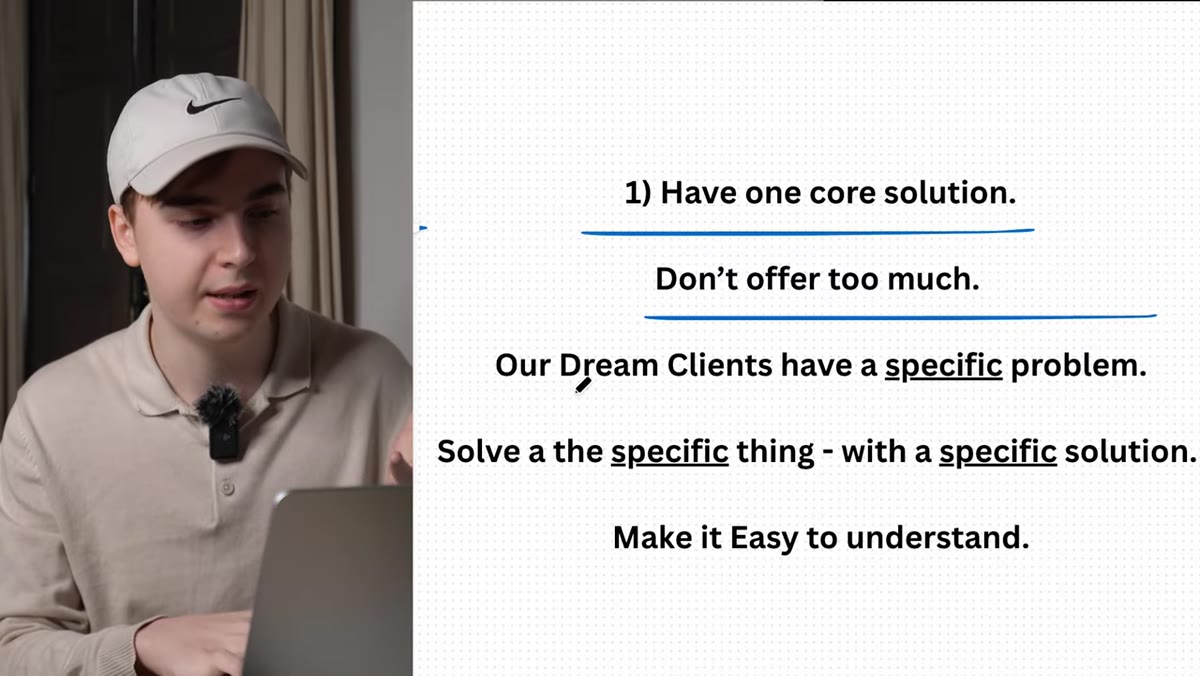 Presenter emphasizing “specific solution to a specific person”
This step builds directly on the dream client work from Step 1 but pushes it further into your actual offer copy. Korhonen frames it this way: your offer is a specific solution to a specific problem for a specific person. All three parts have to be in alignment or the offer falls flat.
Presenter emphasizing “specific solution to a specific person”
This step builds directly on the dream client work from Step 1 but pushes it further into your actual offer copy. Korhonen frames it this way: your offer is a specific solution to a specific problem for a specific person. All three parts have to be in alignment or the offer falls flat.
In practice, this means your offer should name the problem explicitly. If you photograph restaurants, your offer isn’t “food photography.” It’s “social media content that makes your dishes look as good in photos as they taste in person.” That specificity signals to the right client that you understand their world. It also filters out the wrong clients before they even contact you, which saves everyone time.
Step 5: Price for the Outcome, Not the Hours
 Presenter discussing pricing and what clients are actually paying for
Korhonen ties pricing directly to the value of the outcome being delivered, not the time it takes to produce it. This is the shift that changed things for me personally. The year I stopped calculating my rates by hour and started pricing by what the result was worth to the client, my average project value went up significantly. The work didn’t change. The framing did.
Presenter discussing pricing and what clients are actually paying for
Korhonen ties pricing directly to the value of the outcome being delivered, not the time it takes to produce it. This is the shift that changed things for me personally. The year I stopped calculating my rates by hour and started pricing by what the result was worth to the client, my average project value went up significantly. The work didn’t change. The framing did.
Think about what your photography is actually enabling for the client. A brand shoot that helps a startup raise their next funding round is worth more than a headshot for someone updating their LinkedIn. Same camera. Same skill. Different outcomes. Price accordingly.
Step 6: Remove the Friction From Saying Yes
 Presenter describing how offers should make clients feel the decision is obvious
One of Korhonen’s more memorable lines is about making a prospect feel like it would be almost irrational to say no. That’s not manipulation. That’s just a well-constructed offer. When your deliverables are clear, your outcome is compelling, and your price feels proportionate to the result, there’s nothing standing in the way of a yes.
Presenter describing how offers should make clients feel the decision is obvious
One of Korhonen’s more memorable lines is about making a prospect feel like it would be almost irrational to say no. That’s not manipulation. That’s just a well-constructed offer. When your deliverables are clear, your outcome is compelling, and your price feels proportionate to the result, there’s nothing standing in the way of a yes.
Look at your current proposals and ask: where is the friction? Is the pricing structure confusing? Are there too many tiers? Does the client have to do mental math to figure out what they’re getting? Every point of confusion is a reason to walk away. Smooth the path.
Step 7: Align All the Pieces Before You Hit Send
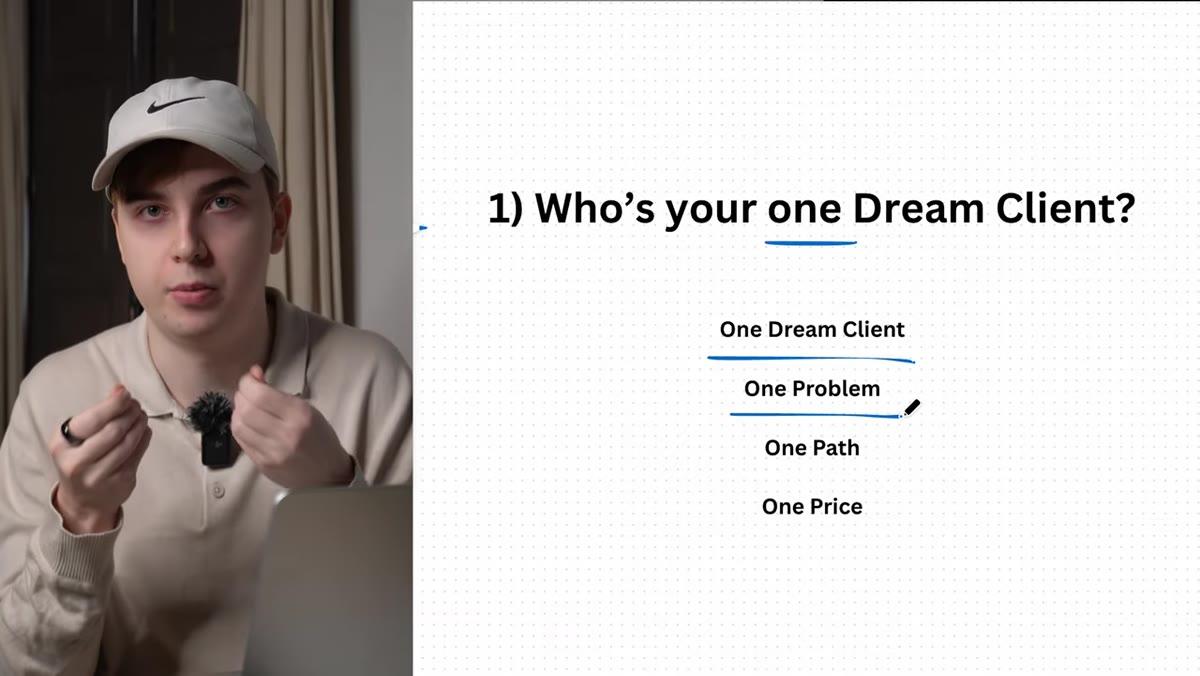 Presenter outlining the four components: client, problem, process, price
Korhonen ends his framework by pulling it all together: dream client, core problem, clear process, aligned price. These four elements should be in sync. If any one of them is off, the whole offer wobbles. A perfect price attached to a vague outcome won’t close. A crystal-clear outcome priced so low it raises eyebrows won’t either.
Presenter outlining the four components: client, problem, process, price
Korhonen ends his framework by pulling it all together: dream client, core problem, clear process, aligned price. These four elements should be in sync. If any one of them is off, the whole offer wobbles. A perfect price attached to a vague outcome won’t close. A crystal-clear outcome priced so low it raises eyebrows won’t either.
Before you send any proposal, run through all four. Who is this for. What problem does it solve. What is the exact process. What is the price and does it reflect the outcome. This four-point check takes three minutes and has saved me from more awkward follow-up conversations than I can count.
One Thing Korhonen Doesn’t Cover (But You Should Think About)
All seven of these traits assume your offer is being seen by the right people in the first place. Distribution matters. I have a 47-item client experience checklist that starts before a client ever contacts me, because my best offers come from referrals built on past experiences. Build your offer using this framework, then make sure you have a consistent way to put it in front of your dream clients. The best offer in the world doesn’t sell itself.
The single most important idea here is one that took me longer than I’d like to admit to absorb: pricing is a packaging problem, not a talent problem. If clients keep saying no, don’t cut your rate. Look harder at what you’re actually offering and whether it’s solving a real, specific problem for a real, specific person.
Watch the full tutorial on YouTube and take notes the first time through. Korhonen covers additional nuance in the full series that pairs well with everything above.
Comments (1)
Simple but effective. Sometimes that's all you need.
Leave a Comment