There’s a particular kind of frustration that comes from doing beautiful work and still struggling to build predictable revenue. For years I watched photographers in my circle pour everything into newborn sessions, deliver stunning galleries, and then never hear from those families again. One-and-done. No repeat business, no referrals that stuck, no reliable income stream they could actually plan around. The problem wasn’t the photography. It was the business model.
That’s why this CreativeLive tutorial on building a baby photography business stopped me mid-scroll. Watch the full tutorial on YouTube – it’s one of the clearest explanations I’ve seen of how to structure a program that doesn’t just book one session but locks in a family for an entire year of milestones. The instructor walks through her exact pricing, her product inclusions, and how she uses two service tiers to qualify clients from the very first phone call. Real numbers, real structure, real results.
I grew up watching my parents undercharge for their portrait work until it nearly broke them. So when someone lays out a model with actual dollar figures and explains the psychology behind each one, I pay attention. Here’s how the strategy breaks down, step by step.
Step 1: Build the Program Around a Loss Leader Entry Price
 Baby program pricing overview with low entry price concept
The foundation of this approach is a deliberately low entry price designed to get hesitant clients to say yes. In marketing this is called a loss leader – you’re not making your margin on that first transaction, you’re buying a relationship. The instructor prices her associate-level baby plan at $99. On its own, that covers three milestone sessions (three months, six months, and one year) plus a finished folio product at the end. Separately, those same elements would cost the client well over $200. The math is obvious to anyone who does the research.
Baby program pricing overview with low entry price concept
The foundation of this approach is a deliberately low entry price designed to get hesitant clients to say yes. In marketing this is called a loss leader – you’re not making your margin on that first transaction, you’re buying a relationship. The instructor prices her associate-level baby plan at $99. On its own, that covers three milestone sessions (three months, six months, and one year) plus a finished folio product at the end. Separately, those same elements would cost the client well over $200. The math is obvious to anyone who does the research.
The critical piece is that the product – the folio – is not delivered until the one-year session is complete. That structure is intentional. It keeps the family engaged with your studio across the entire first year of the baby’s life, which is exactly the window when parents are most emotionally invested in documenting every change.
Step 2: Understand Why Parents Won’t Wait – and Use That to Drive Sales
 Explaining why clients purchase at each milestone session
Here’s the insight that makes the whole program work: no new parent is going to wait twelve months to bring home a single photograph of their newborn. The folio might be the anchor product, but parents will buy prints, digitals, or wall art at every single session along the way. The $99 buy-in is the door opener. The real revenue comes from the purchases clients make at three months, six months, and one year because they can’t help themselves.
Explaining why clients purchase at each milestone session
Here’s the insight that makes the whole program work: no new parent is going to wait twelve months to bring home a single photograph of their newborn. The folio might be the anchor product, but parents will buy prints, digitals, or wall art at every single session along the way. The $99 buy-in is the door opener. The real revenue comes from the purchases clients make at three months, six months, and one year because they can’t help themselves.
This is not a hope-based assumption. The instructor says plainly: it works. When you design your program with this behavioral reality in mind, you stop worrying about whether the entry price is “worth it” and start thinking about how to make every session a compelling sales opportunity in its own right.
Step 3: Create Two Tiers to Qualify Clients Automatically
 Comparing associate session versus master series options
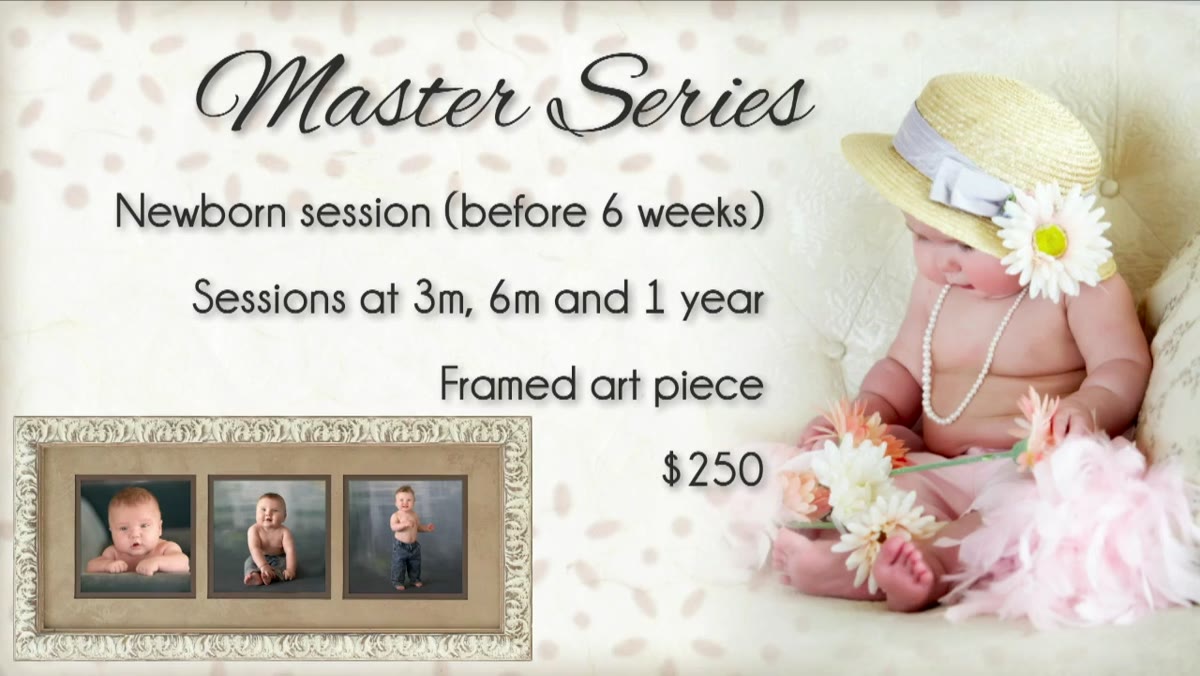
The studio runs two versions of the baby plan, and the difference between them does more than generate revenue – it sorts clients by spending potential without a single awkward conversation. The associate tier at $99 includes the three milestone sessions and the folio. The master series, photographed by the lead photographer, is priced at $250 and includes a complimentary newborn session (for families who book before the baby is six weeks old), plus a framed finished product that retails in the studio at $399 and up.
Comparing associate session versus master series options
The studio runs two versions of the baby plan, and the difference between them does more than generate revenue – it sorts clients by spending potential without a single awkward conversation. The associate tier at $99 includes the three milestone sessions and the folio. The master series, photographed by the lead photographer, is priced at $250 and includes a complimentary newborn session (for families who book before the baby is six weeks old), plus a framed finished product that retails in the studio at $399 and up.
Clients self-select. The price-conscious client books the associate tier and still receives excellent work from an experienced photographer. The client who was referred specifically to the lead photographer, who has done her research and already trusts the brand, books the master series – and statistically, those clients spend more at every session throughout the year.
Step 4: Staff the Tiers Strategically, Not as a Downgrade
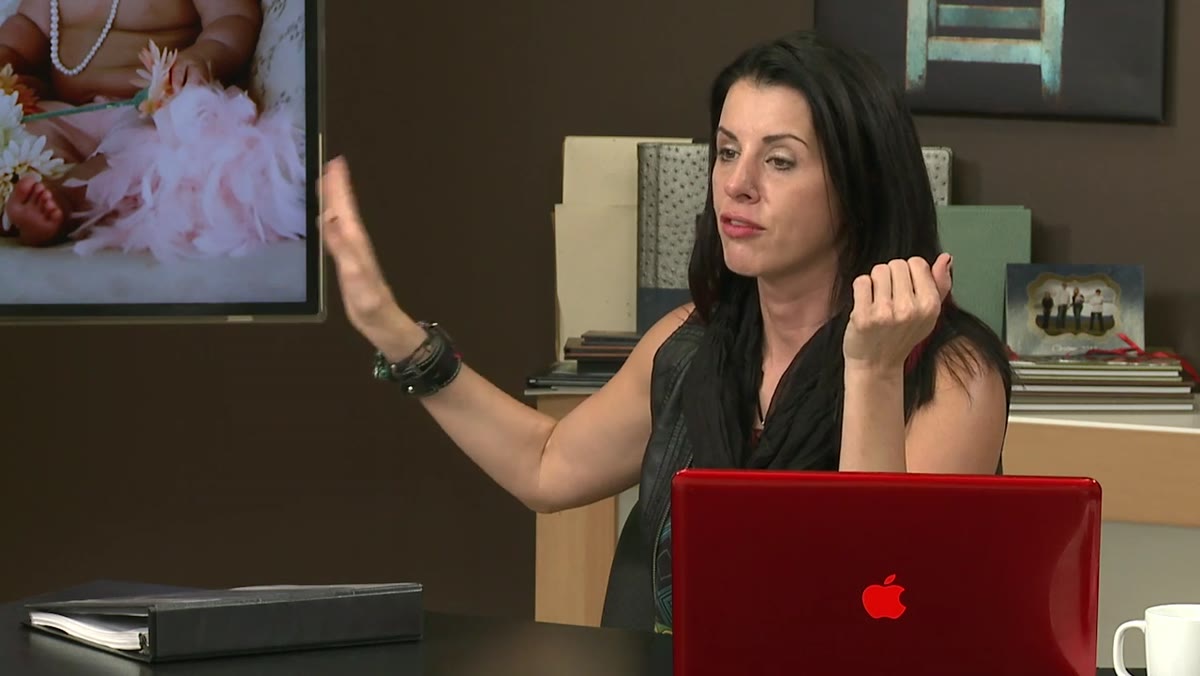 Discussing associate photographer’s strengths and sales performance
This is the part most photographers miss when they try to implement a tiered model. The associate tier only works if the associate photographer is genuinely excellent. The instructor’s associate has been with her studio for eleven years. At certain session types, her sales averages actually exceed the lead photographer’s – because her creative style with props and styled setups connects strongly with a segment of the clientele.
Discussing associate photographer’s strengths and sales performance
This is the part most photographers miss when they try to implement a tiered model. The associate tier only works if the associate photographer is genuinely excellent. The instructor’s associate has been with her studio for eleven years. At certain session types, her sales averages actually exceed the lead photographer’s – because her creative style with props and styled setups connects strongly with a segment of the clientele.
The lesson here is that you’re not offering a budget option and a premium option in terms of quality. You’re offering two different creative personalities and price points. Both deliver results. Both retain clients. If you’re a solo photographer without an associate, the instructor addresses that directly: you can still offer two tiers of the same program with different inclusions and price points, which gives prospective clients a choice and gives you useful data about how they’re likely to spend over the long term.
Step 5: Anchor the Whole System to the Newborn Window
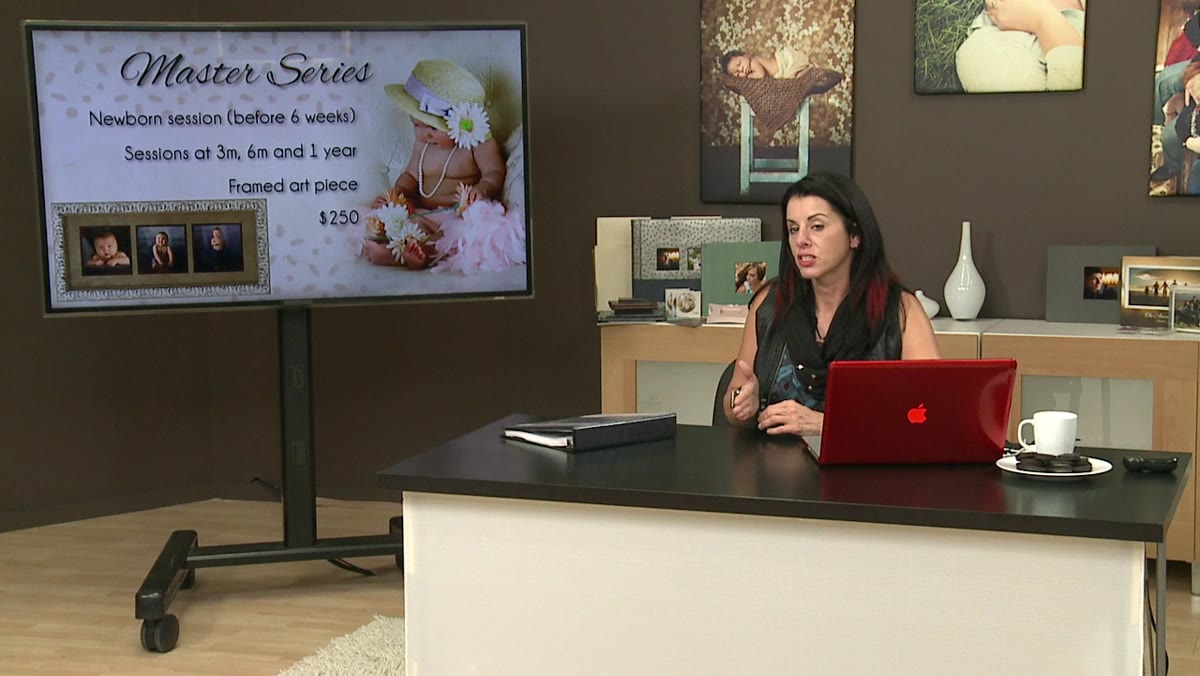 Newborn session offered for bookings before six weeks
The master series includes a complimentary newborn session for families who contact the studio before the baby is six weeks old. That detail is not incidental – it’s the hook that gets families committed to the program before they’ve even processed how fast the first few months are going to move. A family that books during pregnancy or in the first weeks postpartum is emotionally primed to say yes. They’re in the planning mindset. They want to capture everything.
Newborn session offered for bookings before six weeks
The master series includes a complimentary newborn session for families who contact the studio before the baby is six weeks old. That detail is not incidental – it’s the hook that gets families committed to the program before they’ve even processed how fast the first few months are going to move. A family that books during pregnancy or in the first weeks postpartum is emotionally primed to say yes. They’re in the planning mindset. They want to capture everything.
That complimentary session costs you time, but it locks in a client before any competitor has a chance to. And because the full-year program is already purchased, you’re not chasing that family for future bookings. They’re already on your calendar.
What I’d Add From My Own Experience
The tiered structure this tutorial describes works even better when you track what clients in each tier actually spend across all three sessions combined. I’m obsessive about studio metrics – I review session averages by product type, by photographer, and by how the client originally came in. What you’ll find, almost without exception, is that the client who self-selects the higher tier at entry doesn’t just spend more on their package. They refer other high-spending clients. The $250 master series client talks to her playgroup, and three of those families book the same tier.
One adjustment I’d suggest: build a simple client experience checklist for the year – what communication goes out before each session, how you present the product at the end of the year, and how you ask for referrals after the one-year session is complete. The program structure is the engine. Consistent follow-through is what keeps it running.
The single most important idea in this tutorial is that a baby plan is not a discount strategy – it’s a retention strategy. Price the entry low enough to say yes, structure the product delivery to require a full year of engagement, and trust that parents will spend willingly at every milestone along the way. That’s a business you can actually forecast.
Watch the full tutorial on YouTube to hear the instructor walk through her exact numbers and the thinking behind each tier.
Comments (2)
Bookmarked. Coming back to this one for sure.
Shared this with my photography group. Everyone loved it.
Leave a Comment