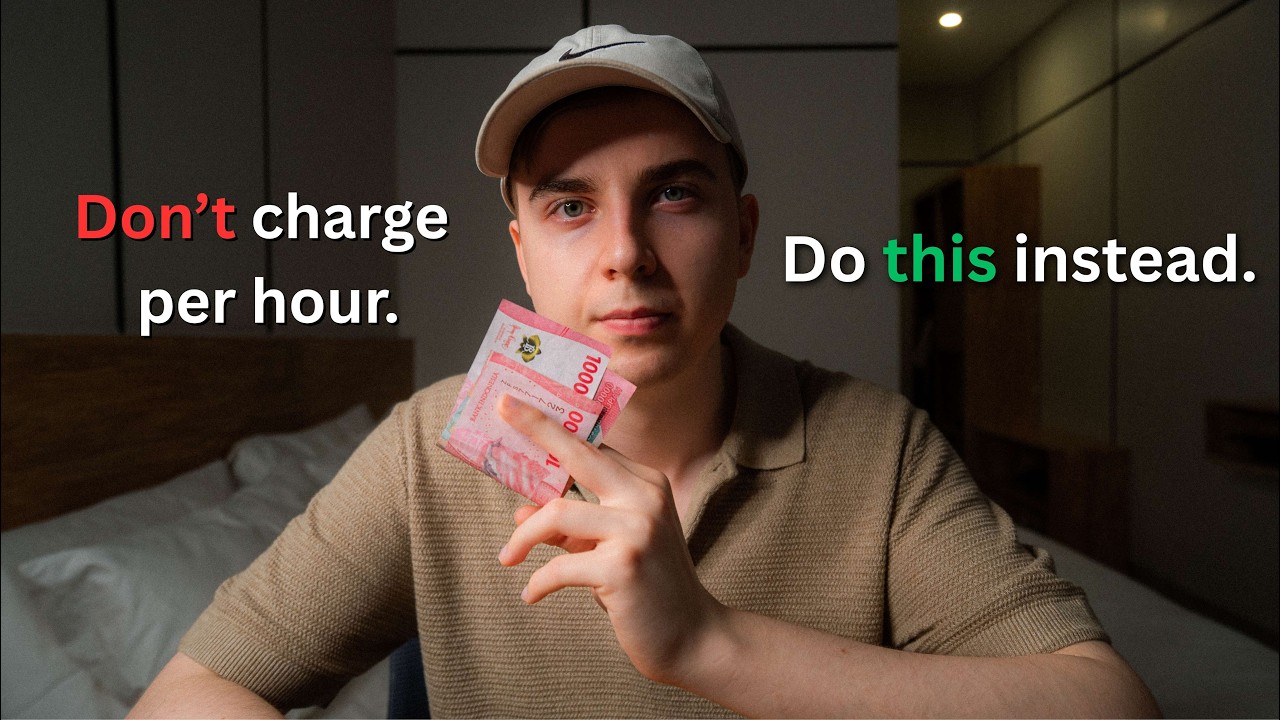
I grew up watching my parents run a photography business out of our living room in Hialeah. They were talented. They were hardworking. And they chronically undercharged because they priced everything by the hour and never figured out how to break free from that ceiling. By the time I started my own portrait studio in Miami, I was determined not to repeat their mistake — but honestly, it took me longer than I’d like to admit to actually crack the pricing problem. I kept looking for a magic number online. $150 an hour? $200? I’d read forum threads, watch videos, and walk away more confused than when I started.
What finally shifted things for me was stopping the search for “the right rate” and starting to understand the underlying logic of how pricing should work. That’s exactly what Hugo Korhonen lays out in his tutorial, Watch the full tutorial on YouTube, and it’s worth a close read even if you’ve been running your business for years. The framework he walks through isn’t complicated, but it cuts straight through the noise most photographers are drowning in.
Step 1: Accept That No One Online Can Tell You Your Exact Price
 caption: Hugo explaining why generic pricing advice fails photographers
The first thing Hugo addresses is the reflex most of us have when we’re stuck on pricing: googling “how much should I charge for photography” and expecting a number to appear. He’s direct about why that never works. Pricing is contextual. Your market, your niche, your experience level, your client’s budget and expectations — all of these variables mean a number that works for a photographer in rural Ohio could be completely wrong for someone shooting brand campaigns in a major city. What you actually need is a framework, not a figure. Once I internalized that, I stopped feeling paralyzed every time a new inquiry landed in my inbox.
caption: Hugo explaining why generic pricing advice fails photographers
The first thing Hugo addresses is the reflex most of us have when we’re stuck on pricing: googling “how much should I charge for photography” and expecting a number to appear. He’s direct about why that never works. Pricing is contextual. Your market, your niche, your experience level, your client’s budget and expectations — all of these variables mean a number that works for a photographer in rural Ohio could be completely wrong for someone shooting brand campaigns in a major city. What you actually need is a framework, not a figure. Once I internalized that, I stopped feeling paralyzed every time a new inquiry landed in my inbox.
Step 2: Understand Why Hourly Pricing Boxes You In
 caption: Hugo outlining the two limits of hourly rate models
Hourly pricing feels logical at first. Your time has value, you charge for it, simple. But Hugo breaks down why this model creates a ceiling you can never escape. There are only two levers available to you: work more hours, or raise your hourly rate. The first option burns you out. The second runs into a specific problem that most photographers don’t see coming.
caption: Hugo outlining the two limits of hourly rate models
Hourly pricing feels logical at first. Your time has value, you charge for it, simple. But Hugo breaks down why this model creates a ceiling you can never escape. There are only two levers available to you: work more hours, or raise your hourly rate. The first option burns you out. The second runs into a specific problem that most photographers don’t see coming.
When you tie your fee to time, you’re implicitly telling clients that what they’re paying for is your presence, not your output. And that framing quietly erodes your value over time. The better you get at photography, the faster you work. A veteran shooter might nail a perfect portrait in five focused minutes. A beginner might take an hour circling the same result. Under an hourly model, the expert earns less for being better. That’s a broken incentive structure, and recognizing it is the first real step toward building a pricing strategy that actually rewards your growth.
Step 3: Shift Your Thinking from Labor to Outcomes
 caption: Hugo describing what clients actually care about purchasing
This is the pivot point of the entire tutorial, and it’s the one that changed how I talk to clients. Hugo is blunt about it: nobody is buying your time. Not a single client has ever written you a check because they valued your hours. They paid for a result.
caption: Hugo describing what clients actually care about purchasing
This is the pivot point of the entire tutorial, and it’s the one that changed how I talk to clients. Hugo is blunt about it: nobody is buying your time. Not a single client has ever written you a check because they valued your hours. They paid for a result.
For a corporate client, that result might be a set of brand images that make their website look credible enough to close a $50,000 contract. For a family, it’s the photographs they’ll frame on the wall and show their kids in twenty years. The emotion, the memory, the professional credibility — that’s the product. When I started describing my work in those terms during consultations, something shifted. Clients stopped negotiating over hourly increments and started thinking about what the outcome was worth to them. Your job is to understand what your client actually values, then price to that value.
Step 4: Stop Competing on Price at the Bottom
 caption: Hugo arguing against matching competitor pricing in your market
Hugo makes a case here that a lot of photographers intellectually agree with but emotionally resist: don’t try to be the cheapest option, and don’t benchmark yourself against what everyone else in your market charges. Both strategies pull you toward the middle or the bottom, where margins are thin and clients are the most difficult.
caption: Hugo arguing against matching competitor pricing in your market
Hugo makes a case here that a lot of photographers intellectually agree with but emotionally resist: don’t try to be the cheapest option, and don’t benchmark yourself against what everyone else in your market charges. Both strategies pull you toward the middle or the bottom, where margins are thin and clients are the most difficult.
The logic is straightforward. If you compete on low price, you attract clients who chose you because you were cheap. Those clients are often the most demanding, least loyal, and most likely to haggle. You also create a race to the bottom with other photographers in your area that nobody wins. Hugo’s push is to move in the opposite direction entirely. Position yourself at the premium end of your market. Not arbitrarily, but by building the portfolio, client experience, and communication skills that justify it. I have a 47-item checklist I run through for every client from first inquiry to final gallery delivery. That level of care is why I can charge what I charge. It’s not arrogance. It’s intentional positioning.
Step 5: Build Packages Around Deliverables, Not Hours
 caption: Hugo presenting an outcome-based pricing structure for photographers
The practical replacement for hourly pricing is packaging your work around what the client receives rather than how long you spend on it. Hugo walks through how this looks in practice. Instead of quoting “$200 per hour, minimum 2 hours,” you offer a defined package: a specific number of edited images, a certain type of shoot, a defined turnaround time, and a clear deliverable the client can picture.
caption: Hugo presenting an outcome-based pricing structure for photographers
The practical replacement for hourly pricing is packaging your work around what the client receives rather than how long you spend on it. Hugo walks through how this looks in practice. Instead of quoting “$200 per hour, minimum 2 hours,” you offer a defined package: a specific number of edited images, a certain type of shoot, a defined turnaround time, and a clear deliverable the client can picture.
This approach does two things at once. It removes the client’s temptation to calculate whether your hourly rate is “fair,” and it lets you price based on the value of the outcome rather than your labor cost. A brand package that helps a client look more professional and attract better customers is worth far more than two hours of your time. Name the outcome in your pricing, and you give yourself room to charge accordingly.
What I’d Add From My Own Experience
Hugo’s framework is solid, and I wish I’d had it clearly laid out when I was starting out. The one thing I’d layer on top of it is the importance of knowing your actual cost of doing business before you build any package price. Value-based pricing is the right direction, but if you’ve never done the math on your overhead, your software subscriptions, your gear depreciation, and your unbillable hours, you can build a beautiful value-based package that still leaves you losing money.
I run a monthly audit on my studio’s numbers. Not because I enjoy spreadsheets (my accountant husband does, though), but because pricing confidently requires knowing your floor. Once you know the minimum you need to earn per project to stay profitable, you can build upward toward the value-based price with clarity instead of anxiety.
The single most important takeaway from Hugo’s tutorial is this: clients do not buy time, they buy outcomes. Price for the outcome, package for the deliverable, and position yourself where you want to be in the market rather than where fear puts you. Watch the full tutorial on YouTube and take notes on the framing he uses. It’s the kind of shift that looks simple on the surface but compounds significantly once you put it into practice.
Comments (2)
This is going in my reference folder. Incredibly useful.
My workflow just got 10x faster. Not even kidding.
Leave a Comment