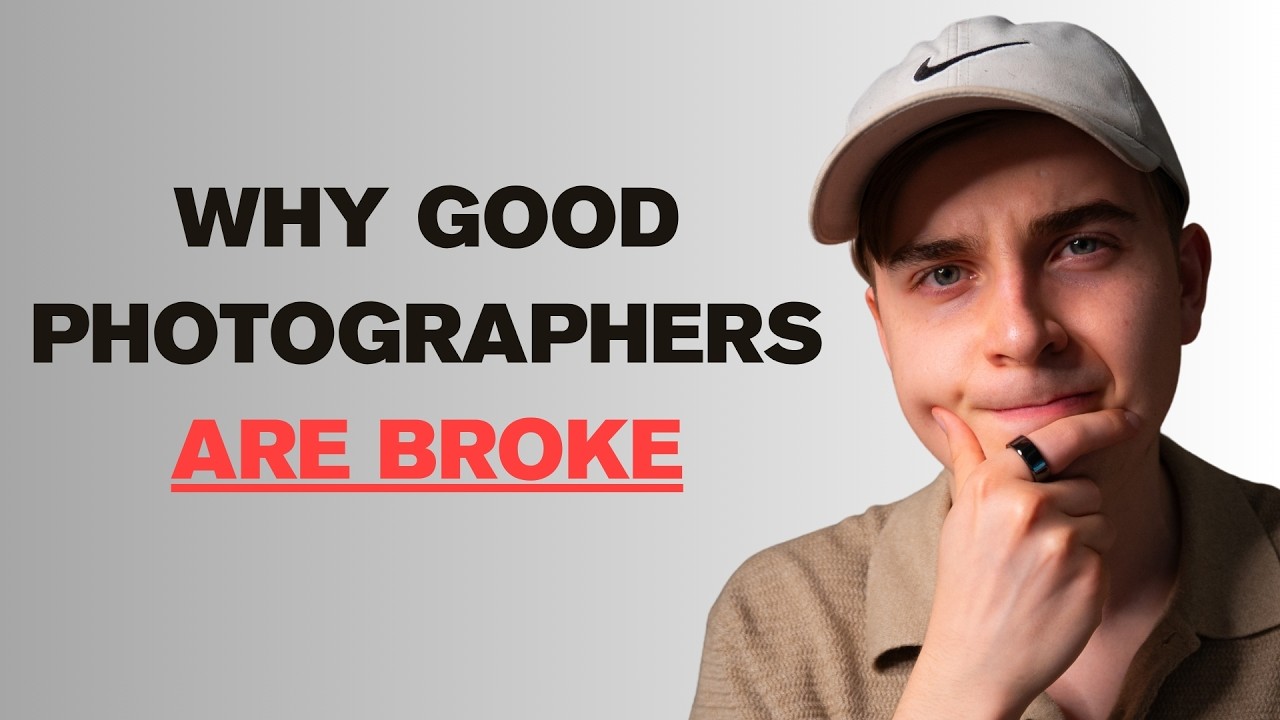
I grew up watching my parents run a photography business on talent and hope. They were genuinely skilled. Clients loved their work. And they were perpetually, quietly broke — because they never learned to treat photography like a business. By the time I opened my own portrait studio in Miami, I was determined not to repeat that pattern. Even so, it took me years to unlearn some habits that were quietly bleeding my revenue dry.
That’s why a tutorial like this one stopped me mid-scroll. In this Hugo Korhonen tutorial — Watch the full tutorial on YouTube — Hugo breaks down four specific reasons technically skilled photographers stay financially stuck. He’s not talking about gear or editing. He’s talking about the business behaviors that nobody in photography school mentions. I’ve seen every one of these patterns play out in my own career and in the photographers I coach. Let’s walk through each one.
Step 1: Stop Waiting for Opportunities and Start Creating Them
 Photographer passively waiting instead of actively reaching out to clients
The first trap Hugo identifies is passive marketing: building a beautiful website, curating an Instagram feed, and then sitting back and waiting for inquiries to roll in. This feels productive. It isn’t. In the early stages of a photography business, inbound leads are almost nonexistent because nobody knows you exist yet.
Photographer passively waiting instead of actively reaching out to clients
The first trap Hugo identifies is passive marketing: building a beautiful website, curating an Instagram feed, and then sitting back and waiting for inquiries to roll in. This feels productive. It isn’t. In the early stages of a photography business, inbound leads are almost nonexistent because nobody knows you exist yet.
The fix is direct outreach. Identify exactly who you want to work with, whether that’s local restaurants, real estate agents, boutique fitness studios, or wedding planners, and contact them personally. You do not need a polished logo or a perfect website before you do this. Hugo is clear on that point, and I’d back it up completely. My first five commercial clients came from direct emails I sent before I even had a proper domain name. Get the clients first. Polish the brand later.
Step 2: Stop Selling Photos and Start Solving Problems
 Comparison of “selling photos” pitch versus a problem-solution offer
This is the mindset shift that separates photographers who struggle from those who build real revenue. Hugo uses a hotel as his example: the hotel doesn’t actually want photographs. They want more bookings. The photos are a vehicle to that outcome, not the product itself.
Comparison of “selling photos” pitch versus a problem-solution offer
This is the mindset shift that separates photographers who struggle from those who build real revenue. Hugo uses a hotel as his example: the hotel doesn’t actually want photographs. They want more bookings. The photos are a vehicle to that outcome, not the product itself.
When you pitch a client by saying “I’d love to shoot some photos for you,” the honest answer from most businesses is “we’re fine.” But if you walk in with “I help boutique hotels increase direct bookings by giving them imagery that competes with the big chains,” you’re speaking to a problem they actively feel. Reframe every offer around what the client gets from the photos, not the photos themselves. This one change will make your outreach more effective almost immediately.
Step 3: Narrow Your Niche Until It Feels Uncomfortable
 Defining one specific client type rather than a broad photography audience
Hugo’s third reason photographers stay broke is being too broad. Trying to serve everyone, from newborns to commercial brands to senior portraits to weddings, means your messaging lands with no one. It’s counterintuitive, but the more specifically you describe who you help, the more attractive you become to that exact person.
Defining one specific client type rather than a broad photography audience
Hugo’s third reason photographers stay broke is being too broad. Trying to serve everyone, from newborns to commercial brands to senior portraits to weddings, means your messaging lands with no one. It’s counterintuitive, but the more specifically you describe who you help, the more attractive you become to that exact person.
In practice, this means picking one type of client and one type of problem, then building everything around that. Your portfolio, your website copy, your outreach emails, your pricing structure. All of it should speak directly to a single audience. The fear is that you’ll turn people away. What actually happens is that the right people recognize themselves in your messaging and trust you faster. I track my studio’s client sources obsessively, and my data consistently shows that niche-specific referrals close at nearly twice the rate of general inquiries.
Step 4: Audit What You’re Spending Energy On
 List of common time-wasters photographers focus on early in business
Embedded in Hugo’s first point is a productivity lesson worth pulling out on its own. He lists the things photographers obsess over early on: the website design, the logo, the business cards. These feel like work. They are not revenue-generating activities.
List of common time-wasters photographers focus on early in business
Embedded in Hugo’s first point is a productivity lesson worth pulling out on its own. He lists the things photographers obsess over early on: the website design, the logo, the business cards. These feel like work. They are not revenue-generating activities.
Do a real audit of how you spent your last five working days as a photographer. Write it down by category: client communication, shooting, editing, marketing outreach, and everything else. Most photographers who feel stuck will find that the “everything else” category is swallowing hours that could go toward direct outreach or building client relationships. Hugo’s framework asks you to prioritize anything that puts you in front of a potential client over anything that makes your brand look prettier.
What I’d Add From My Own Experience
Hugo’s four points are solid and I’ve lived most of them. The one thing I’d layer on top is the importance of tracking your results numerically, not just directionally.
When I doubled my income in the year I finally committed to a focused niche and a problem-first pitch, I almost didn’t notice it happening because I wasn’t measuring month over month. My accountant husband sat me down with a spreadsheet and showed me the actual revenue curve. Seeing the numbers made it concrete in a way that gut feeling never did. Now I track inquiry-to-booking rate, average project value, and client source every single month.
If you start implementing Hugo’s steps, give yourself a 60-day window and measure. How many outreach messages did you send? How many responses did you get? How many of those converted? The data will tell you where your system is working and where you need to adjust. Without it, you’re still operating on hope, which is exactly what keeps talented photographers broke.
The single most important idea in Hugo’s tutorial is this: skill gets you in the room, but positioning and outreach get you paid. You can be the best photographer in your city and still earn less than someone with half your technical ability, simply because they understand that photography is a business and they run it accordingly.
If you’re ready to go deeper on these ideas, Watch the full tutorial on YouTube and pay particular attention to how Hugo frames the client conversation. It’s worth 10 minutes of your time and could reframe how you approach every pitch you make this year.
Comments (6)
Never thought of approaching it this way. Really creative.
Just used this on a wedding shoot edit. Client was thrilled.
Never thought of approaching it this way. Really creative.
This is the kind of content that keeps me coming back.
Just used this on a wedding shoot edit. Client was thrilled.
Shared this with my photography group. Everyone loved it.
Leave a Comment