I grew up watching my parents run a photography studio, and the one thing they never cracked was referrals. They had talent. They had loyal clients. But those clients never seemed to send anyone new through the door. For years I thought that was just how the industry worked, that referrals were random, something you hoped for but couldn’t engineer. It wasn’t until I started studying photographers who built their entire business on word-of-mouth that I realized referrals aren’t luck. They’re a result of a deliberate, repeatable system.
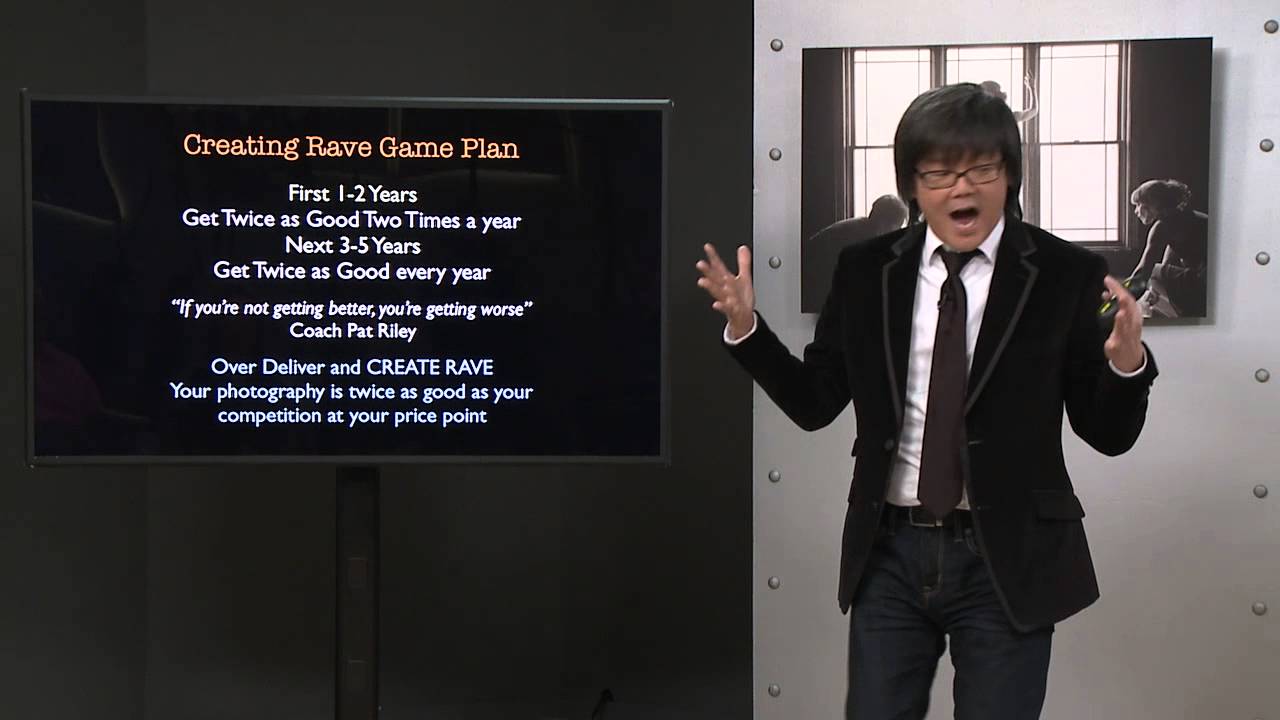
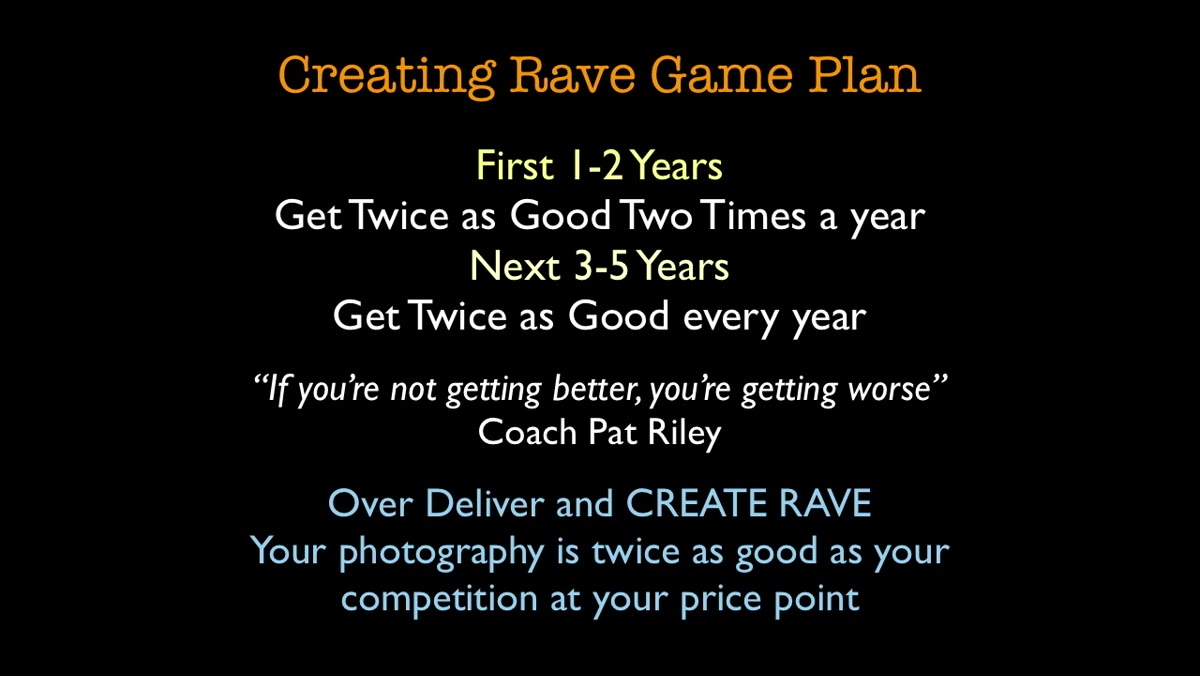
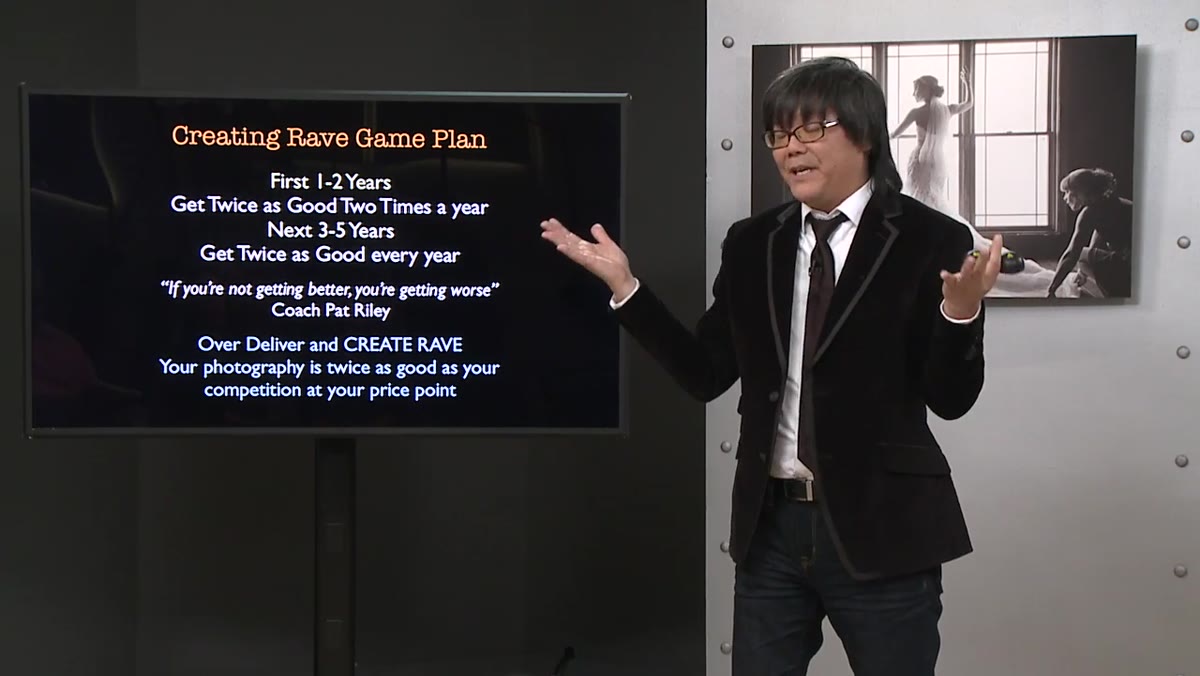
That’s what stopped me mid-scroll when I came across Scott Robert Lim’s session on CreativeLive. In this CreativeLive tutorial with Scott Robert Lim, he lays out a clear-eyed, numbers-driven framework for what he calls “creating rave.” The premise is simple but demanding: your work needs to be twice as good as your competition at your price point. Not a little better. Twice as good. The raving follows from that, not from your Instagram feed or your email list.
What I love about this framework is that it’s honest about the timeline. There’s no overnight shortcut here. But there’s also a concrete game plan, and that’s what I’m breaking down below.
Step 1: Stop Copying and Start Contributing
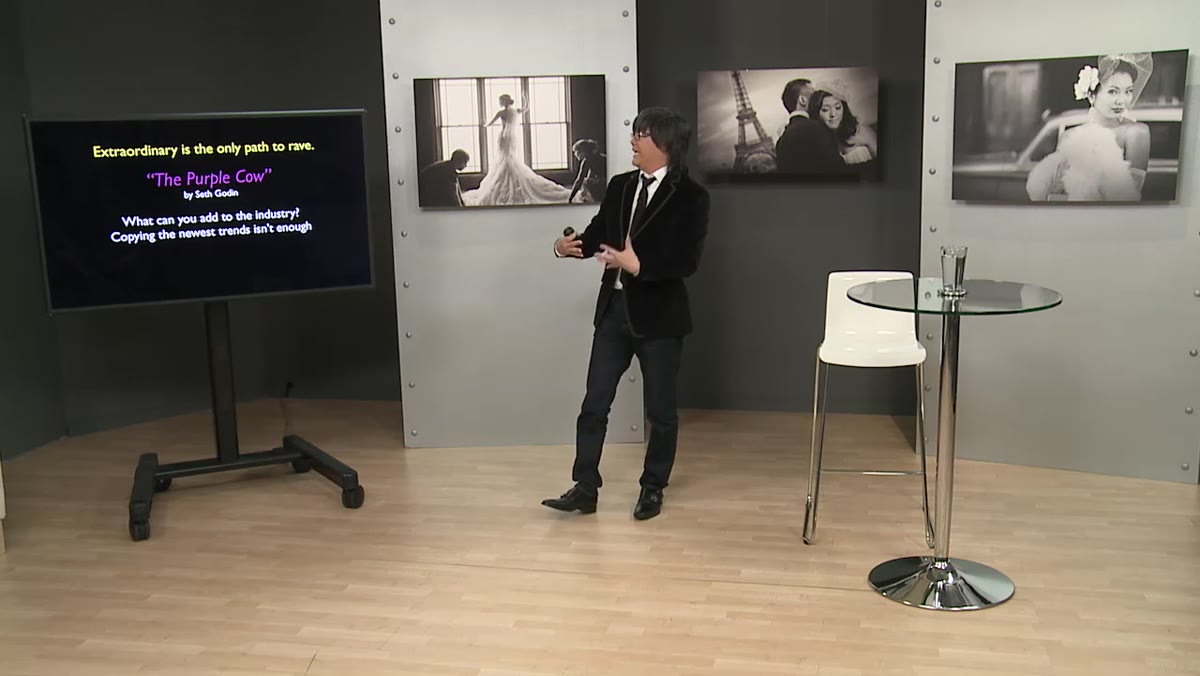 Scott speaking at a whiteboard about adding to the industry
The first shift Lim asks you to make is mental. Copying trends, techniques, or another photographer’s posing style is a starting point, not a destination. If you want to build a business that stands on its own, you need to ask yourself what you’re actually adding to the craft. What perspective, aesthetic, or approach do you bring that didn’t exist before you showed up?
Scott speaking at a whiteboard about adding to the industry
The first shift Lim asks you to make is mental. Copying trends, techniques, or another photographer’s posing style is a starting point, not a destination. If you want to build a business that stands on its own, you need to ask yourself what you’re actually adding to the craft. What perspective, aesthetic, or approach do you bring that didn’t exist before you showed up?
This matters practically because the market can always find a cheaper version of whoever you’re imitating. The photographers who command premium prices and generate genuine referrals are the ones clients can’t quite replace with someone else. Start keeping a running list of the techniques you’ve borrowed and push yourself to answer: what am I building on top of these?
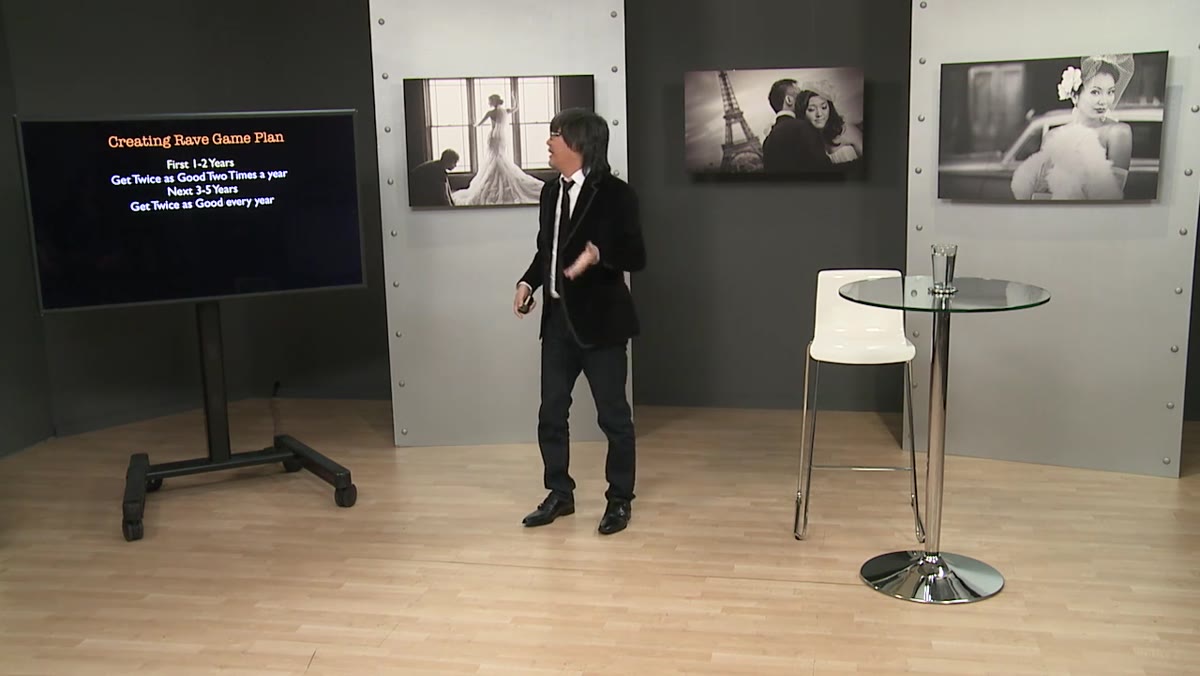
Step 2: Set a Skill Growth Target for Years One and Two
 Lim gesturing as he outlines the year-by-year improvement framework
Lim gets specific here, and the specificity is the point. In your first year or two, the goal is to be significantly better by the end of the year than you were at the start. Beginners have an advantage: the learning curve is steep and progress comes fast. The mistake most photographers make is treating skill-building as something that happens passively, on the job.
Lim gesturing as he outlines the year-by-year improvement framework
Lim gets specific here, and the specificity is the point. In your first year or two, the goal is to be significantly better by the end of the year than you were at the start. Beginners have an advantage: the learning curve is steep and progress comes fast. The mistake most photographers make is treating skill-building as something that happens passively, on the job.
Treat it like a training plan. Schedule time each month to study lighting, composition, posing, or post-processing. Set a measurable benchmark so you can actually track whether you’ve improved. I track my studio’s portfolio reviews quarterly, pulling five to ten images and rating them against work I admire. It sounds obsessive, but it keeps me from coasting.
Step 3: Maintain Growth Through Years Three to Five
 Lim explaining the difficulty curve of long-term skill development
The second phase of the game plan is harder because improvement gets slower as you get more skilled. Lim compares it to learning guitar. The first hundred chords come quickly, but after that, every new level of mastery requires disproportionately more effort. Most photographers plateau here and mistake stability for success.
Lim explaining the difficulty curve of long-term skill development
The second phase of the game plan is harder because improvement gets slower as you get more skilled. Lim compares it to learning guitar. The first hundred chords come quickly, but after that, every new level of mastery requires disproportionately more effort. Most photographers plateau here and mistake stability for success.
The key is to keep adding something new to your work every single year, even when you feel like you’ve arrived. Lim references Pat Riley’s coaching philosophy: if you’re not improving, you’re declining. In a creative industry, the moment you feel like you’ve made it is often the moment your business quietly starts to stall. Build a yearly learning goal into your business plan the same way you’d build in a revenue target.
Step 4: Price for the Work You’re Going to Deliver, Not the Work You Have Now
 Lim explaining the doubling framework for pricing and output quality
This is the section of the tutorial I’ve returned to the most. Lim reframes pricing entirely. Instead of asking what your work is worth right now, ask what level of work you need to be producing to justify the price you want to charge. If you want to book at $2,000, you need to be producing work that looks like $4,000. If your target is $5,000, your portfolio needs to look like $10,000.
Lim explaining the doubling framework for pricing and output quality
This is the section of the tutorial I’ve returned to the most. Lim reframes pricing entirely. Instead of asking what your work is worth right now, ask what level of work you need to be producing to justify the price you want to charge. If you want to book at $2,000, you need to be producing work that looks like $4,000. If your target is $5,000, your portfolio needs to look like $10,000.
The practical move is to identify the price tier above yours and study what photographers at that level are actually delivering, not just in image quality but in client experience, presentation, and consistency. Then close the gap. I doubled my income in one year not by raising my prices first, but by overhauling my delivery experience until I felt genuinely confident charging more.
Step 5: Engineer the Rave Through the Booking Gap
 Lim describing how clients who book in advance experience the quality jump
Lim points out something most photographers overlook: clients often book you six months to a year in advance. That gap is your opportunity. They hired you at your current level. If you’re actively improving, by the time you actually shoot and deliver their work, you’re significantly better than the photographer they thought they were hiring.
Lim describing how clients who book in advance experience the quality jump
Lim points out something most photographers overlook: clients often book you six months to a year in advance. That gap is your opportunity. They hired you at your current level. If you’re actively improving, by the time you actually shoot and deliver their work, you’re significantly better than the photographer they thought they were hiring.
When the final images land in their inbox and the quality exceeds what they expected based on the samples they originally saw, that’s when the rave happens. They tell everyone. They don’t just say you were good. They say you exceeded what they thought they were getting. That gap between expectation and delivery is where word-of-mouth referrals are born.
Step 6: Hit 24 Bookings Before You Focus on Price
 Lim writing on a whiteboard showing the 12 to 24 wedding progression
The final piece of the game plan is about volume before premium pricing. Lim recommends building toward 24 weddings (or 24 equivalent sessions, depending on your niche) because frequency is what compounds skill and exposure simultaneously. At that volume, your work reaches enough people to generate consistent referrals. At 10 bookings a year, you’re invisible.
Lim writing on a whiteboard showing the 12 to 24 wedding progression
The final piece of the game plan is about volume before premium pricing. Lim recommends building toward 24 weddings (or 24 equivalent sessions, depending on your niche) because frequency is what compounds skill and exposure simultaneously. At that volume, your work reaches enough people to generate consistent referrals. At 10 bookings a year, you’re invisible.
For a solo operation, 20 to 24 sessions is also close to the sustainable ceiling without burnout, which means it’s a natural pressure valve. You hit that number, you’ve maximized your reach, and now the game shifts to raising your price rather than adding volume. Don’t skip to the premium pricing conversation before you’ve done the exposure work.
What I’d Add From Running My Own Studio
The framework Lim outlines is sound, but there’s one layer I’d add: document your improvement so clients can see it in real time. I update my portfolio every quarter and send a brief email to my waitlist whenever I do. Not a newsletter, just a short note saying the portfolio has been refreshed. That keeps my name in front of past clients, and several of my best referrals have come from people who saw a new image and immediately thought of someone who needed a photographer.
The rave doesn’t just happen at delivery. It happens every time someone sees your work and thinks of a friend who needs what you offer.
The single most important idea in this tutorial is that overdelivering isn’t a nice-to-have, it’s the entire marketing strategy. If your work is twice as good as what a client expected when they booked you, no Instagram ad can compete with what they’re going to say about you at dinner that weekend.
Watch the full tutorial on YouTube and pay close attention to the pricing section. Lim’s numbers-first thinking will change the way you look at every job you book.
Comments (4)
Clear and practical. No fluff. Appreciate that.
This is exactly what I needed today. Been struggling with this for weeks.
Finally someone explains this in a way that actually makes sense.
This is the kind of content that keeps me coming back.
Leave a Comment