I watched my parents pour everything into their photography business for years. Good work. Real talent. Genuinely happy clients. And they still couldn’t pay themselves a real salary. I grew up thinking that was just the nature of creative work, that art and financial stability existed in separate lanes.
It took me running my own portrait studio in Miami, obsessing over my own numbers, and eventually doubling my income in a year after implementing a pricing strategy I had been terrified to try, to understand that the problem was never the photography. It was the business thinking layered on top of it. Or rather, the lack of it.
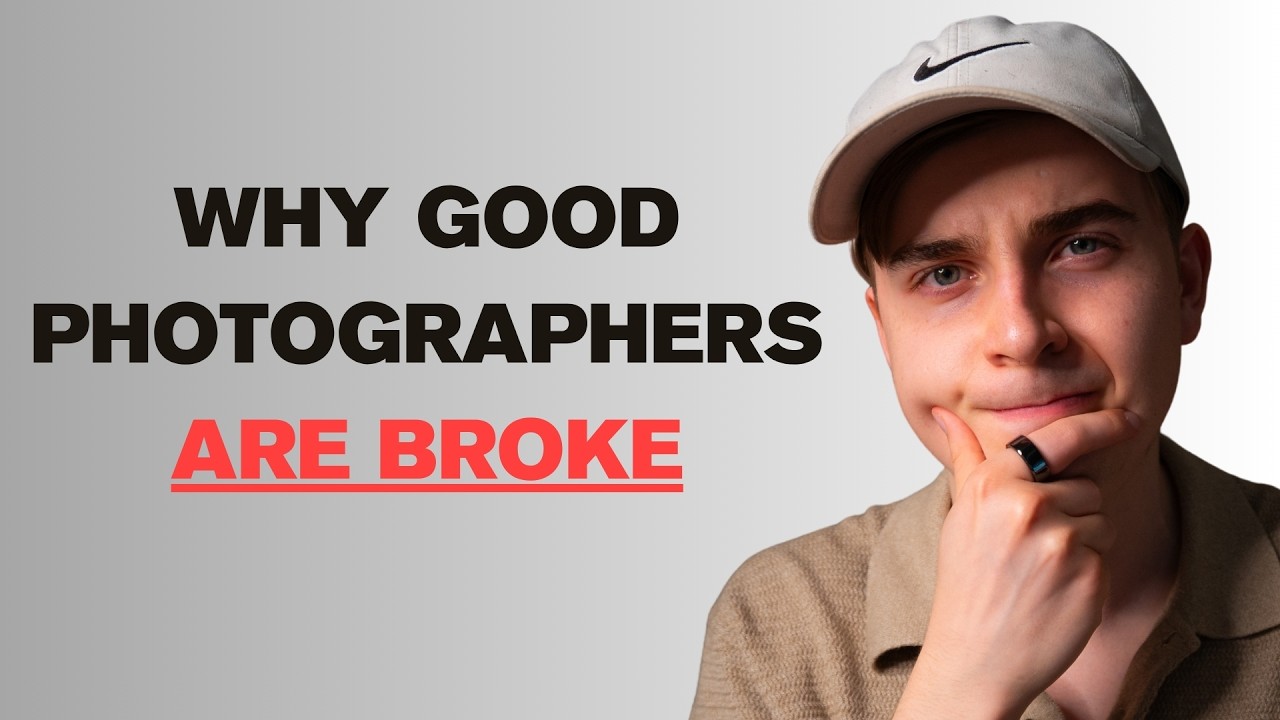
So when I came across Hugo Korhonen’s breakdown of exactly why technically skilled photographers stay broke, I sat with it for a while. It confirmed some things I had already learned the hard way. It also named a few patterns I hadn’t fully articulated yet.
Skill Without Strategy Is a Slow Leak
The first reason Hugo identifies is one that stings because it sounds like a compliment: you’re focused on getting better at photography instead of getting better at running a photography business. These are not the same skill set, and improving one does not automatically improve the other.
Most photographers, especially early on, treat business growth as something that happens when their work gets good enough. They pour time into gear, editing techniques, and portfolio-building under the assumption that quality will eventually speak for itself. It won’t. Or at least, it won’t fast enough to pay your rent.
I track my studio’s metrics every week, bookings, inquiry-to-conversion rates, average session value, client retention. When I started doing that, I realized my busiest months were not always my most profitable ones. That disconnect is exactly what Hugo is pointing at. Busyness is not a business strategy.
Charging for Time Instead of Value
The second reason is pricing, and it is where most photographers quietly bleed out. Hugo makes the point that photographers chronically underprice because they’re anchoring their rates to time and effort rather than to the outcome they deliver for a client.
When you charge by the hour or by the number of edited images, you’re essentially competing on labor cost. And you will always lose that race to someone newer, hungrier, and willing to work for less.
The shift is to price around value. What is it worth for a brand to have imagery that converts? What is it worth for a family to have portraits that become part of their home and their legacy? Those conversations produce very different numbers than “I’ll shoot for three hours and deliver 50 images for $400.”
This is the exact reframe that changed my own pricing. It felt uncomfortable the first time I quoted a client at a rate that reflected the outcome rather than my hourly math. She said yes immediately. That told me everything.
The Visibility Problem Nobody Wants to Admit
Hugo’s third reason hits closer to the business mechanics: most photographers are invisible between sessions. They shoot, they deliver, they go quiet. There is no consistent presence, no content strategy, no reason for potential clients to think of them when a need arises.
This is not about becoming an influencer. It is about staying in the conversation. A potential client who sees your work once and then doesn’t hear from you for four months is not going to remember you when they’re ready to book.
Hugo’s point here connects directly to the difference between photographers who scrape together bookings one at a time and photographers who build a pipeline. Consistent visibility, whether through social content, email, or referral systems, is what creates momentum. Without it, you are always starting from zero.
This is where I’ll push back slightly on what’s presented in the video. Visibility alone isn’t enough if your positioning isn’t clear. I’ve seen photographers post constantly and still struggle to convert because their feed looks like every other photographer’s feed. The content has to communicate a specific point of view, a reason to choose you over the ten other talented photographers in your market. So yes to showing up consistently, but pair it with a distinct perspective or it becomes noise.
The Missing Infrastructure Under the Talent
The fourth reason Hugo outlines is the lack of systems, follow-up sequences, onboarding processes, client experience touchpoints. The stuff that feels administrative and unglamorous but determines whether a client books again, refers their friends, or leaves a review that brings in new business.
I have a client experience checklist with 47 line items. That sounds excessive until you realize that the consistency it creates is what drives my referral rate. Clients don’t just remember the photos. They remember how it felt to work with you, how organized you were, whether you followed up, whether you made the process easy. That experience is a product, and like any product it needs to be designed deliberately.
The photographer who wings it and delivers beautiful work will occasionally impress someone. The photographer who wings it and has an off day will leave a bad impression with no guardrails to catch it. Systems are the difference between results that are occasional and results that are repeatable.
The Real Gap Between Good and Profitable
Technical skill earns you admiration. Business skill earns you income. The photographers who build sustainable, profitable work treat both as disciplines worth studying, not just one.
If any of the four reasons Hugo outlines sounds uncomfortably familiar, that recognition is worth something. Watch the full video for his complete breakdown, including the specific framework he uses to help photographers move from good-but-struggling to consistently profitable.
Comments
Leave a Comment